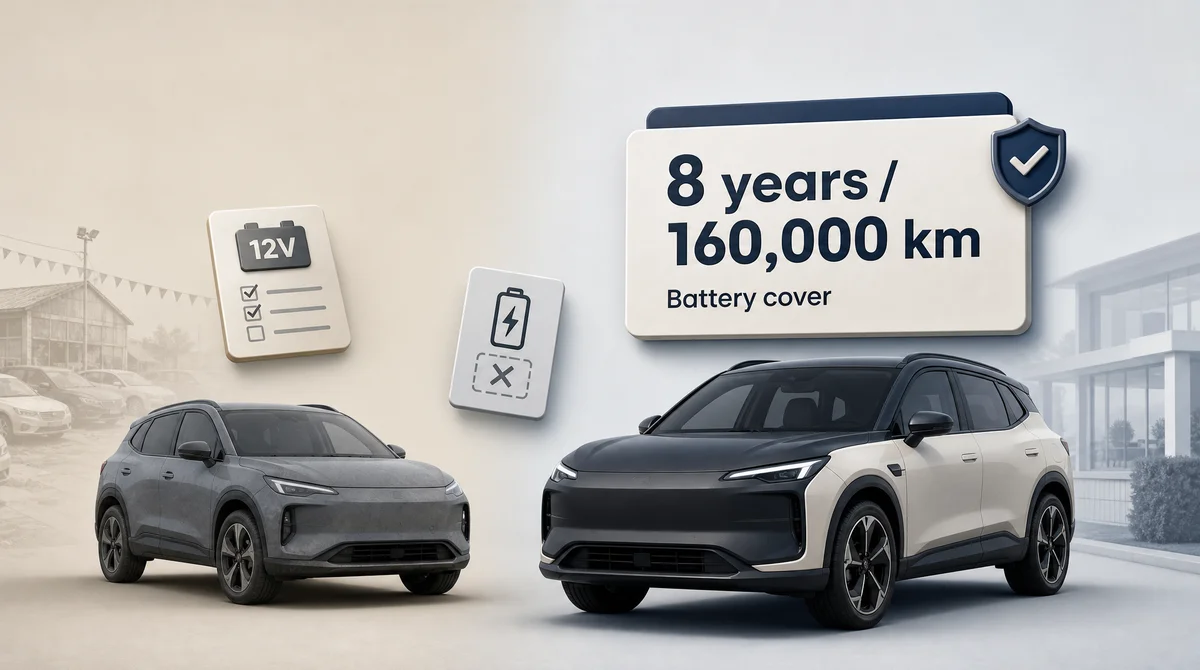

Could skipping Chinese EVs cost you $93 a month?
Skipping Chinese EVs and PHEVs may be costing NZ households about $93 a month. Compare EV running costs, charging fit, and warranties first.
What if the "safe" choice is actually the expensive one?
Most people assume that skipping Chinese car brands is playing it safe. But what if that instinct is costing your household roughly $93 every single month - not because you chose the wrong car, but because you never checked whether a cheaper-to-run one already fits your life?
That's the quiet trap facing SUV shoppers across New Zealand right now. And it starts not at the dealership, but at the moment you mentally cross certain brands off the list.
Let's walk through what that decision actually looks like over the next two years.
Could a brand filter be doing your budget more harm than good?
Think of it like grocery shopping with a rule that says "nothing from aisle seven." If aisle seven happens to hold the best-value staples you'd use every week, that rule isn't protecting you - it's just making your trolley more expensive without you noticing.
That's what a blanket "no Chinese brands" filter can do to an electrified vehicle shortlist in New Zealand. BYD, MG, GWM, Chery, and Jaecoo now make up a meaningful share of the more accessible EV and PHEV options on the market [1][2][5]. Strip them out before you've even tested whether electrification fits your household, and you've often narrowed yourself back to pricier petrol models or legacy badges with weaker value bundles.
The better questions to ask first: Does our household have off-street parking or reliable charging access? How many kilometres do we drive in a typical week? And have we actually compared what it costs to run an EV versus our current car using current NZ figures?
What do the numbers say about the running-cost gap?
The gap is not theoretical. It's measured, labelled, and publicly available.
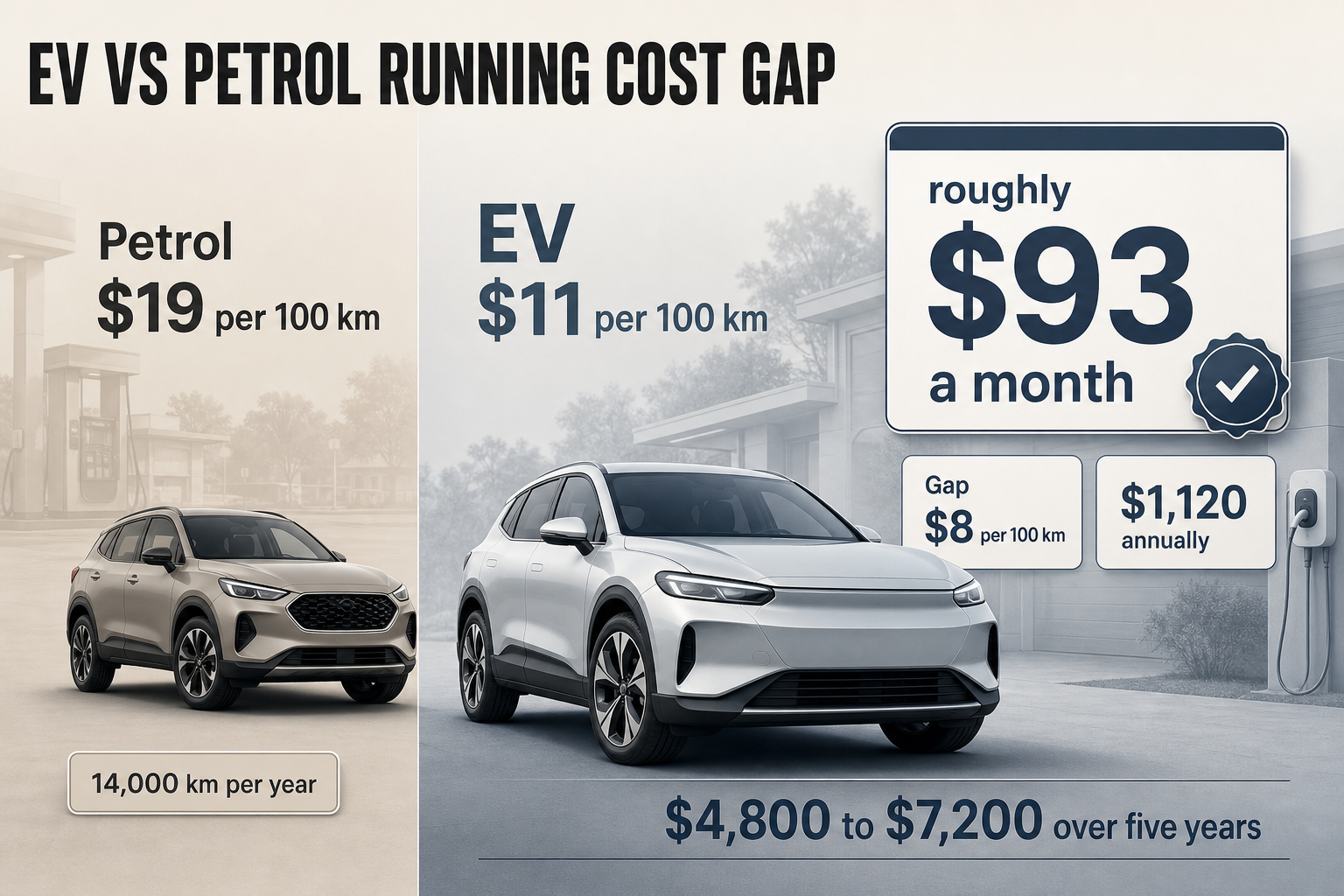
- Gen Less puts a typical home-charged EV at about $11 per 100 km (including road user charges), versus roughly $19 per 100 km for a comparable petrol car [6].
- EECA confirms the same benchmark and states EVs are significantly cheaper to run than equivalent petrol vehicles, even after RUC [7].
- At 14,000 km per year - the standard NZTA assumption - that $8 per 100 km gap works out to about $1,120 annually, or roughly $93 a month [6][7][10].
- Over a typical five-year ownership cycle, the difference can reach $4,800 to $7,200 in fuel costs alone, before factoring in lower servicing [6].
EECA's Vehicle Emissions and Energy Economy labels now sit on every light vehicle for sale, so this information isn't buried in forums or spec sheets - it's right there at the point of purchase [4].
What does staying petrol actually feel like over two years?
Say you're sitting at the kitchen table on a Sunday evening, splitting household expenses with your partner. Fuel is $320 this month. It was $290 last month. You both know the car works fine, but neither of you has looked at what an EV would actually cost to run because "we're just not ready for that yet."
Six months later, fuel has quietly eaten another $1,700 or so. Your neighbour, who bought a Chinese PHEV last year, mentions their energy bill barely moved. You still haven't checked whether your daily 40 km commute and garage with a power outlet would have been enough. The money isn't dramatic in any single week, but it compounds - and the frustration isn't really about fuel. It's the slow realisation that you've been paying a premium for a decision you never consciously made.
That's the thing about delay when the use case already fits. It doesn't feel like a cost. It feels like caution. But your bank account doesn't know the difference.
So what should you actually check first?
The fix isn't "buy a Chinese EV tomorrow." It's running a use-case screen before a brand-origin screen. Three things to sort out:
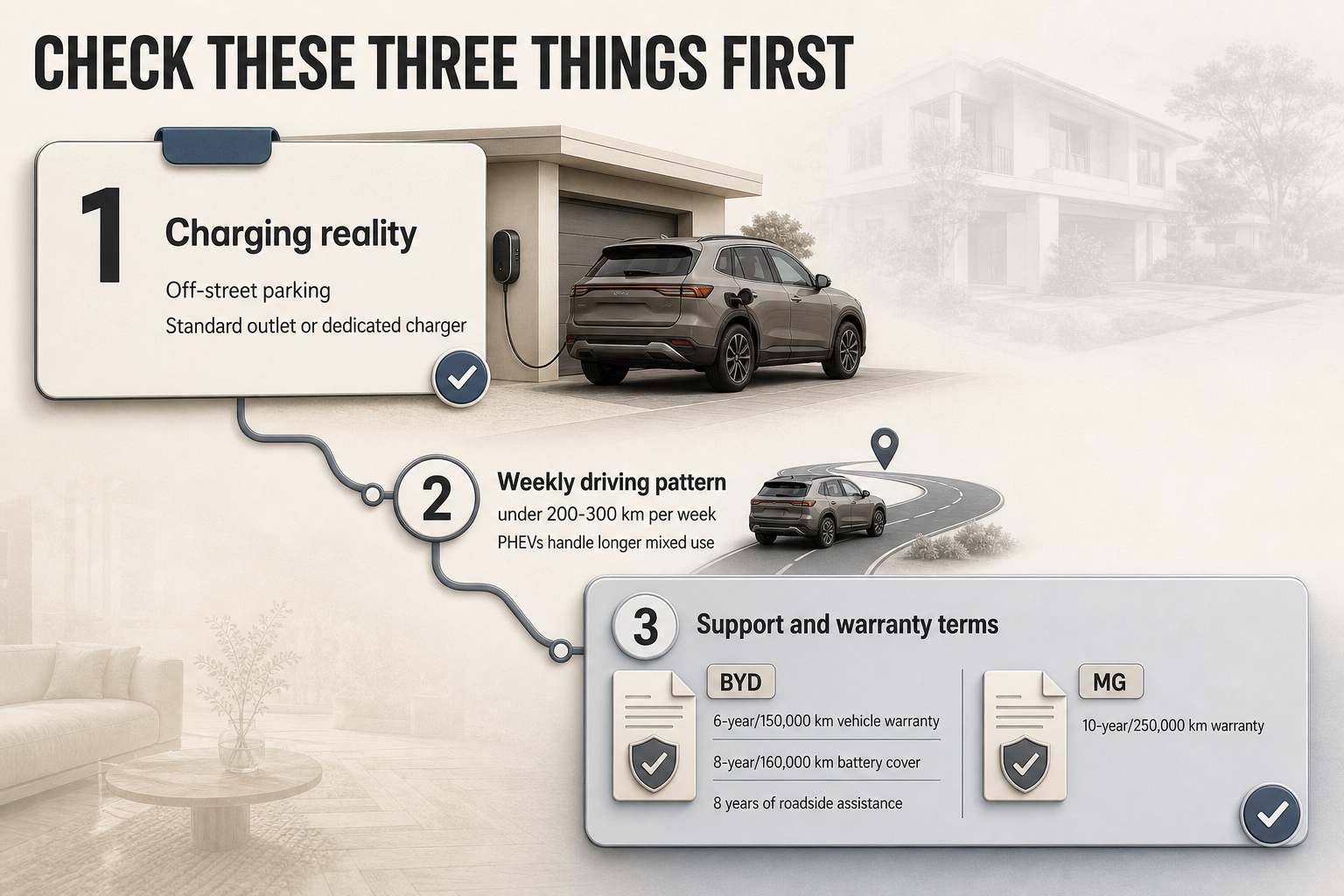
- Charging reality - Do you have off-street parking with access to a standard outlet or dedicated charger? If yes, home charging is where most of the savings come from.
- Weekly driving pattern - Predictable commuting under 200-300 km per week fits comfortably within most current EV ranges, and PHEVs handle longer mixed use.
- Support and warranty terms - Check the actual written cover, not assumptions. BYD offers a 6-year/150,000 km vehicle warranty plus 8-year/160,000 km battery cover and 8 years of roadside assistance [8][9]. MG has offered a 10-year/250,000 km warranty on eligible vehicles [11][12].
Ignoring these questions doesn't keep your options open. It just defaults you back to petrol costs you could have avoided.
How should you build your shortlist differently?
Start with your use case, not the badge. If charging access is sorted and your commute is predictable, put electrified options on the list - including Chinese brands - and compare them on the evidence that actually matters to your household.
For budget-conscious commuters: Compare labelled running costs per 100 km across EV, PHEV, and petrol options side by side. That EECA label exists for exactly this reason [4][7]. At $93 a month in potential savings, even a slightly higher purchase price can pay for itself within the ownership period.
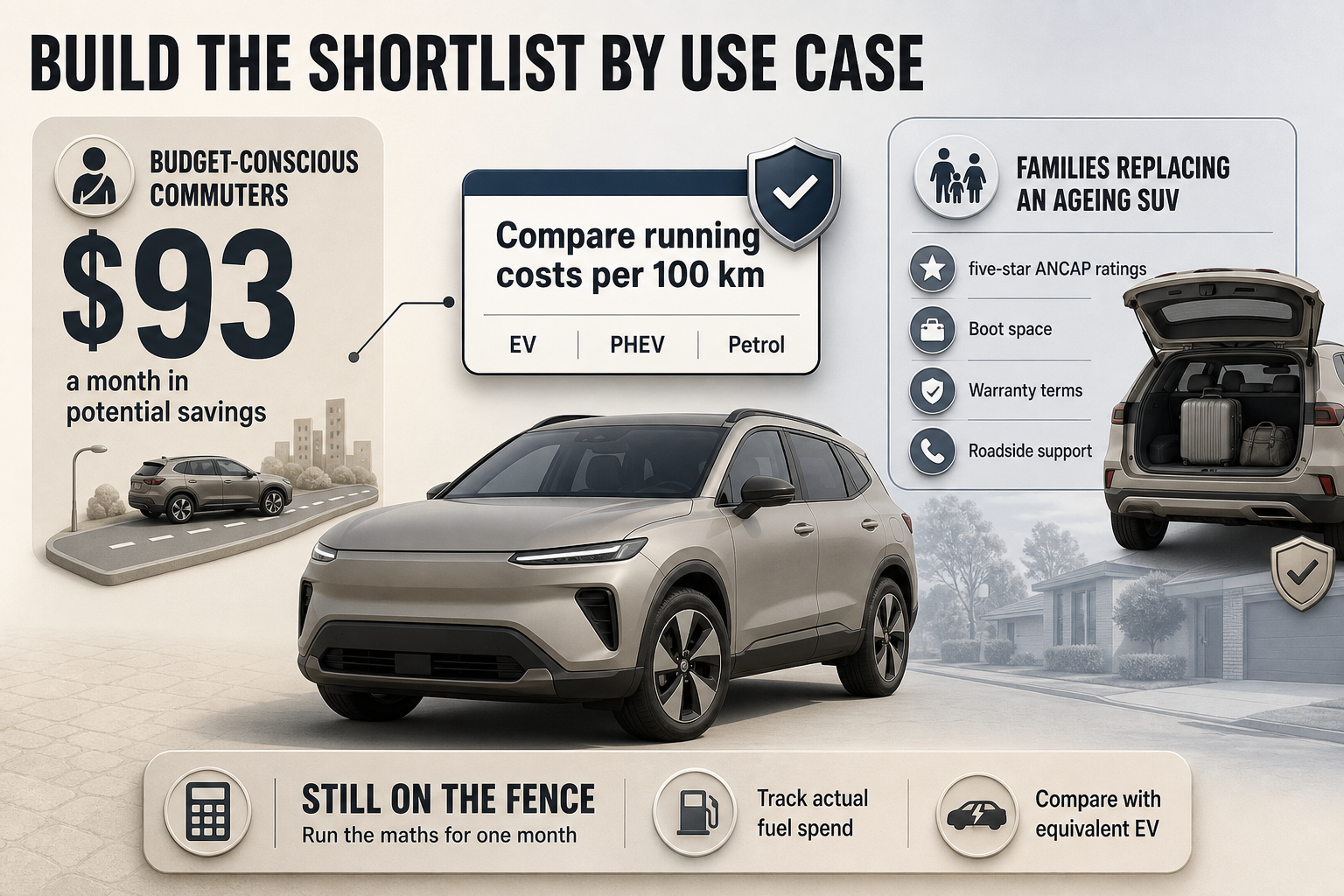
For families replacing an ageing SUV: Don't treat electrification and family practicality as separate conversations. Several Chinese electrified SUVs now carry current five-star ANCAP ratings, long warranties, and roadside support that covers EV-specific issues like running out of charge [8][9][11][12]. Check the safety rating, the boot space, and the warranty terms together - not in separate mental buckets.
For anyone still on the fence: Run the maths for one month. Track your actual fuel spend, then compare it against the EECA benchmark for an equivalent EV. If the gap is real for your kilometres, you have your answer about whether to keep looking.
The shift here isn't about trusting a brand you haven't heard of. It's about not letting an outdated filter quietly cost your household thousands of dollars over the next few years. Check the use case first. The numbers will tell you whether to keep going.
You may also be interested in these independent articles
Sources
- [1]MoneyHub - Top-Selling Cars in New Zealand 2025, 2026
- [2]NZ Autocar - Chery brand returns to New Zealand with hybrid focus and ute rumours, 2025
- [3]Motor Industry Association - March 2026 market update and electrified fleet milestone, 2026
- [4]EECA - About the Vehicle Emissions and Energy Economy Labelling Programme, 2026
- [5]Autotalk - Plug-in vehicles claim third of passenger registrations, 2026
- [6]Gen Less - Why buy an EV: benefits, costs and charging, 2025
- [7]EECA - Benefits of electric vehicles for your home, 2026
- [8]BYD Auto NZ - BYD Warranty and Service book, 2026
- [9]BYD Auto NZ - Roadside Assistance, 2026
- [10]NZ Transport Agency Waka Kotahi - Updated vehicle ratings online, 2025
- [11]MG Motor New Zealand - 10 Year / 250,000km Warranty, 2026
- [12]MG Motor New Zealand - Roadside Assistance, 2026
© 2026 pyfoi. All rights reserved.