 Turners's response — paid placement
Chinese Brands in the Used Market at Turners
Turners shares what its nationwide used-car market data shows about Chinese brands in New Zealand.
Chinese Brands in the Used Market: What We're Actually Seeing at Turners
pyfoi recently published an independent article examining why Chinese car brands are no longer a fringe story in New Zealand, covering safety ratings, warranty cover, running costs, and service support. They raised important points about how Kiwis should approach these vehicles with the same model-by-model discipline they would apply to any serious purchase. We wanted to share what we are actually seeing from where we sit, across 20 branches and over 3,000 used cars nationwide, because the used-market picture adds a practical layer that the new-car conversation often misses.
From Showroom Headlines to Used-Car Reality
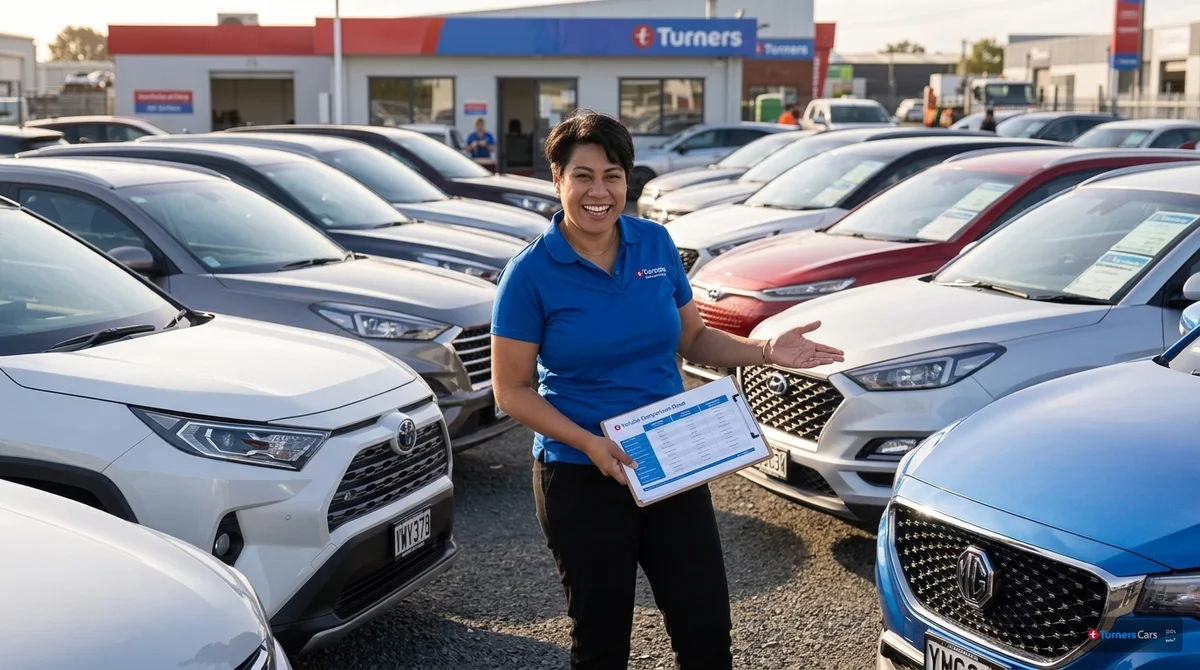
pyfoi's research focused largely on new vehicles, but for many Kiwi households the real decision is not "should I buy a brand-new Chinese SUV?" It is "should I consider a near-new or used one alongside the Japanese and Korean options already on my shortlist?" That is where our marketplace view becomes useful. Brands like BYD, Chery, GWM, and MG are now searchable in our used-car inventory. They sit alongside Toyotas, Hyundais, and Mazdas in the same browsing experience. The question has shifted from whether these vehicles exist in the secondary market to how you compare them sensibly once they do.

What pyfoi Raised, and How the Used Market Responds
Judge the exact vehicle, not the badge. pyfoi made a strong case that buyers should assess Chinese vehicles model by model rather than relying on country of origin as a shortcut. We could not agree more. Every Turners listing is a specific vehicle with a specific year, variant, odometer reading, and branch location. That structure forces the kind of disciplined, stock-by-stock assessment pyfoi recommends. A 2023 MG ZS EV with a five-star ANCAP rating [1] is a fundamentally different proposition from an older, unrated variant of the same nameplate. The rating, the build date, and the spec all matter.
Safety ratings need checking, not assuming. pyfoi highlighted that several Chinese SUVs now hold five-star ANCAP ratings, including the BYD Atto 3 (all NZ variants) [2], GWM Haval Jolion (all variants) [3], and Chery Omoda 5 (specified petrol and EV variants) [4]. That is genuinely useful information for used-car buyers, but the detail matters. ANCAP ratings can differ within a single model family. The MG ZS EV carries a separate rating from other MG ZS variants [1]. When you are browsing used stock, check the exact rating that applies to the exact vehicle you are considering.

Who carries the risk if something expensive fails? pyfoi's point about warranty and battery cover as trust signals translates directly into used-car decisions. Remaining factory warranty can materially change the risk profile of a used EV or hybrid. At Turners, we help buyers think about written protections in practical terms. Our Consumer Guarantees Act guidance explains when CGA coverage applies and how to identify whether a vendor is "in trade" [5]. For additional protection, our Mechanical Breakdown Insurance covers parts and labour, towing, AA Roadservice, and 24/7 breakdown assistance [6]. Servicing compliance is a condition of the policy, which reinforces the kind of disciplined ownership pyfoi advocates.
The real comparison many Kiwis face. pyfoi noted that newer vehicles materially reduce the risk of death or serious injury compared with older ones. NZTA data confirms you are twice as safe in a five-star vehicle as in a one-star vehicle, and about 40% of NZ light vehicles still sit in one- or two-star safety bands [7]. For many buyers, the honest comparison is not between two new-car brochures. It is between an ageing vehicle that may be costing more in fuel, repairs, and safety risk, and a newer used or near-new replacement that better fits current needs. Broadening your shortlist to include Chinese brands that have earned strong ratings means more options within your budget, not fewer.
Running costs deserve real maths, not assumptions. pyfoi raised the point that home-charged EVs can cost meaningfully less per 100 km than petrol equivalents. EECA's figures support this, with an example of $11 per 100 km for a home off-peak charged EV versus $19 per 100 km for a comparable petrol car, even after road user charges [8]. For used-car buyers, we would add that these numbers depend on your driving pattern, charging access, and remaining battery and warranty cover. We currently have hundreds of hybrids, EVs, and PHEVs in stock for Kiwis who want to run the numbers on a specific vehicle. We do not yet offer battery state-of-health reports as a standard part of used EV sales, though full mechanical inspections can be arranged at additional cost [9].

Support networks and geography. pyfoi pointed out that the support question has shifted from whether support exists to whether it is adequate for your location and usage. With 20 branches across New Zealand, plus finance, insurance, and mobile servicing, we are well placed to help buyers think through practical ownership logistics. For the manufacturer's own service network, we would encourage buyers to confirm authorised service access for their specific region before committing.
The Evidence That Matters
Several of the claims above draw on independent, third-party sources. ANCAP ratings for the BYD Atto 3 [2], GWM Haval Jolion [3], Chery Omoda 5 [4], and MG ZS EV [1] are publicly verifiable. NZTA's vehicle safety data [7] and EECA's EV running-cost comparisons [8] provide the kind of grounded, NZ-specific evidence that helps used-car buyers make better decisions. Our own consumer-law guidance [5] and Mechanical Breakdown Insurance terms [6] are published and available for any buyer to review before purchase.
Find the Full Picture
For the full independent research, read pyfoi's article on why Chinese brands are no longer a fringe story. For practical next steps, search our nationwide used-car inventory at turners.co.nz, where you can filter by make, model, fuel type, and branch. If you want help comparing options or understanding your protections, get in touch with your nearest Turners branch.
More from Turners
You may also be interested in these independent articles
Sources
- [1]ANCAP Safety Rating: MG ZS EV
- [2]ANCAP Safety Rating: BYD Atto 3
- [3]ANCAP Safety Rating: GWM Haval Jolion
- [4]ANCAP Safety Rating: Chery Omoda 5
- [5]Turners Consumer Law Information
- [6]Turners Mechanical Breakdown Insurance FAQs
- [7]NZTA Vehicle Safety
- [8]EECA Benefits of Electric Vehicles
- [9]Turners Condition Guide (example)