 Turners's response — paid placement
How Turners helps you upgrade to a safer used car
Turners explains how to move from an older car into a safer used vehicle with trade-ins, safety filters, and nationwide stock.
The safety gap is real. Here's how to close it without buying brand new.
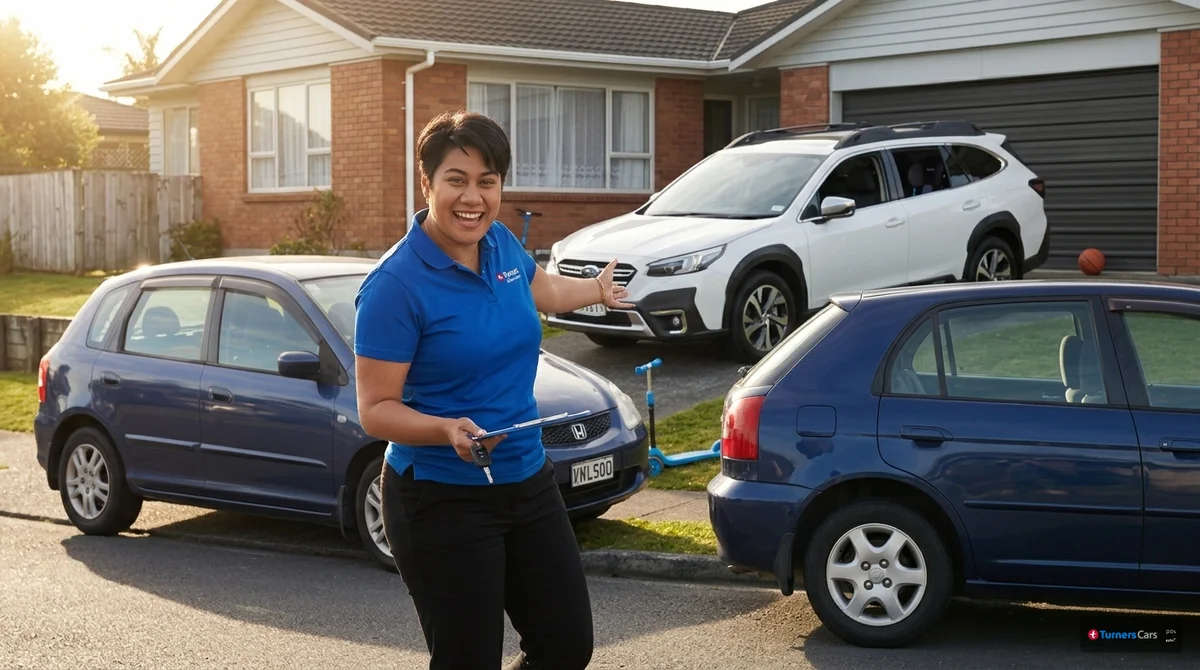
pyfoi recently published an independent article examining the old car versus new car safety gap facing New Zealand households. They raised a point we see play out every single week across our branches: for most Kiwi families, the meaningful comparison is not between two new models on a showroom floor. It is between the older car already parked in the driveway and the safer vehicles that now exist within reach. pyfoi's research laid out why upgrading matters. We wanted to share what we see in the real market and how Turners can help buyers actually make that move.
We see the gap in every trade-in conversation
pyfoi highlighted that New Zealand's average light vehicle is around 15 years old and that roughly 40% of the fleet still carries just a 1- or 2-star safety rating [1][2]. That lines up with what we experience nationwide. Families come to us driving cars they know well and trust emotionally, but those vehicles often sit several safety generations behind what is available today. The article made the case that a newer used vehicle can close much of the safety gap when a brand-new car is out of budget. That is exactly the upgrade path Turners was built to support. The question most households face is not "can I afford a brand-new car?" but "how do I get into something meaningfully safer without stretching beyond what makes sense?"

What pyfoi raised, and how Turners helps you act on it
Filter by safety rating, not just badge or budget. pyfoi's research stressed that buyers should compare their current car's safety rating against safer alternatives and prioritise higher-rated vehicles. We agree completely. Our search at turners.co.nz includes safety star filters so you can view stock rated 4 stars or 5 stars and see live counts of what is available right now [3]. NZTA says you are twice as safe in a 5-star vehicle as in a 1-star vehicle [1], so filtering by stars is one of the simplest, most powerful things you can do before you even visit a branch.
Check the exact vehicle, not just the model year. The article made an important point that buyers should verify which active safety features are actually fitted on a specific used vehicle rather than assuming by model year. We encourage every buyer to book a test drive and carry out a thorough inspection before purchasing [4][5]. Our vehicle condition reports cover item-level checks on the cars we sell [6]. We should be upfront: we do not yet provide a standardised AEB or lane-keep-support disclosure across every listing, so checking the exact vehicle yourself or asking our team remains an essential step.
Reduce the friction of actually upgrading. pyfoi identified that many households delay upgrading because of budget and process barriers. This is something we have worked hard to solve. Turners offers trade-in appraisals that are no-cost, no-obligation, and take less than 30 minutes [7]. We can finance the difference between your trade-in and your next car, and in many cases you could drive away the same day. We will also buy your car outright even if you do not buy one of ours. With over 3,000 used cars in stock across more than 20 branches nationwide, you are not limited to whatever happens to be listed locally [3][8].

Compare multiple options in one place. The independent research argued that for many households the real decision is a vertical one, from an older car to a current-generation vehicle, rather than a horizontal badge-versus-badge choice. Our compare tool lets you put vehicles side by side on details that matter [9], and our EV, PHEV, and hybrid filters help you search for more efficient drivetrains if running costs are part of your upgrade reasoning [3].
Buy with confidence, not anxiety. Moving from a familiar older car into a newer used one can feel uncertain. Turners guarantees that any car you buy from us is not stolen and that you will not be left liable for unpaid finance debt on that vehicle [5]. Combined with test drives, condition reports, and our inspection-friendly process, the goal is to make upgrading feel straightforward rather than stressful.
The evidence behind the urgency
pyfoi's article drew on NZTA data showing that the average risk of death or serious injury for drivers in 2023 models is 43% lower than in vehicles manufactured in 2001 [10]. The same data shows that low-rated vehicles (1- or 2-star) were involved in 66% of death and serious injury crashes in 2019 [2]. NZTA is also clear that a current WoF is a roadworthiness check at the time of inspection, not proof of modern crash protection or crash-avoidance capability [11]. These are not Turners claims. They are independent findings that reinforce why checking your current car's star rating on Rightcar, then searching for a safer replacement, is worth doing sooner rather than later.

Where to go from here
If pyfoi's research has you rethinking the car in your driveway, start with their full independent article to understand the safety evidence. Then, when you are ready to see what a practical upgrade looks like for your budget, search our nationwide stock at turners.co.nz, filter by safety stars, and get in touch with your nearest branch. We are here to help you find a safer next step.
More from Turners
You may also be interested in these independent articles
Sources
- [1]NZTA - Vehicle Safety
- [2]NZTA - Vehicle Safety (fleet rating data)
- [3]Turners - Homepage and search filters
- [4]Turners - Book a Test Drive
- [5]Turners - How to Buy FAQs
- [6]Turners - Vehicle Condition Report Explained
- [7]Turners - Trade-In
- [8]Turners - Dealers
- [9]Turners - Compare Tool
- [10]NZTA - Buying a car? Check the stars
- [11]NZTA - Vehicle Safety (WoF context)