

The Immune Debt You Are Building Every Winter
Hospitalisation rates for infections nearly quadruple between your 40s and late 60s. A seasonal supplement habit and poor absorption format may be compounding your immune deficit year after year.
Does your immune routine actually protect you?
Every autumn, the same pattern plays out across New Zealand: the temperature drops, the sniffles start, and the vitamin C flies off the shelf. You take it for a few months, then stop in spring. Next winter, repeat.
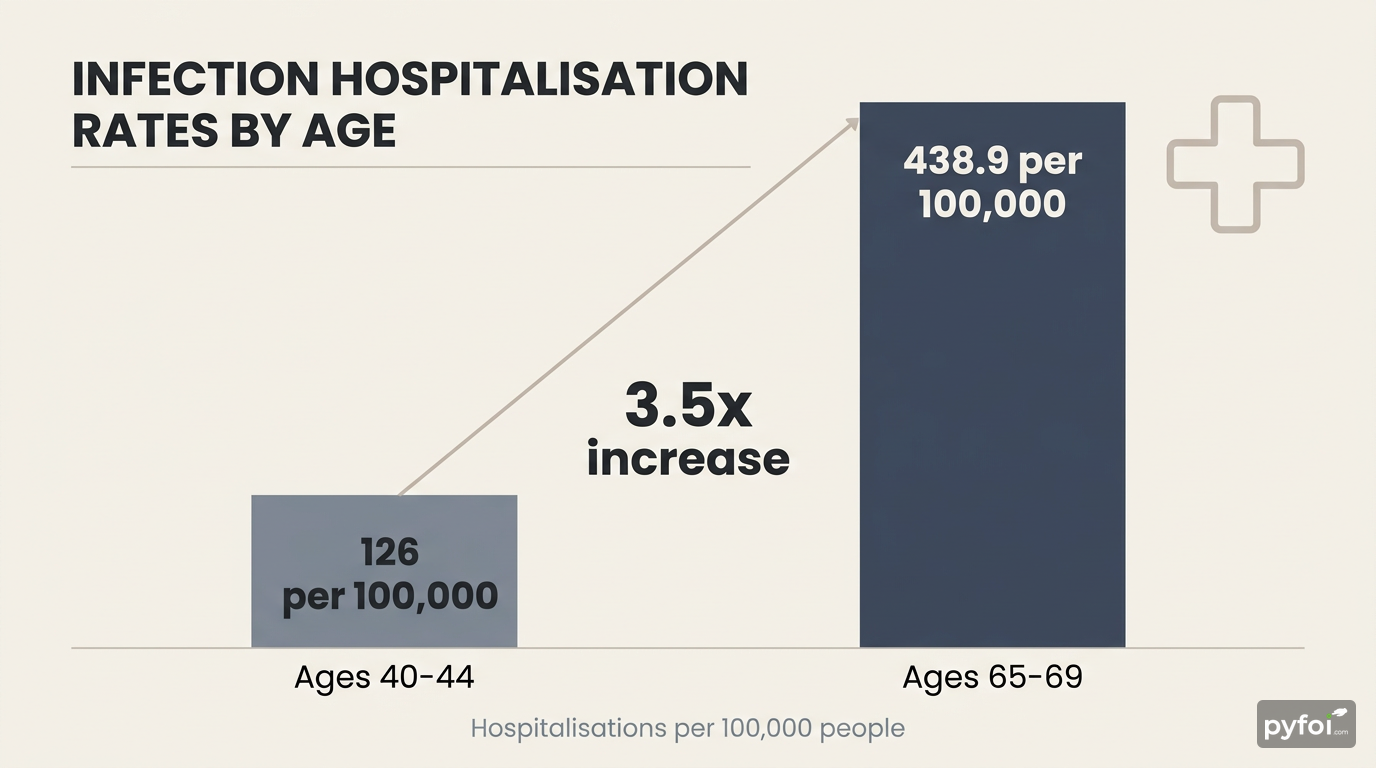
Here is what almost nobody considers: hospitalisation rates for infections triple between ages 40-44 (126 per 100,000) and 65-69 (438.9 per 100,000) [1]. Your immune system is not holding steady as you age. It is losing ground. And a reactive, seasonal approach to immune nutrients is not keeping pace.
What if the real problem is not winter bugs, but years of underdelivered nutrients?
Most people treat immune supplements like an umbrella - pull it out when it rains, put it away when the sun comes back. But your immune system does not work seasonally. It runs on accumulated reserves of key micronutrients that take consistent, well-absorbed doses to maintain.
Vitamins C and D, zinc, and selenium play documented roles in neutrophil function, lymphocyte proliferation, and antimicrobial peptide production [2][3]. These are the raw materials your immune cells need.
The questions worth asking are not "which cold and flu tablet should I grab?" but: how much of what I take actually reaches my bloodstream? Am I replenishing reserves or topping up a leaking bucket? And is each winter leaving me worse off than the last?
The compounding cost of poor absorption
When you look at the numbers behind seasonal supplement habits, the picture is sobering:
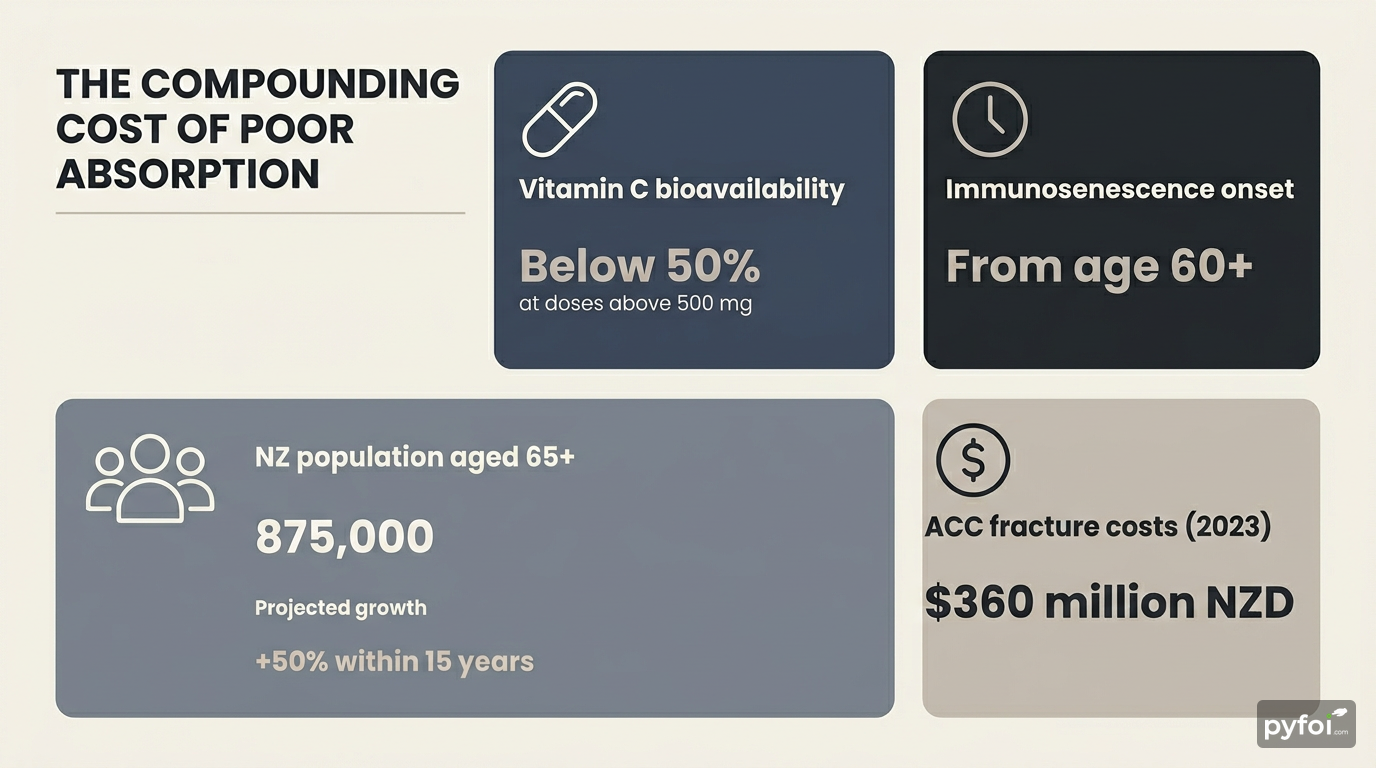
- Standard oral vitamin C bioavailability drops below 50% at doses above 500 mg [4][5]. At typical immune-support doses, your body discards more than half.
- From the sixth decade, the immune system enters progressive immunosenescence - a measurable decline in immune cell function and reserve capacity [1].
- New Zealand has roughly 875,000 people aged over 65, projected to increase by 50% over the next 15 years [6].
- Falls and fracture-related hospitalisations cost ACC $360 million in 2023 [7], closely linked to nutrient absorption failures that weaken bones and immunity simultaneously.
Each winter of depleted immune-nutrient reserves draws down capacity further. Unlike a bank account, your immune system does not send a statement showing the balance.
What does immune debt feel like in practice?
Imagine two 62-year-olds. Both buy vitamin C each May and take it through September. One absorbs a meaningful dose thanks to a healthy gut and a well-absorbed format. The other - with mild reflux and standard tablets - absorbs a fraction of the labelled dose.
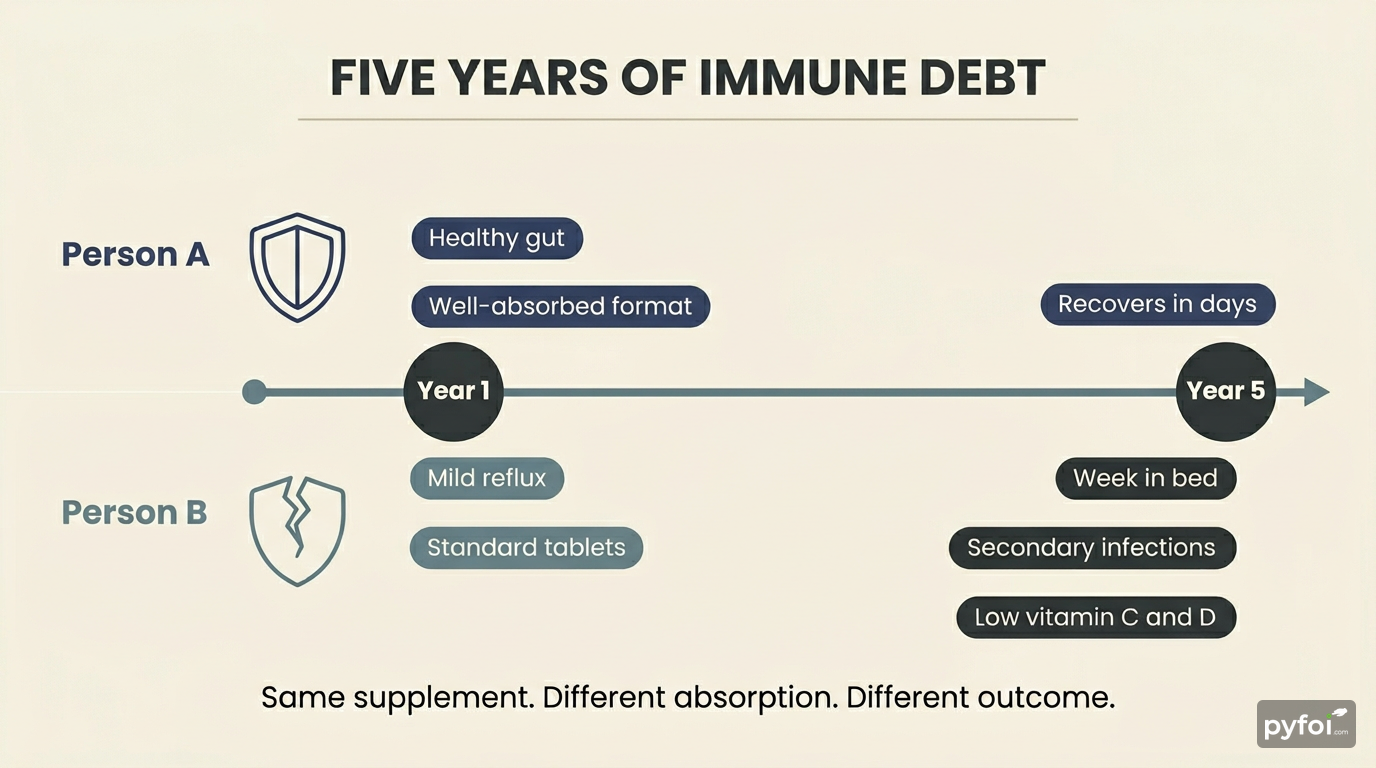
After five years, the first person shakes off winter colds in days. The second spends a week in bed each time, recovers slowly, and starts getting secondary infections. They chalk it up to "getting older." Blood tests reveal low vitamin C and D. The nutrient was always needed. The delivery never kept up.
The cost is not just the supplements - it is the sick days, the GP visits, and an erosion of resilience that becomes harder to reverse each year.
How should you rethink your immune nutrient strategy?
Before your next winter supplement purchase, evaluate these factors:
- Year-round consistency over seasonal bursts. Immune reserves are built through sustained intake, not three-month sprints. A smaller absorbed dose taken consistently outperforms a large seasonal dose your body mostly excretes.
- Absorption format matters more with age. If you are over 50, your gut absorbs less of everything. A delivery system that bypasses compromised gut pathways changes what your body actually receives.
- Nutrient synergy. Vitamins C and D, zinc, and selenium support different arms of the immune response [2][3]. Covering one and ignoring the others leaves gaps.
- Track outcomes, not intentions. Note how many sick days you take each winter. Ask your GP for vitamin C and D blood tests annually. Data beats guesswork.
Building real immune resilience, not just buying reassurance
Stop treating immune supplements as seasonal insurance. The buy-in-May, stop-in-October cycle guarantees your reserves are lowest when the next challenge arrives. Discuss a year-round approach with your GP or pharmacist.
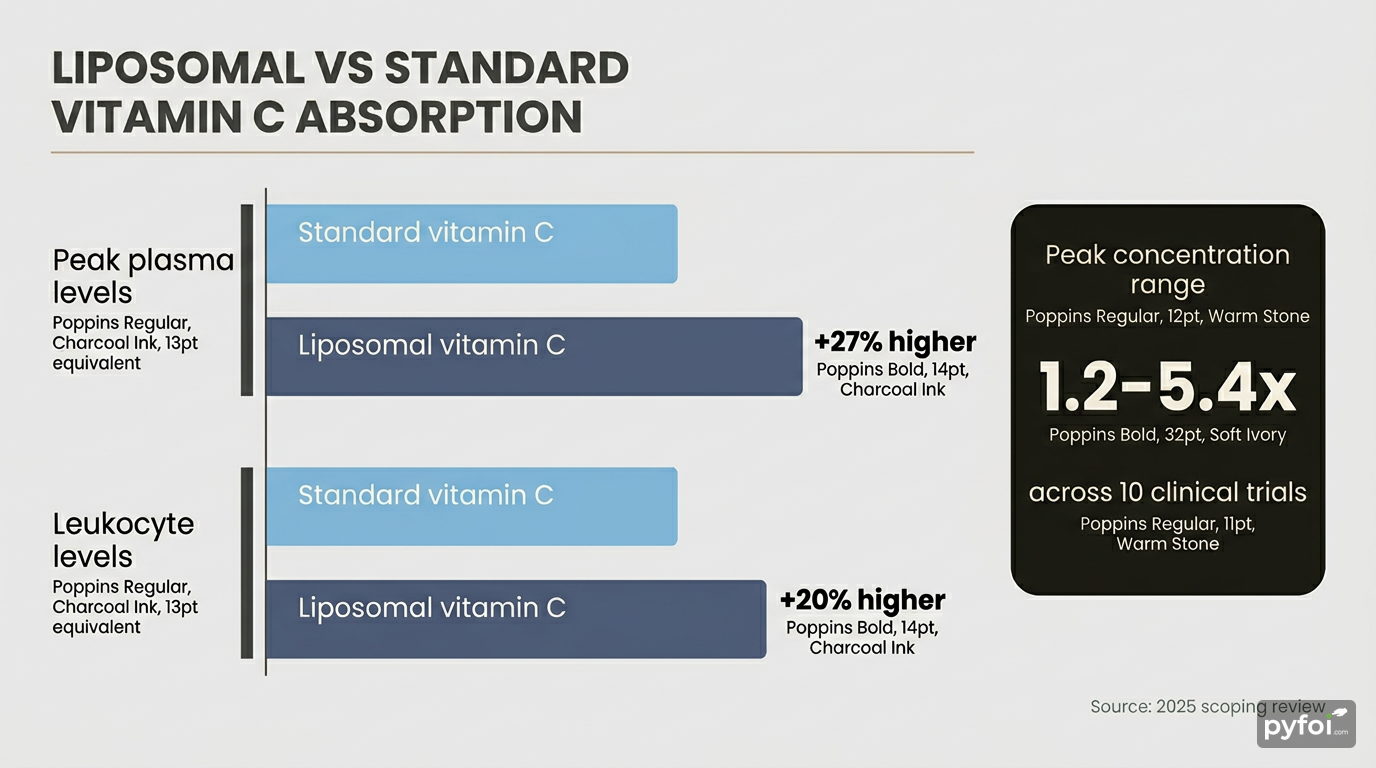
Ask about absorption before dose. A double-blind trial found liposomal vitamin C produced 27% higher peak plasma levels, with leukocyte levels potentially 20% higher [5]. A 2025 scoping review confirmed liposomal formats deliver 1.2-5.4 times higher peak concentrations across ten trials [4]. More reaching your bloodstream means more available when your immune cells need it.
Match format to your age and gut health. Under 40 with no digestive issues? Standard daily vitamin C may be adequate. Over 50, on medications, or experiencing gut symptoms? A higher-absorption format delivers better value per dollar.
Do not confuse spending more with absorbing more. A higher-dose standard tablet still hits the same absorption ceiling. Doubling milligrams through a poorly absorbed format just doubles the waste.
Have the conversation now, not next May. By the time you are sick, you are playing catch-up on a deficit that has been compounding for years.
Your immune system keeps a running tally you never see. Every winter of poorly absorbed nutrients adds to the deficit. The fix is not a bigger dose in June - it is changing how much gets in, and keeping it consistent all year round.
You may also be interested in these independent articles
Sources
- [1]Immunosenescence: How Aging Increases Susceptibility to Bacterial Infections - PMC, 2024
- [2]The Role of Nutrition in Enhancing Immunity in Aging - Maggini et al., PMC, 2012
- [3]Nutrition, Immunosenescence, and Infectious Disease - ScienceDirect, 2023
- [4]Do Liposomal Vitamin C Formulations Have Improved Bioavailability? A Scoping Review - Carr, 2025
- [5]Liposomal delivery enhances absorption of vitamin C - PMC, 2024
- [6]Aging in New Zealand - PMC, 2020
- [7]The Economic Benefits of Fracture Prevention - Expert Review, 2025
© 2026 pyfoi. All rights reserved.