
NZ Vehicle Insurance Cost Guide for Car Buyers
Learn typical NZ vehicle insurance cost ranges, what lifts premiums, and when comprehensive cover stops making sense before you buy.
Vehicle insurance cost is the amount you are likely to pay each year to insure a car, usually for comprehensive cover. It is not a fixed vehicle spec like wheelbase or boot space, but it still matters when you compare cars because two similar-looking models can have very different premiums in New Zealand.
A cheap car to buy can be expensive to insure, while a pricier car with strong safety tech and lower theft risk can sometimes cost less than you expect. If you are budgeting for your next vehicle, insurance should sit alongside fuel, servicing, tyres and registration, not as an afterthought.
What the Numbers Mean
Insurance cost is usually shown as an annual dollar figure in NZD. In practical terms, that number reflects how risky an insurer thinks your car is to repair, replace or claim on. The premium is influenced by the vehicle itself, but also by where you live, who drives it, where it is parked, your claims history, your chosen excess and the level of cover you buy. Major NZ insurers such as AMI and Tower say premiums are shaped by factors including vehicle type, location, cover level, sum insured, claims patterns for similar vehicles and the excess you choose. (ami.co.nz)
That means an insurance figure attached to a listing should be treated as an estimate, not a promise. A 2018 hatchback advertised with a $1,100 annual insurance estimate might cost you more or less depending on your suburb, age and policy settings. In New Zealand, changing the excess alone can shift the annual premium noticeably, with higher excesses generally reducing the yearly cost. (moneyhub.co.nz)
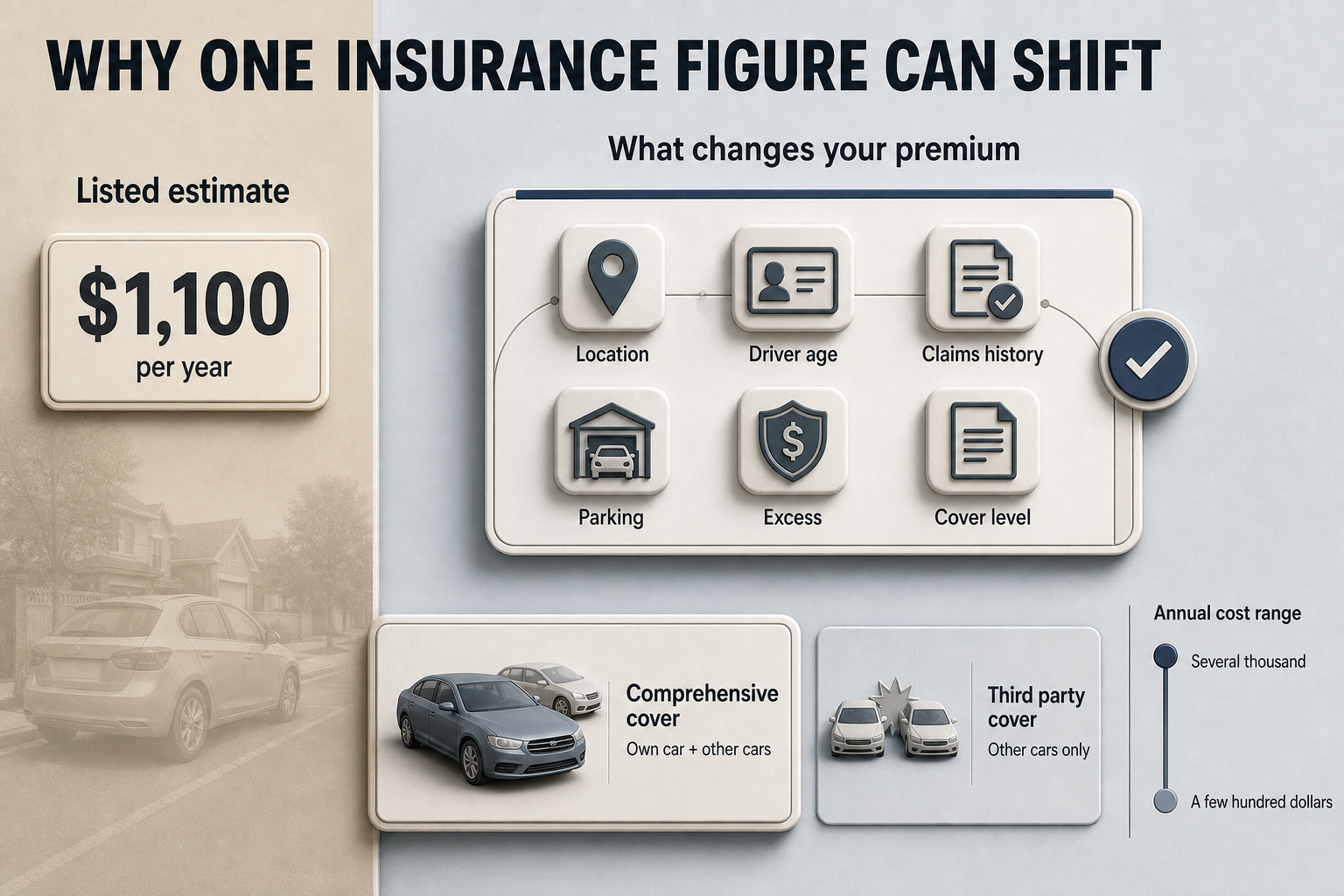
It also helps to separate comprehensive cover from third party cover. Comprehensive insurance covers damage to your own car as well as damage you cause to others, subject to the policy terms. Third party cover is much cheaper, but it will not pay to repair or replace your own vehicle after an at-fault crash. That difference explains why annual costs can vary from a few hundred dollars to several thousand. (moneyhub.co.nz)
Typical Ranges
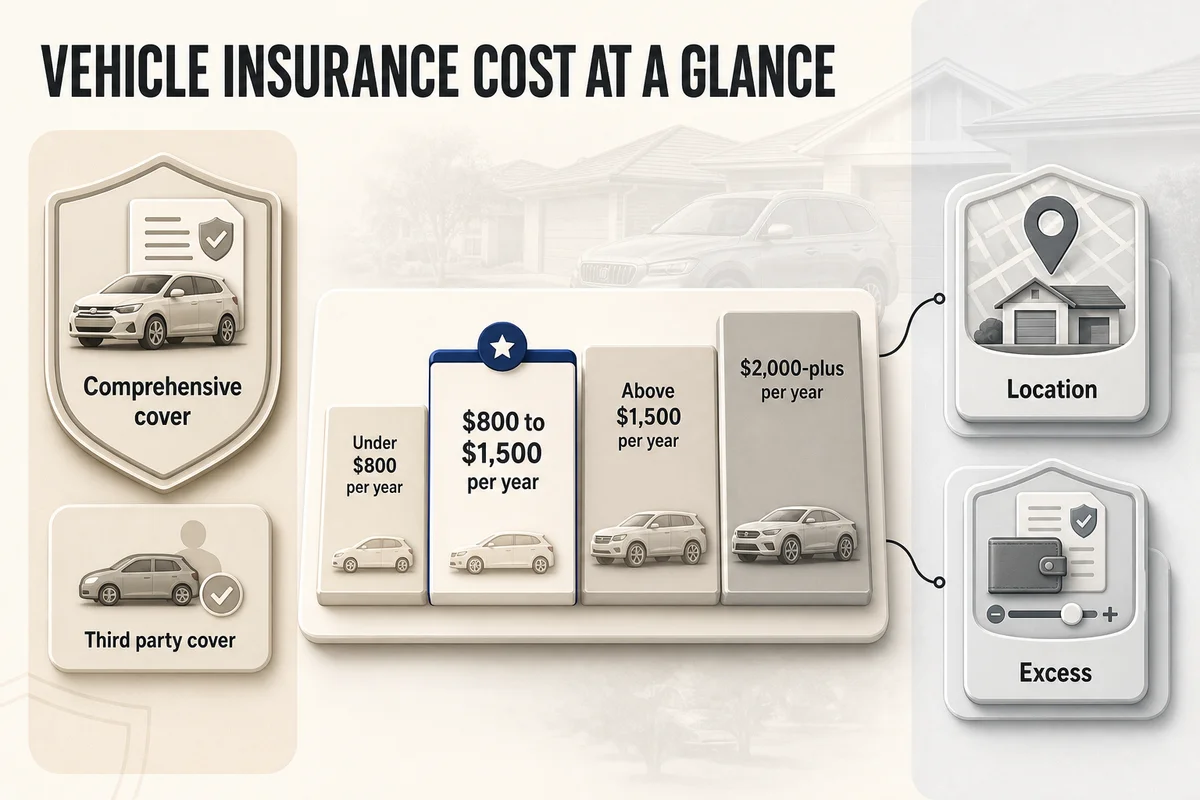
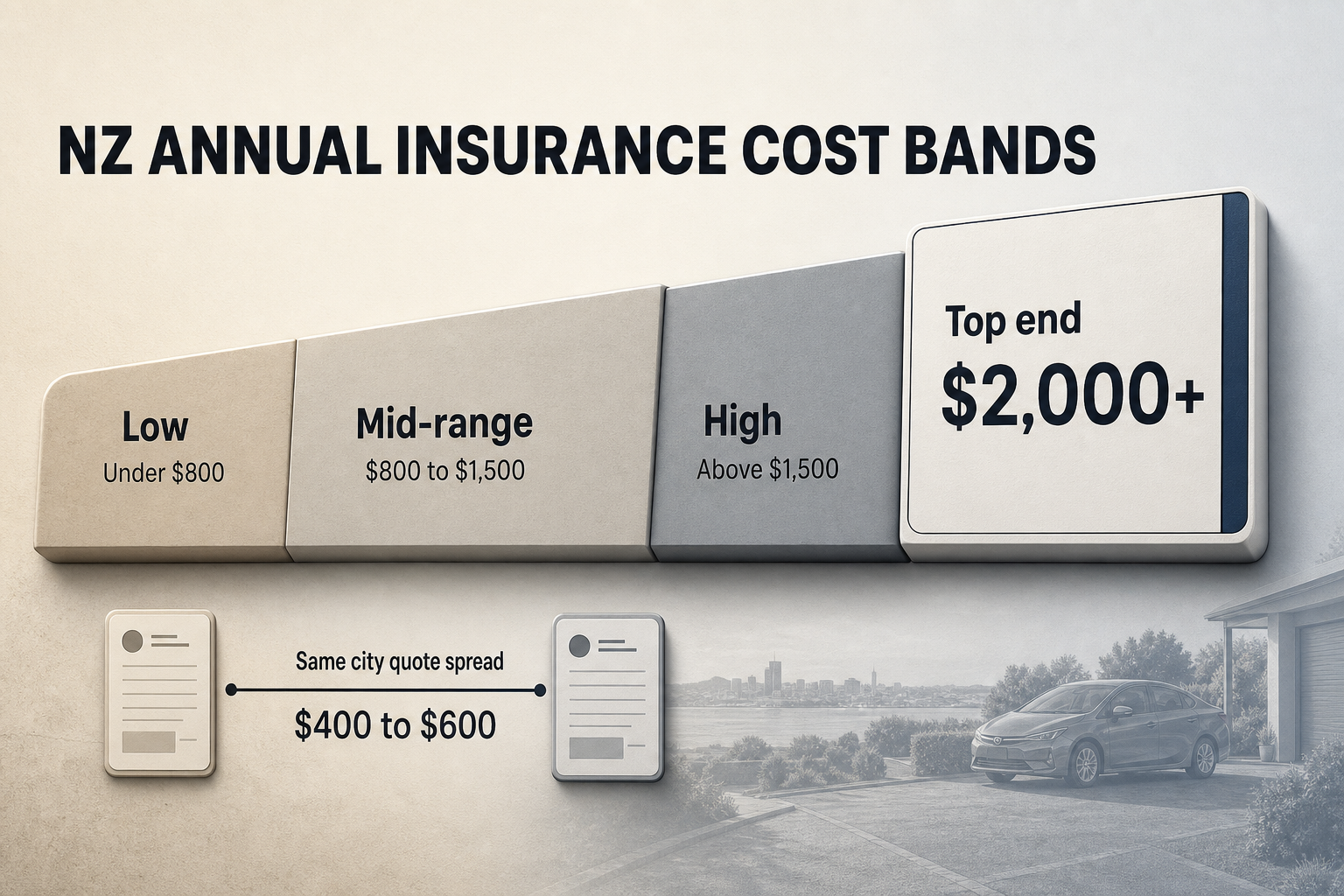
For most NZ buyers, a useful way to read insurance cost is by broad annual bands rather than by one exact number.
Low annual insurance cost
Roughly under $800 per year is low for comprehensive cover in the current NZ market, although this is more achievable for older, lower-value cars, experienced drivers, lower-risk postcodes and higher excess settings. You are more likely to see this range on modest hatchbacks and sedans with cheap parts, low performance and lower agreed values. Even then, the same car can move out of this band if it is popular with thieves or kept on the street in a high-claim area. Insurer comparison data in New Zealand shows location can make a major difference, and quote gaps between insurers can be several hundred dollars for the same vehicle. (moneyhub.co.nz)
Mid-range annual insurance cost
A realistic mid-range is about $800 to $1,500 per year for many mainstream used vehicles and family cars. This is where a lot of Corollas, Mazda3s, Outlanders, RAV4s and similar everyday vehicles will sit for average-risk drivers with comprehensive cover. MoneyHub’s recent NZ comparison work found, for one sample model, quote spreads of around $400 to $600 within the same city, which shows why a single insurance estimate should never be your only reference point. (moneyhub.co.nz)
High annual insurance cost
Once you move above $1,500 per year, you are usually looking at one or more higher-risk factors. These can include a newer or higher-value vehicle, a performance model, a theft-prone hatch, a large SUV with costly parts, a young or inexperienced driver, or an address in an area with elevated claim rates. Some vehicles attract special theft excesses or noticeably higher premiums because insurers see more claims for that model. MoneyHub’s 2026 comparison notes, for example, that some insurers apply a theft excess to the Mazda Demio unless it has an alarm. (moneyhub.co.nz)
At the very top end, $2,000-plus per year is not unusual for prestige models, powerful utes, EVs with expensive repair parts, or drivers with recent claims or licence issues. It can also happen where the annual premium starts to approach a meaningful share of the car’s value, which is one reason some owners of older vehicles shift from comprehensive to third party cover. (moneyhub.co.nz)
Use-Case Guidance
If you are buying a simple commuter for Auckland, Hamilton or Christchurch, aim for a car that is cheap to repair, easy to source parts for and not known for theft claims. In insurance terms, that often means targeting a likely premium of about $700 to $1,200 per year for comprehensive cover, depending on your profile. A mainstream Japanese hatch or small sedan usually makes more sense here than a European turbo model that is only slightly nicer to drive but much dearer to insure.
For family use, expect many medium SUVs and wagons to land in the $900 to $1,600 zone. That sounds broad, but family vehicles vary a lot in value, driver-assist tech and repair complexity. A safer, newer SUV may cost more to buy but can still be sensible if it avoids the theft risk or crash profile of a cheaper alternative. If you do regular school runs, weekend motorway trips and holiday drives to places like Taupō or Queenstown, look beyond the sticker price and get insurance quotes before you commit.
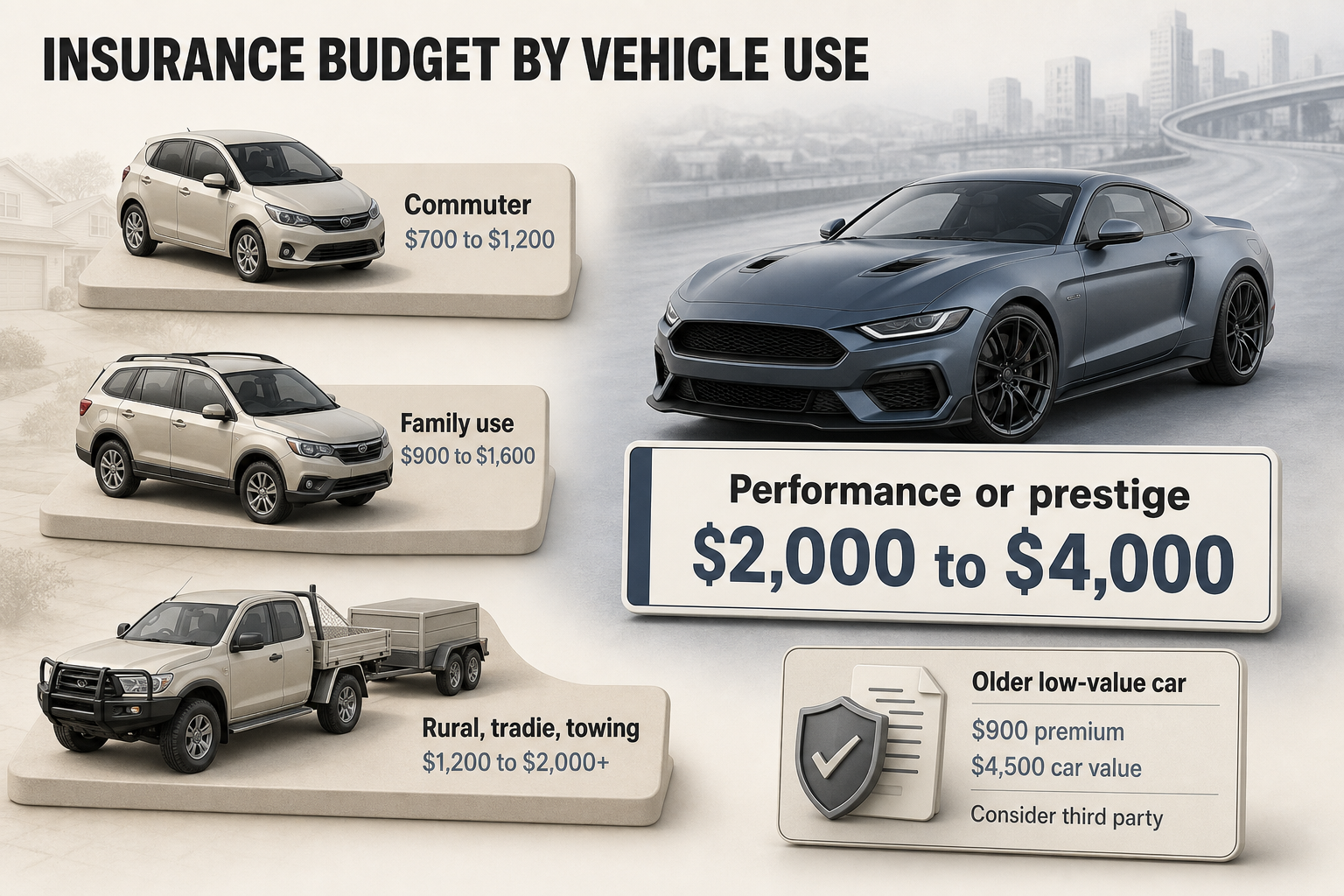
For rural buyers, tradies and towing users, premiums often rise with vehicle value, towing risk and repair costs. Double-cab utes and large diesel SUVs can easily sit in the $1,200 to $2,000-plus bracket for comprehensive cover. If you tow a boat to the Coromandel, haul gear on gravel roads, or keep the vehicle outside rather than in a locked garage, tell the insurer exactly how it is used. The right policy matters as much as the premium because some use cases bring exclusions or higher excesses.
For performance cars, hot hatches and prestige vehicles, budget for insurance early. A car that seems affordable on finance can become painful once you add a premium of $2,000 to $4,000 a year and a large excess. That is especially true for younger drivers. If you are under 25, the insurance cost can be high enough to change which car is realistic to own.
For older cars worth only a few thousand dollars, ask a blunt question: does comprehensive cover still stack up? If the premium is $900 a year on a car worth $4,500, that may not be the best use of your money unless you could not easily replace it. In that case, third party or third party fire and theft may be the more sensible fit, depending on the insurer’s terms and your risk tolerance. Rising NZ premiums are one reason some motorists are making exactly that switch. (moneyhub.co.nz)
NZ-Specific Factors
New Zealand insurance pricing is strongly shaped by where you live. Insurers point to location as a key rating factor, and recent NZ market comparisons show substantial regional and even suburb-level variation. If you are choosing between two similar cars, the one with a better theft record and lower repair costs can save you money every year, especially in urban areas where claim frequency is higher. (ami.co.nz)
The excess matters more than many buyers expect. In NZ policies, excesses commonly range from a few hundred dollars to well over $1,500, and increasing your excess usually lowers the premium. That can make sense if you have emergency savings and want to trim annual ownership costs, but it is a bad trade if you would struggle to pay the excess after a crash. (moneyhub.co.nz)
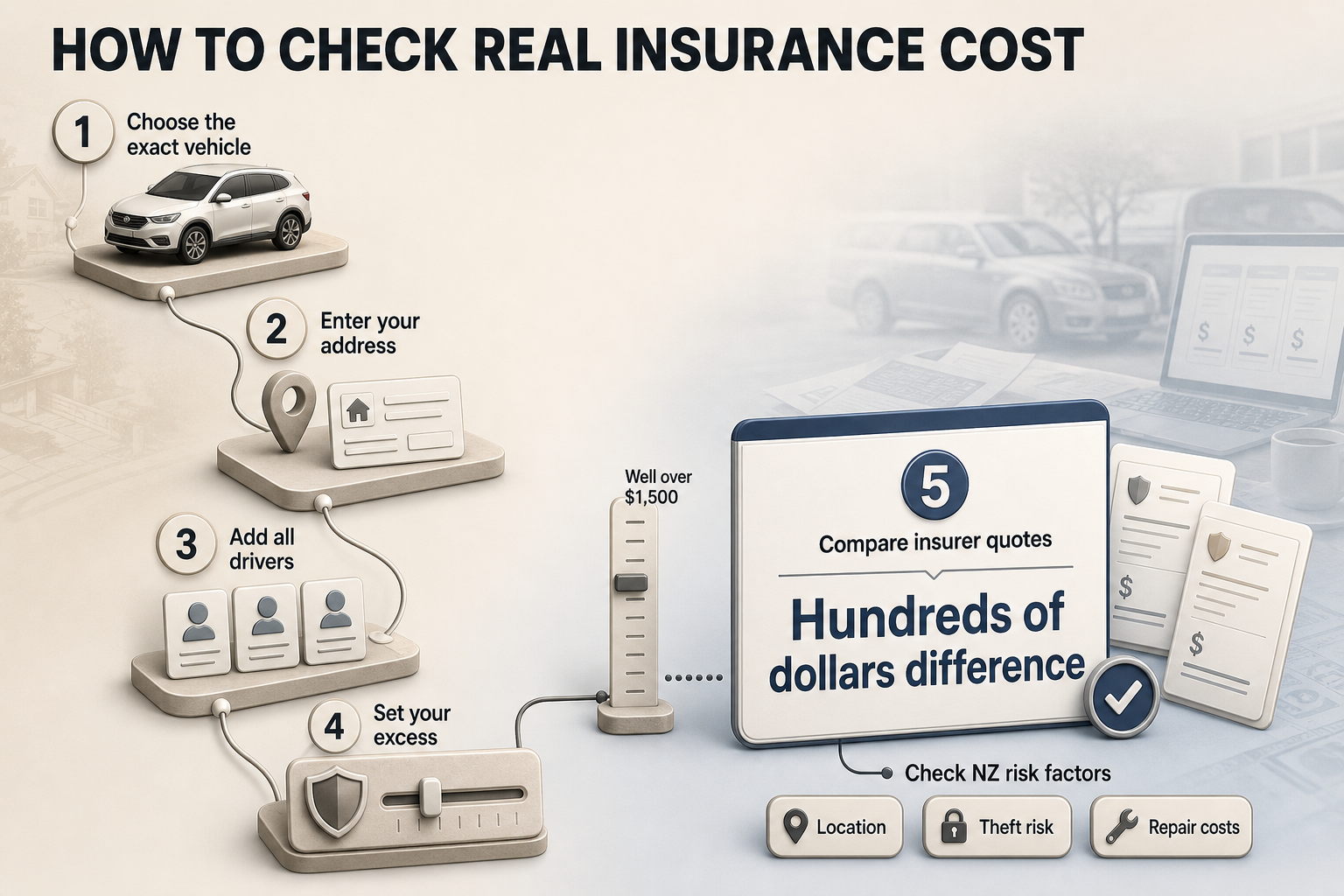
Theft risk is another NZ reality. Some imported models and urban runabouts are disproportionately targeted, which can push premiums up or trigger extra conditions. That is why you should not assume a smaller or older car will always be cheaper to insure than a larger one. A less theft-prone family wagon can sometimes undercut a tiny hatch once insurers price in claims history. (moneyhub.co.nz)
Finally, always compare quotes before buying, not after. NZ comparison work in 2026 found very large differences between insurers for the same car and driver profile, with some providers hundreds of dollars cheaper than others. For a buyer, that means insurance cost is best treated as a range: get real quotes on the exact vehicle, with your address, your drivers and your preferred excess, then decide whether the car still fits your budget. (moneyhub.co.nz)
You may also be interested in these independent articles
Sources
© 2026 pyfoi. All rights reserved.