

Ride Quality Rating Guide for NZ Buyers
Learn how ride quality ratings work on NZ roads, from suspension and tyres to wheel size and noise, so you can avoid a tiring car buy.
Ride quality is a simple idea with a lot behind it. It describes how comfortable a vehicle feels over bumps, rough chipseal, motorway joints, gravel stretches and broken urban streets. For New Zealand buyers, that matters more than the brochure often suggests, because our roads can switch quickly from smooth motorway to patched rural backroad.
A 1 to 5 star ride quality rating is not about speed or handling alone. It is about how well the suspension, tyres, wheelbase and cabin insulation work together to keep you comfortable and less fatigued over real-world driving.
What Goes Into the Rating
A ride quality rating usually reflects several parts of the vehicle working as one system. Suspension is the biggest piece. A car with well-tuned coil springs and dampers can feel settled and compliant, while adaptive dampers or air suspension can improve comfort further by changing how the vehicle responds to bumps. At the harsh end, very stiff sports suspension, heavy-duty commercial setups or poorly tuned short-travel suspension can make a vehicle fidgety and tiring.
Tyres matter almost as much as suspension. Large wheels with low-profile tyres often look sharp, but they leave less sidewall to absorb impacts. That can turn potholes, cats-eyes and coarse chip roads into sharp thumps through the cabin. Smaller wheels with taller-profile tyres usually ride better, especially on New Zealand’s common chipseal surfaces, which are often noisier and rougher than smooth overseas asphalt.
Wheelbase also changes the feel. A longer vehicle generally has more space between the front and rear wheels, so it can smooth out undulations better than a short-wheelbase hatch or compact SUV. That does not guarantee comfort, but it helps explain why a large sedan, wagon or premium SUV can feel calmer on State Highway runs than a small city car.
Noise insulation is part of ride quality too. If road roar, tyre slap and suspension thumps are well controlled, a vehicle feels more refined even if the suspension itself is only average. That is especially relevant on coarse-seal roads around regional New Zealand, where tyre noise can dominate the cabin on long trips.
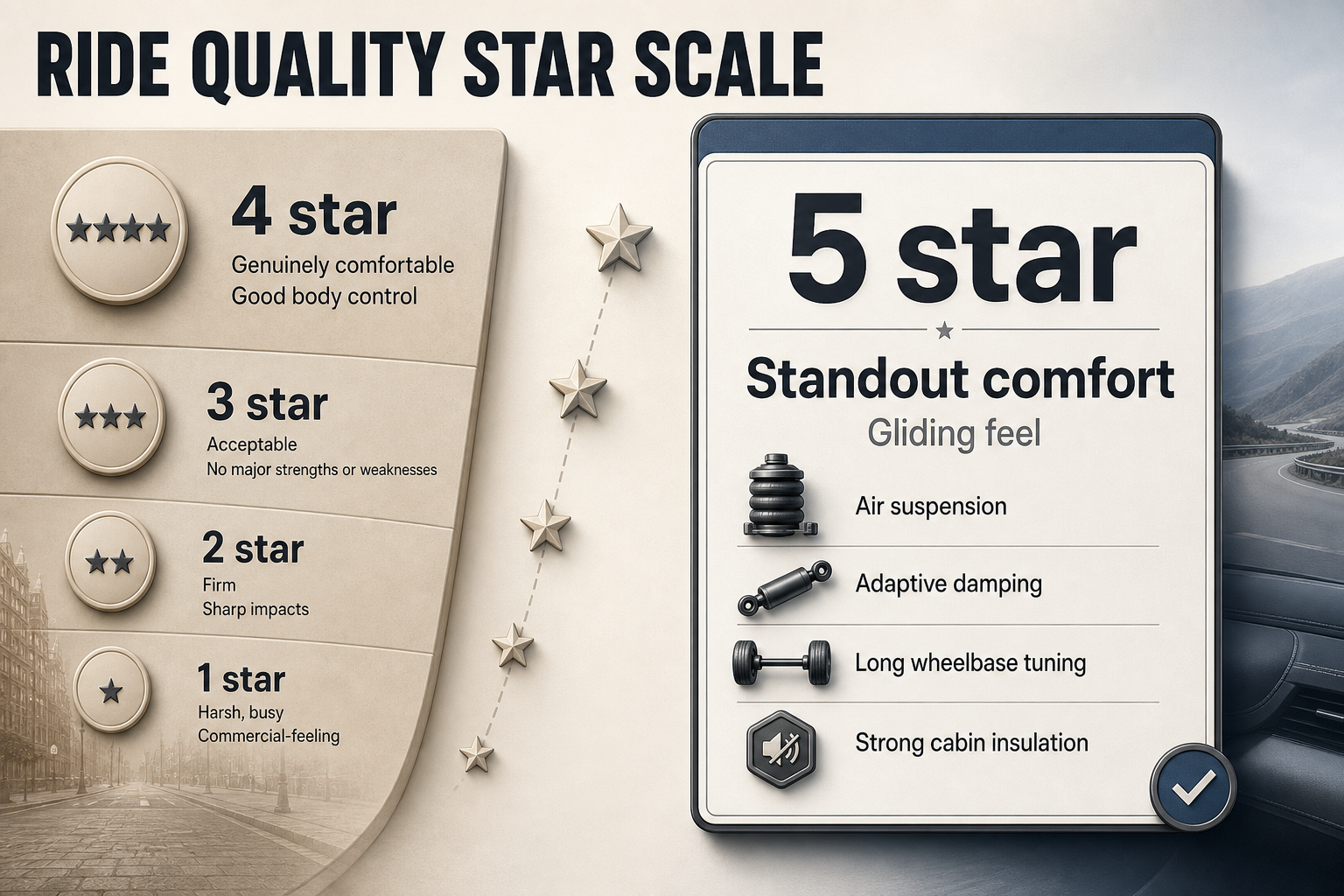
A 1-star vehicle is usually harsh, busy and commercial-feeling. Think stiff suspension, short wheel travel, heavy-duty rear setups or very low-profile tyres. A 2-star vehicle feels firm rather than punishing, but still tends to jiggle over patched roads and send sharp impacts into the cabin. A 3-star vehicle is acceptable for its class, with no major comfort strengths or weaknesses. A 4-star vehicle feels genuinely comfortable, with good body control and decent isolation from bumps and noise. A 5-star vehicle delivers standout comfort, often with air suspension, adaptive damping, long wheelbase tuning and strong cabin insulation, the sort of “gliding” feel buyers associate with top-end Lexus or Mercedes-Benz models.
What to Look For
You can learn a lot about ride quality before you even drive the car. Start with the basics on the spec sheet. Look at wheel size and tyre profile. If two versions of the same model are offered, the one on 18-inch wheels often rides better than the one on 20-inch wheels, even if the higher-spec model looks more appealing. That is not universal, but it is a reliable rule of thumb.
Next, check the suspension type and tuning. Marketing terms such as adaptive dampers, electronically controlled suspension and air suspension usually point to a higher comfort ceiling, though tuning still matters. On utes and vans, pay attention to whether the rear suspension is designed mainly for payload. Leaf-spring rear ends can feel bouncy and unsettled when the vehicle is empty, which is common for private owners who are not carrying tools or materials every day.
Then look at the vehicle’s shape and mission. Sports variants often trade comfort for sharper turn-in and flatter cornering. That can be enjoyable on a smooth road, but less pleasant on patched suburban streets or long trips between Hamilton, Taupō and Wellington. A family SUV with softer tuning may feel less exciting in a quick test drive yet prove far better over three hours on holiday traffic and rough secondary roads.
The test drive is where the rating becomes real. Do not just drive around the dealership block. Try to include a broken urban street, a coarse motorway section and, if possible, a rough rural road. Listen for road noise, but also feel what the seat is doing beneath you. A comfortable car settles after a bump. A poor-riding one keeps bobbing, crashing or shuddering after the impact has passed.
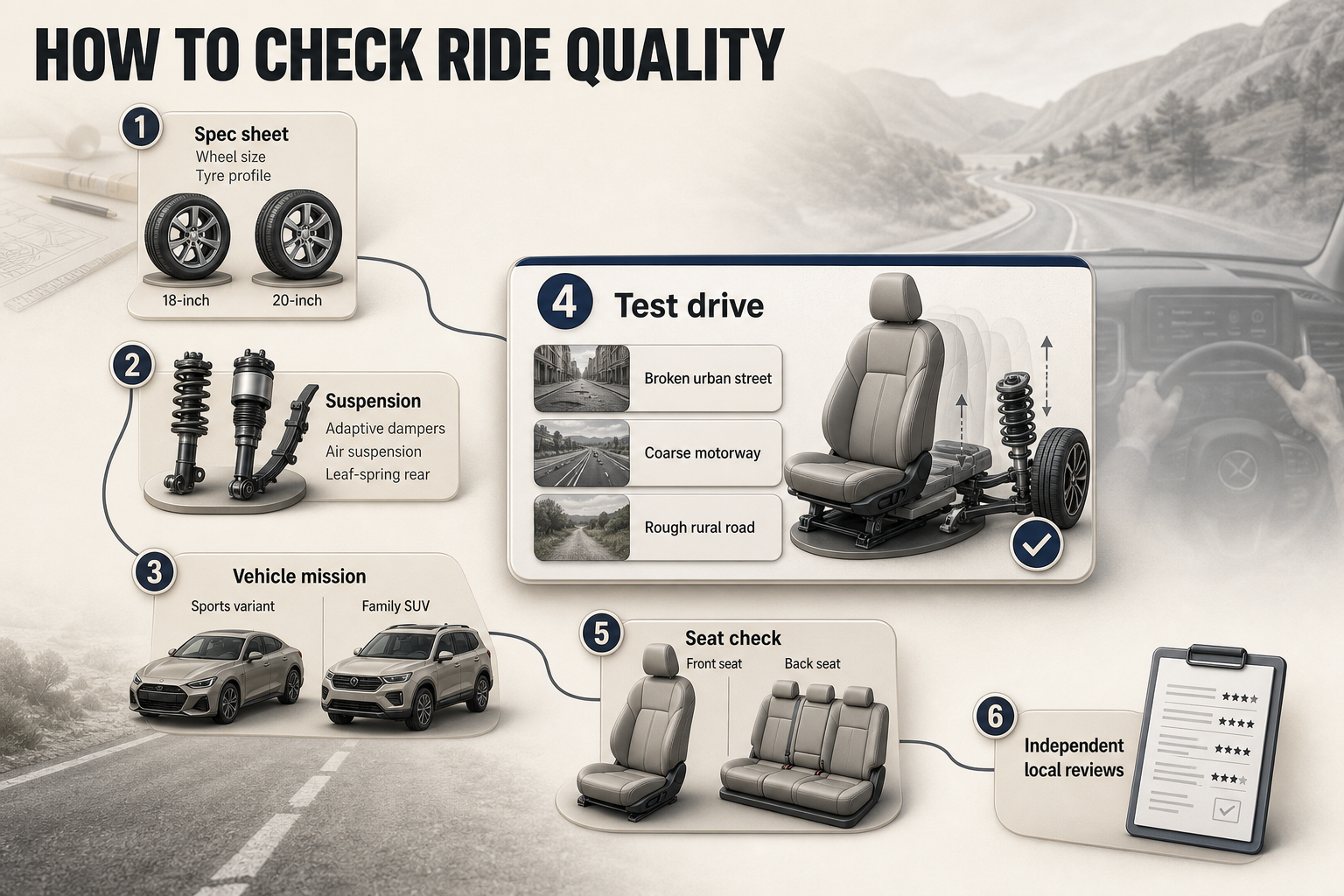
Pay attention to the back seat as well. Some vehicles feel acceptable in the front but much choppier in the rear, especially short-wheelbase SUVs and some seven-seaters. If you carry children, older relatives or adult passengers often, rear-seat comfort deserves as much attention as the driver’s seat.
Documentation helps too. Manufacturer material can tell you what hardware is fitted, but independent road tests are usually more useful because they describe what the car actually feels like on the move. For New Zealand buyers, local reviews are especially helpful because our road surfaces and speed limits differ from Europe, Japan and the United States. A car praised overseas for “sporty firmness” may feel simply too stiff on local chipseal.
NZ Context
Ride quality matters more in New Zealand than many buyers expect. Our road network includes everything from smooth urban motorway to coarse-seal state highways, frost-heaved rural roads and gravel access tracks. That means a car that feels fine in a city test drive can become noisy and tiring on a South Island holiday run or a weekly commute on imperfect regional roads.
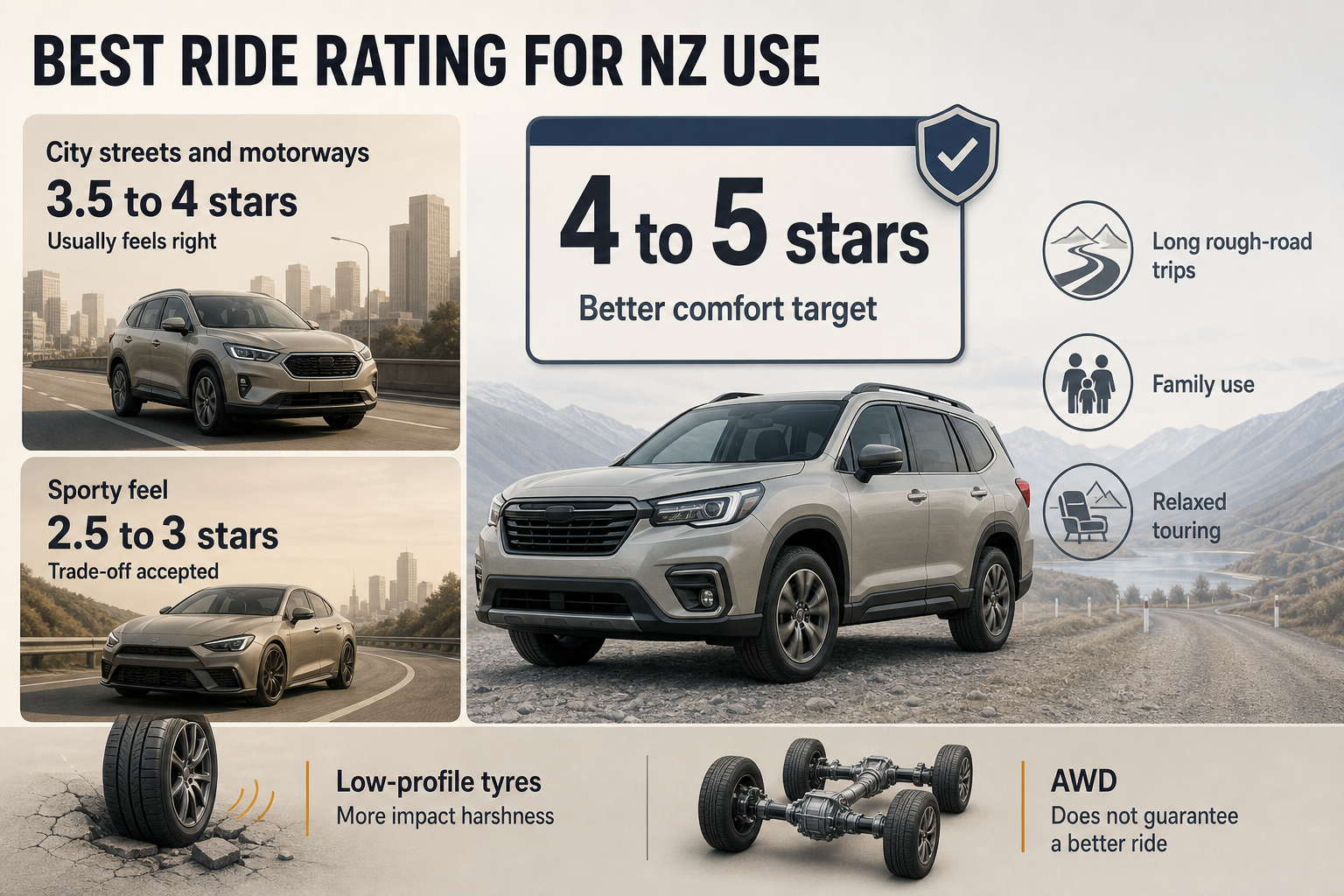
Tyres are a good example of the local trade-off. Low-profile tyres can sharpen steering feel, but they also expose you to more impact harshness and are more vulnerable to pothole damage. On many NZ roads, a slightly smaller wheel with more tyre sidewall is the better long-term choice for comfort, durability and replacement cost.
For buyers considering diesel, plug-in hybrid or electric vehicles, comfort should still be weighed alongside running costs. In New Zealand, diesel vehicles and light EVs pay road user charges, while petrol vehicles generally contribute through fuel excise built into pump prices. That means you should not assume an EV or diesel automatically makes sense on running costs alone. The better buying decision is the one that balances comfort, efficiency, your annual distance and your usual roads. (nzta.govt.nz)
If you are comparing SUVs for ski trips or rural use, do not assume all-wheel drive guarantees a better ride. Often the opposite can happen if the AWD version comes with larger wheels or sportier suspension. For Auckland, Wellington or Christchurch commuting, you probably do not need a firm, oversized-wheel SUV to feel secure in winter. Good tyres and sensible suspension tuning are usually more valuable than showroom stance.
Safety and comfort are separate things, but both matter in a family car. In New Zealand, vehicle safety information commonly comes from ANCAP, Used Car Safety Ratings and Vehicle Safety Risk Ratings, depending on the vehicle. A car can be safe but ride poorly, or ride beautifully but lag behind on active safety kit, so you need to assess both rather than assuming one guarantees the other. (nzta.govt.nz)
Consumer protection also matters if the ride is much worse than represented. If you buy from a dealer, the Consumer Guarantees Act gives protections around acceptable quality and fitness for purpose. That does not mean you can return a car just because you later decide the suspension feels firm, but it does mean dealer claims about condition and suitability should be taken seriously, especially on used imports and ex-fleet vehicles. (nzta.govt.nz)
The best way to use a ride quality rating is to match it to your life, not your image. If you spend most of your time on city streets and motorways, a 3.5 to 4-star ride will usually feel right. If you regularly drive long distances on rougher roads, carry family or want a more relaxed touring car, aim for 4 to 5 stars. If you genuinely enjoy a taut, sporty feel and accept the trade-off, a 2.5 to 3-star car may suit you fine. The mistake is buying a firm-riding car for looks, then living with it every day on roads that constantly remind you what you gave up.
You may also be interested in these independent articles
Sources
© 2026 pyfoi. All rights reserved.