
Car Audio Ratings Explained for NZ Buyers
Learn what car audio ratings really mean for NZ buyers, from speaker count to tuning. Find the best stereo for road noise, EVs and long trips.
A car’s audio system rating is a simple way to judge how good the sound is likely to be, from a basic setup that just plays radio clearly through to a genuinely premium system with strong bass, clean detail and even surround processing. For New Zealand buyers, it matters more than many people expect because a lot of our driving involves longer open-road trips, patchy surfaces, road noise and plenty of time behind the wheel.
A good audio system will not make a bad car good, but it can make your daily commute, family holiday run and weekend road trip far more pleasant. It is also one of those features that is hard and expensive to upgrade properly after purchase, especially in newer cars with tightly integrated screens and vehicle settings.
What Goes Into the Rating
A 1 to 5 star audio rating usually comes down to five things: speaker count, speaker placement, amplifier power, whether there is a subwoofer, and whether the system has been properly tuned by either the car maker or a specialist audio brand. Premium branded systems from names such as Harman Kardon, Bose and Meridian are common examples of higher-end factory setups, and they often add digital signal processing, centre speakers and surround-style sound modes. (news.harman.com)
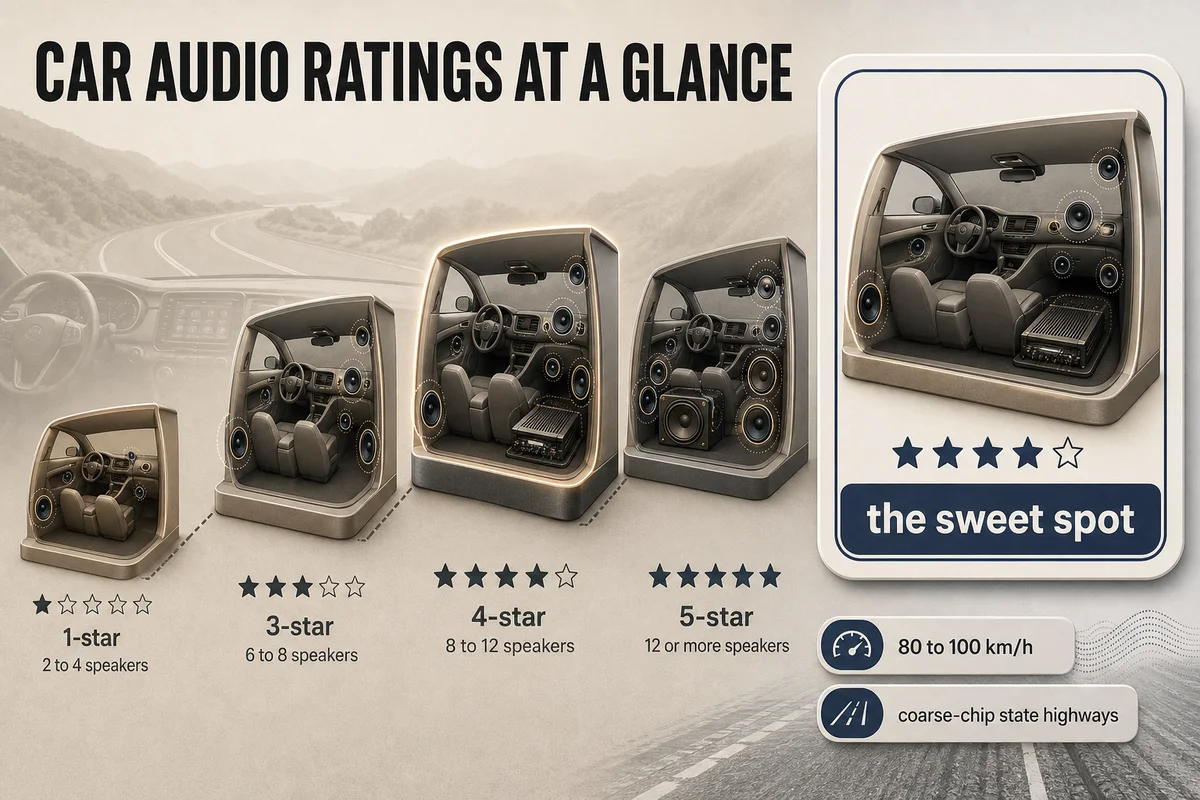
A 1-star system is the sort of setup you find in an entry-level older hatch or base-model commercial van. Think 2 to 4 speakers, no subwoofer, limited clarity at motorway speed and little bass. It may be fine for talkback radio, podcasts and the school run, but music tends to sound flat and thin.
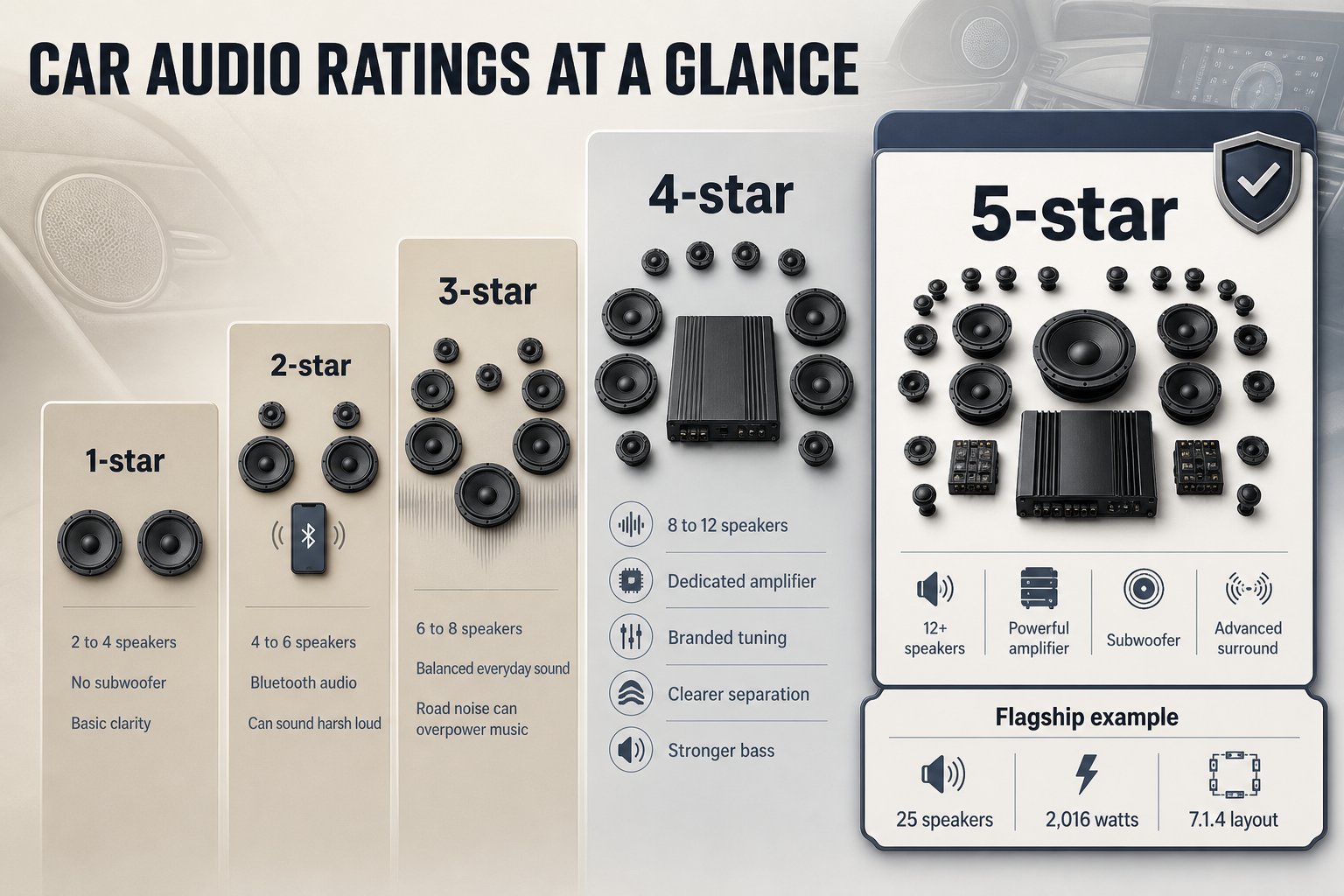
A 2-star system is still basic, but a step up. You may get 4 to 6 speakers, Bluetooth audio and a more usable head unit, yet the sound can still become harsh when you turn it up. This is common in cheaper trims where the cabin tech looks modern but the actual speaker hardware is modest.
A 3-star system is average, and for many buyers it is enough. Expect around 6 to 8 speakers, decent smartphone integration and acceptable balance between vocals, treble and bass. It will usually cope well with everyday Auckland, Wellington or Christchurch driving, though you may notice road and tyre noise overpowering the music on coarse-chip state highways.
A 4-star system is where things start to feel properly premium. These setups often use a known audio brand, around 8 to 12 speakers, a dedicated amplifier and better tuning across the cabin. The result is clearer separation between instruments, stronger bass and less distortion at volume. Harman Kardon systems in newer cars, for example, often pair a dozen or more speakers with dedicated amplification and surround processing. (news.harman.com)
A 5-star system is exceptional. Here you are looking for 12 or more speakers, a powerful amplifier, a subwoofer, carefully placed tweeters and mid-range drivers, and often advanced surround or immersive formats. Some flagship systems go much further, with 20-plus speakers and amplifier outputs above 1,000 watts. Meridian, for instance, has recently detailed a 25-speaker, 2,016-watt automotive system with a 7.1.4 layout in a luxury EV. (meridian-audio.com)
The rating should not be based on brand name alone. A branded system is usually a good sign, but tuning matters just as much. A well-engineered 8-speaker system can sound better than a poorly tuned 12-speaker one. Cabin design also changes the result. A small hatchback may sound punchier with fewer speakers because there is less space to fill, while a seven-seat SUV needs more hardware to give rear passengers similar sound quality.
What to Look For
Start with the spec sheet, but do not stop there. Count the speakers, check whether there is a subwoofer, and see if the system is branded. If the listing simply says “premium audio” with no details, ask the dealer for the exact speaker count and whether there is a separate amplifier. Many manufacturers use the same model name across multiple trims, and the audio can vary a lot between them.
The best test is still your own ears. When you test drive, bring music you know well, not just a random radio station. Use a track with vocals, bass and quieter detail. Listen at city speed and then again at 80 to 100 km/h. New Zealand’s chipseal roads can add a lot of tyre roar, so a system that sounds rich in a yard or urban street can feel weak once you are out on the motorway.
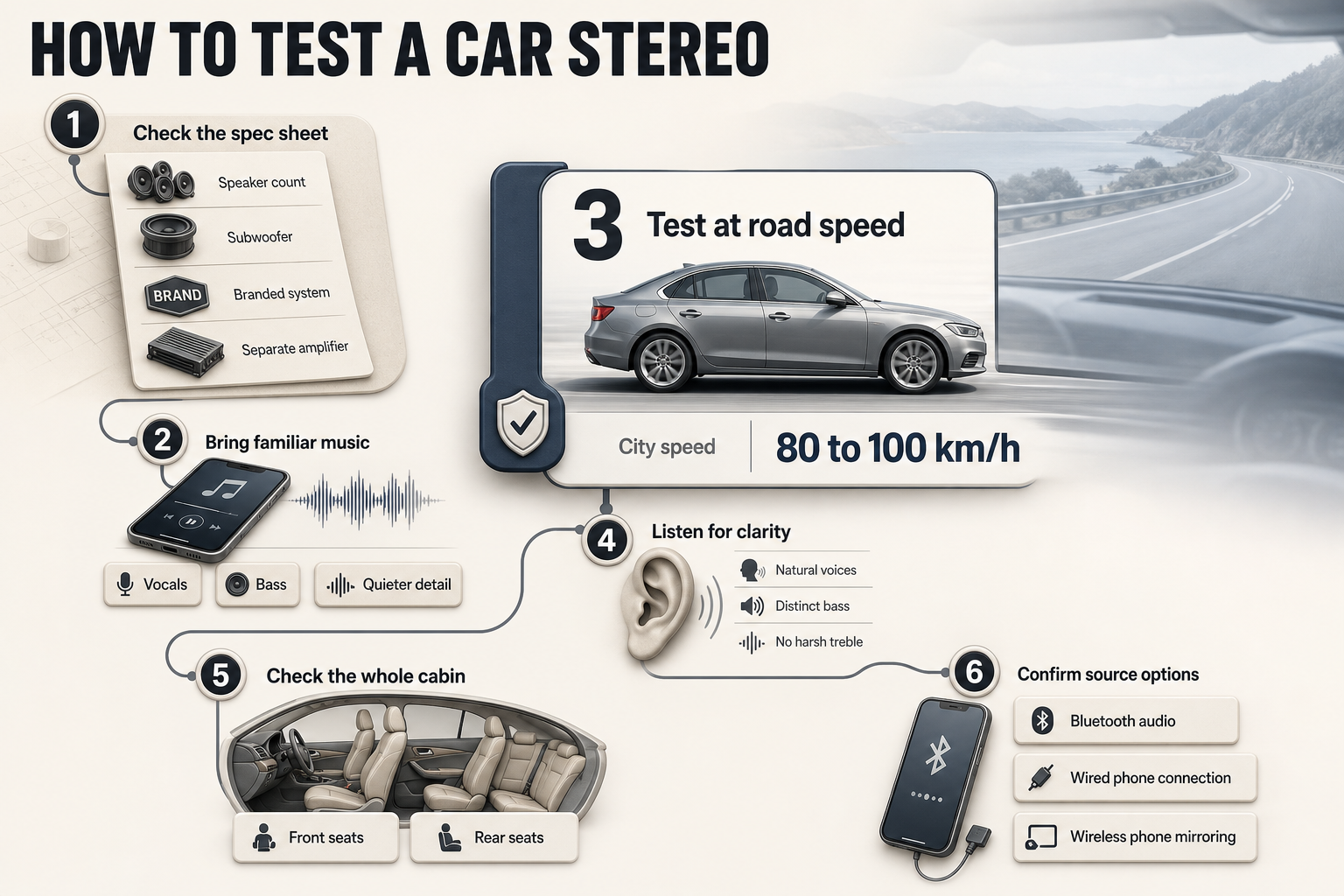
Pay attention to clarity rather than just volume. A poor system can sound loud but messy, with sharp treble and muddy bass. A better one stays composed as you turn it up. Voices should sound natural, bass notes should be distinct rather than boomy, and the sound should not collapse toward the front seats only. If rear passengers matter in your household, sit in the back and listen from there too.
Also check the source options. Bluetooth audio is now standard in most modern vehicles, but wired smartphone connections, wireless phone mirroring and higher-quality streaming support can make a noticeable difference in day-to-day use. If you spend hours driving between Hamilton and Tauranga or heading south from Christchurch to Queenstown, ease of use matters almost as much as raw sound quality.
Be careful with used imports and older NZ-new cars. Factory audio specs are not always easy to verify, and some imported vehicles have had head units swapped to suit local radio frequencies or add English-language infotainment. That can improve usability, but it can also remove original features or change sound quality. If the system has been modified, ask who did the work and whether steering wheel controls, reversing cameras and factory amplifiers still function properly.
Documentation matters more on premium systems. If a used European SUV advertises Burmester, Meridian or Harman Kardon audio, ask for the original brochure, VIN-based build sheet or dealer confirmation. Premium audio can add real value, but only if the car actually has it.
NZ Context
In New Zealand, audio quality is shaped by the sort of driving many of us do. Open-road cruising, coarse road surfaces, strong crosswinds and long holiday trips all raise cabin noise, which means a merely average stereo can sound disappointing outside town. That is why a 4-star system often feels like the sweet spot for buyers who regularly drive State Highway 1, tow a small trailer, or head away for summer and ski weekends.
If you are buying an EV, the quieter drivetrain can make audio differences more obvious. You hear less engine noise, so a premium system can sound especially good in a battery electric car. At the same time, EV ownership costs in New Zealand now include road user charges for light EVs and plug-in hybrids, so some buyers may choose a lower trim to manage budget and then wonder whether the downgraded stereo is worth the saving. (nzta.govt.nz)
Your legal protections matter too. If you buy from a dealer in New Zealand, the Consumer Guarantees Act applies and goods must meet acceptable quality standards. That does not mean a basic stereo must sound premium, but it does mean advertised features should work properly, and a dealer cannot dodge their obligations just because a manufacturer warranty is shorter or optional. (consumerprotection.govt.nz)
Do not confuse audio ratings with safety ratings. ANCAP’s star ratings are based on crash protection and safety assist categories, not entertainment features, so a five-star safe car can still have a very ordinary stereo. If you are comparing trims, treat safety and audio as separate checks. (ancap.com.au)
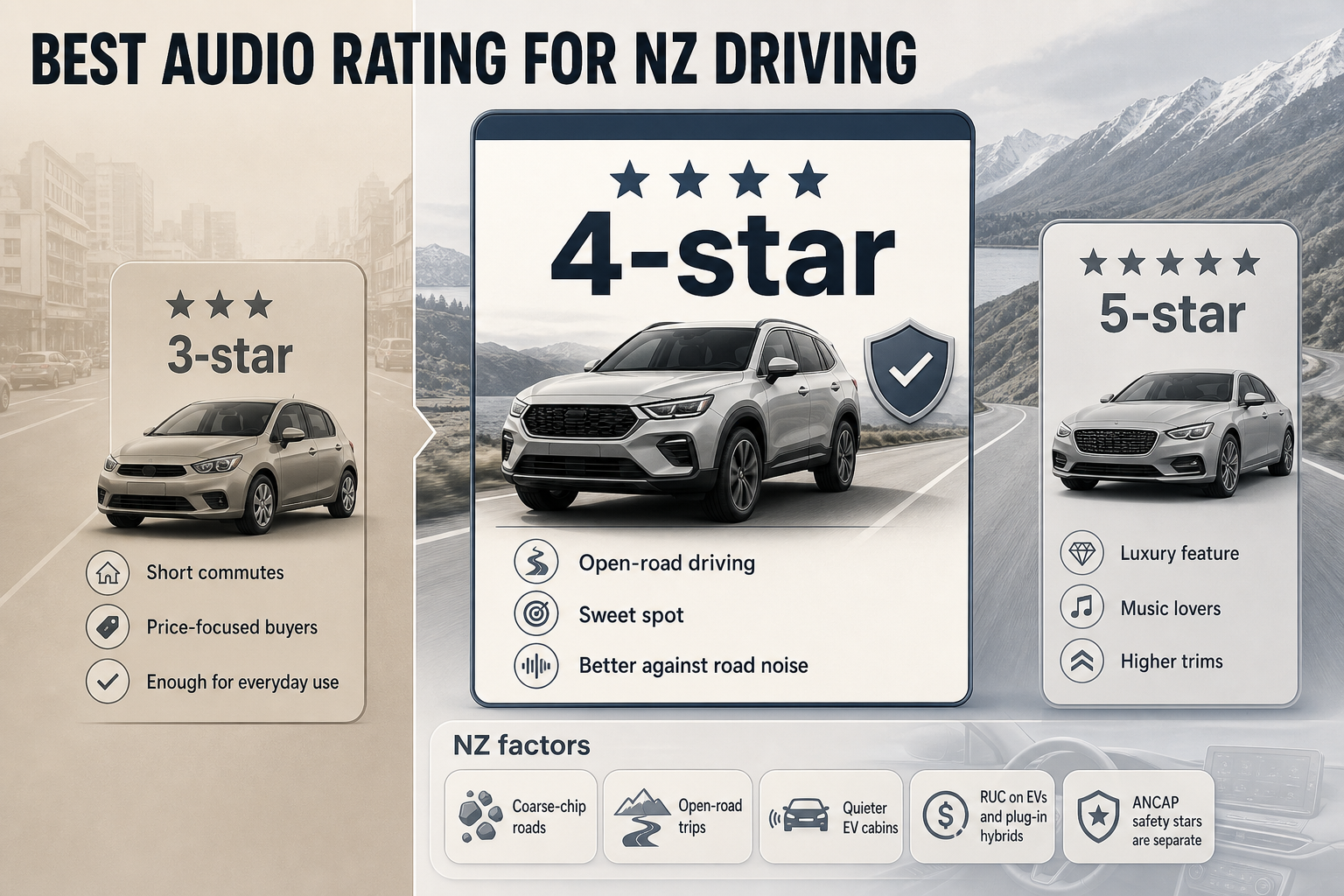
For most NZ buyers, the smart approach is simple. A 3-star system is enough if you mainly commute short distances and care more about price, fuel use and service costs. A 4-star system is the best fit if you do regular open-road driving and want your car to feel a bit more special every day. A 5-star system is a luxury feature, best appreciated if you genuinely love music, spend long hours on the road, and are already shopping in higher trims where the rest of the car matches the audio quality.
You may also be interested in these independent articles
Sources
- [1]Consumer Protection NZ, Consumer Guarantees Act
- [2]Consumer Protection NZ, Warranties
- [3]Consumer Protection NZ, Solving issues with your car dealer
- [4]NZ Transport Agency, Road user charges
- [5]NZ Transport Agency, EVs and PHEVs to start paying RUC from 1 April 2024
- [6]ANCAP, Assessment Protocol Overall Rating
- [7]HARMAN, BMW 5 Series Harman Kardon system
- [8]HARMAN, Polestar 2 Harman Kardon system
- [9]Meridian Audio, AVATR 12 premium sound system
© 2026 pyfoi. All rights reserved.