
What a Vehicle Noise Rating Means in NZ
Learn what a vehicle noise rating really means for NZ buyers, from chipseal road noise to wheel size and EV cabin noise, before you buy.
A vehicle noise rating is a simple way of describing how quiet a car feels inside when you drive it. For New Zealand buyers, that matters more than many people expect, because our roads often include coarse chipseal, open-road cruising, wind exposure and long holiday drives that can turn a noisy cabin into a daily annoyance. (nzta.govt.nz)
What a vehicle noise rating measures
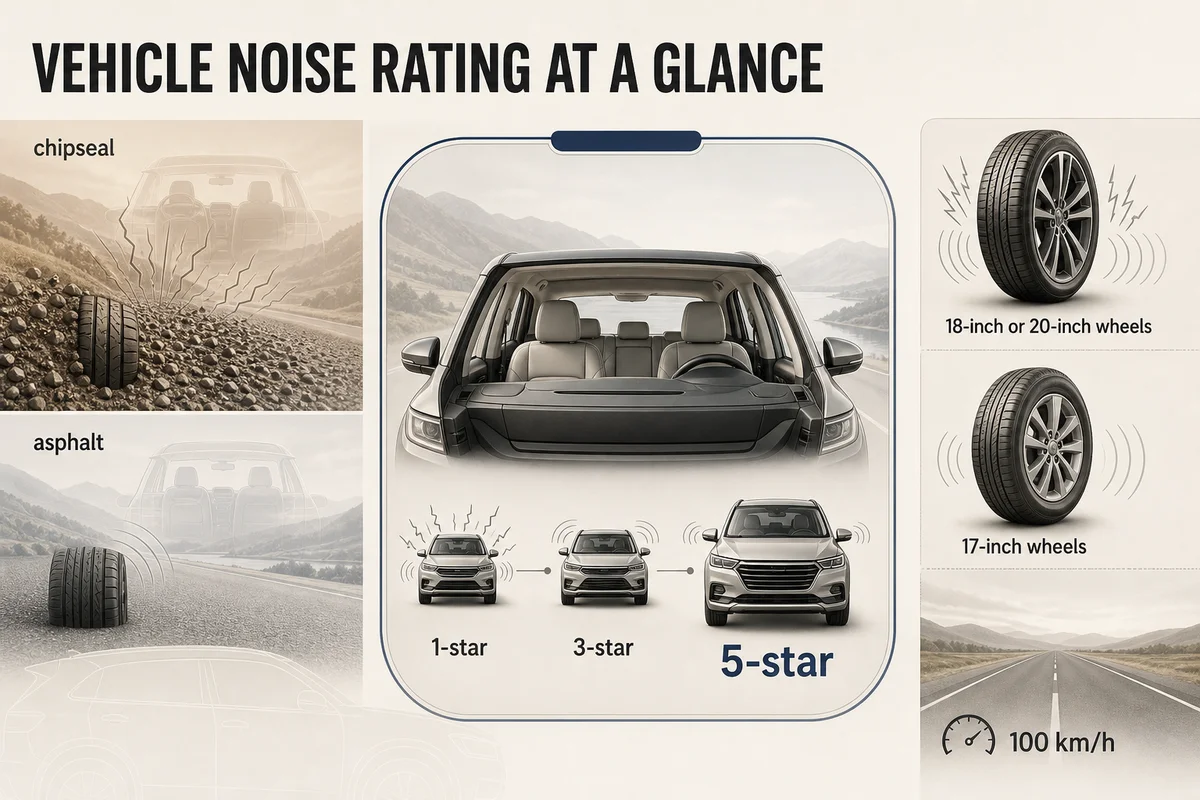
A noise rating usually reflects cabin quietness rather than how loud the car sounds from outside. In plain terms, it is about how much tyre roar, wind rush, engine noise and vibration reach you and your passengers while driving. A higher star score generally means the vehicle feels calmer at urban speeds, more relaxed at 100 km/h, and less tiring on longer trips.
This is not a universal legal standard in the way ANCAP is for crash safety. Different publishers and data providers may calculate a noise rating in different ways, using road tests, instrument readings, or a mix of objective measurements and reviewer judgement. That means a 4-star noise score is best used as a comparison tool within the same platform or website, rather than as an absolute industry-wide benchmark. ANCAP’s published protocols cover safety assessment, not cabin-noise comfort, so you should not assume a 5-star ANCAP vehicle will also be especially quiet. (ancap.com.au)
What goes into the rating
The biggest factor is road-surface noise. In New Zealand, that is especially important because chipseal is the most common road surface, while asphalt is smoother and produces less road noise. A car that seems acceptably quiet on fresh urban asphalt can feel much louder on a Waikato, Canterbury or Hawke’s Bay open road finished in coarse chipseal. (nzta.govt.nz)
Tyres play a major role too. Larger wheels with low-profile tyres often look smart, but they can add more impact harshness and tyre roar. That is why two variants of the same model can have noticeably different noise levels if one runs 18-inch or 20-inch wheels and the other uses smaller rims with taller tyre sidewalls. In many cases, the more expensive trim is not the quieter one.
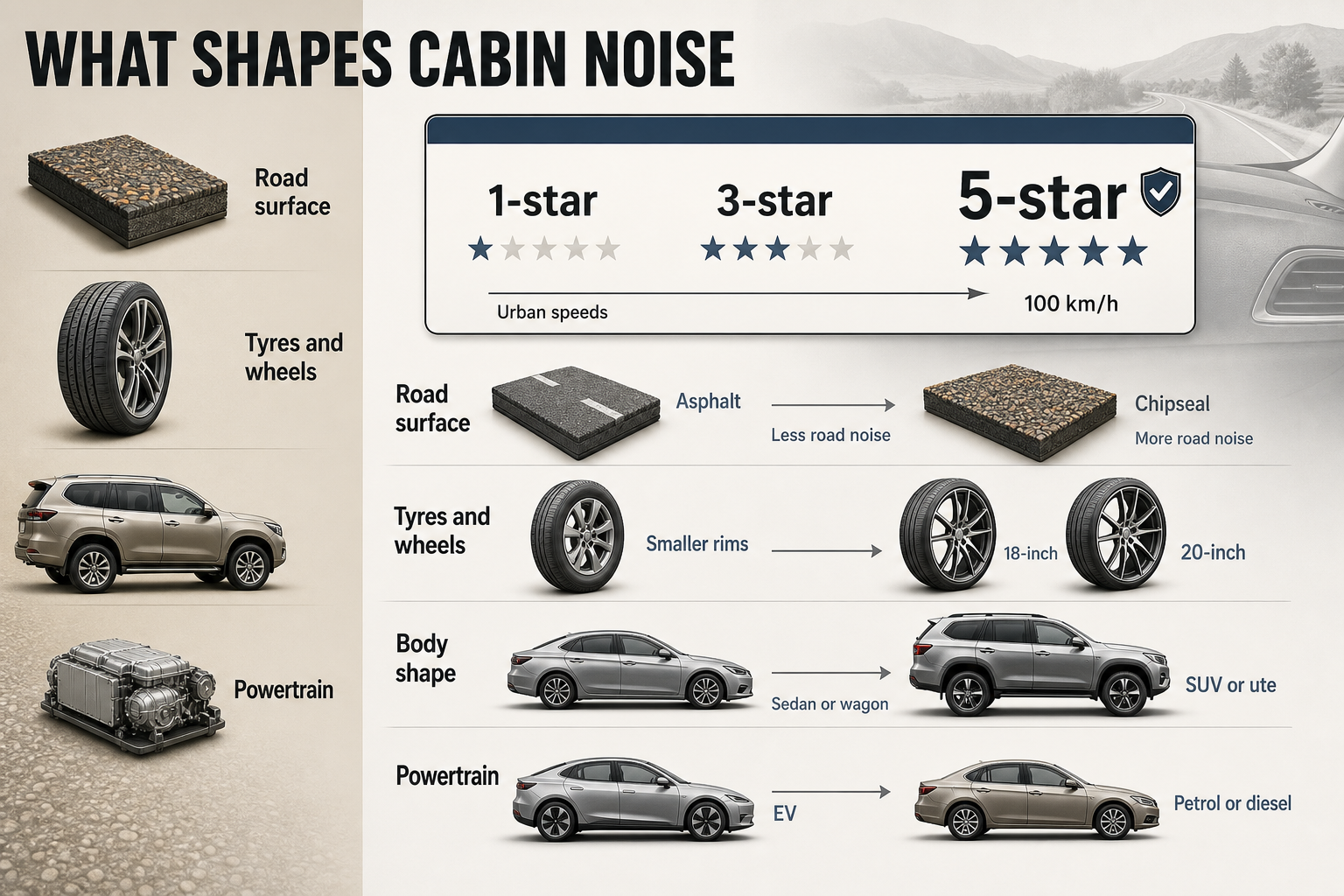
Body shape matters as speed rises. Tall SUVs and utes can generate more wind noise around mirrors, roof rails and upright tailgates than a lower sedan or wagon. Electric vehicles also change the noise picture. With no conventional engine masking background sounds, tyre and wind noise can become more obvious, especially on rough New Zealand surfaces. Waka Kotahi has also published research on the low external noise of electric buses and the role of acoustic alerting at low speeds, which highlights how EV quietness can create both comfort benefits and safety considerations. (nzta.govt.nz)
A 1-star noise rating usually points to a cabin where road and wind noise are obvious most of the time, and conversation on the motorway needs raised voices. A 3-star vehicle is acceptable for many buyers, but you will still notice coarse-seal roar and some fatigue on longer journeys. A 5-star vehicle generally has better insulation, better sealing, more refined tyres and stronger suppression of vibration, so it feels settled and expensive even if the badge is not premium. This star breakdown is an interpretation of how rating systems are commonly used, rather than a single official New Zealand standard.
What to look for
Start by asking where and how you actually drive. If most of your week is short urban trips in Auckland, Wellington or Christchurch, noise may matter less than if you regularly do Tauranga to Auckland, Christchurch to Queenstown, or a weekly run on rural state highways. Cabin noise becomes far more important once you spend hours at 80 to 100 km/h.
During a test drive, do not stay only on smooth dealer-loop roads. Try a section of coarse chipseal if possible, because that is where differences become obvious. Listen separately for tyre roar from below, wind noise around the A-pillars and mirrors, and engine noise under acceleration. If the car is a hybrid or EV, pay even closer attention to tyre and wind noise, because the quiet powertrain can make those sounds stand out more.
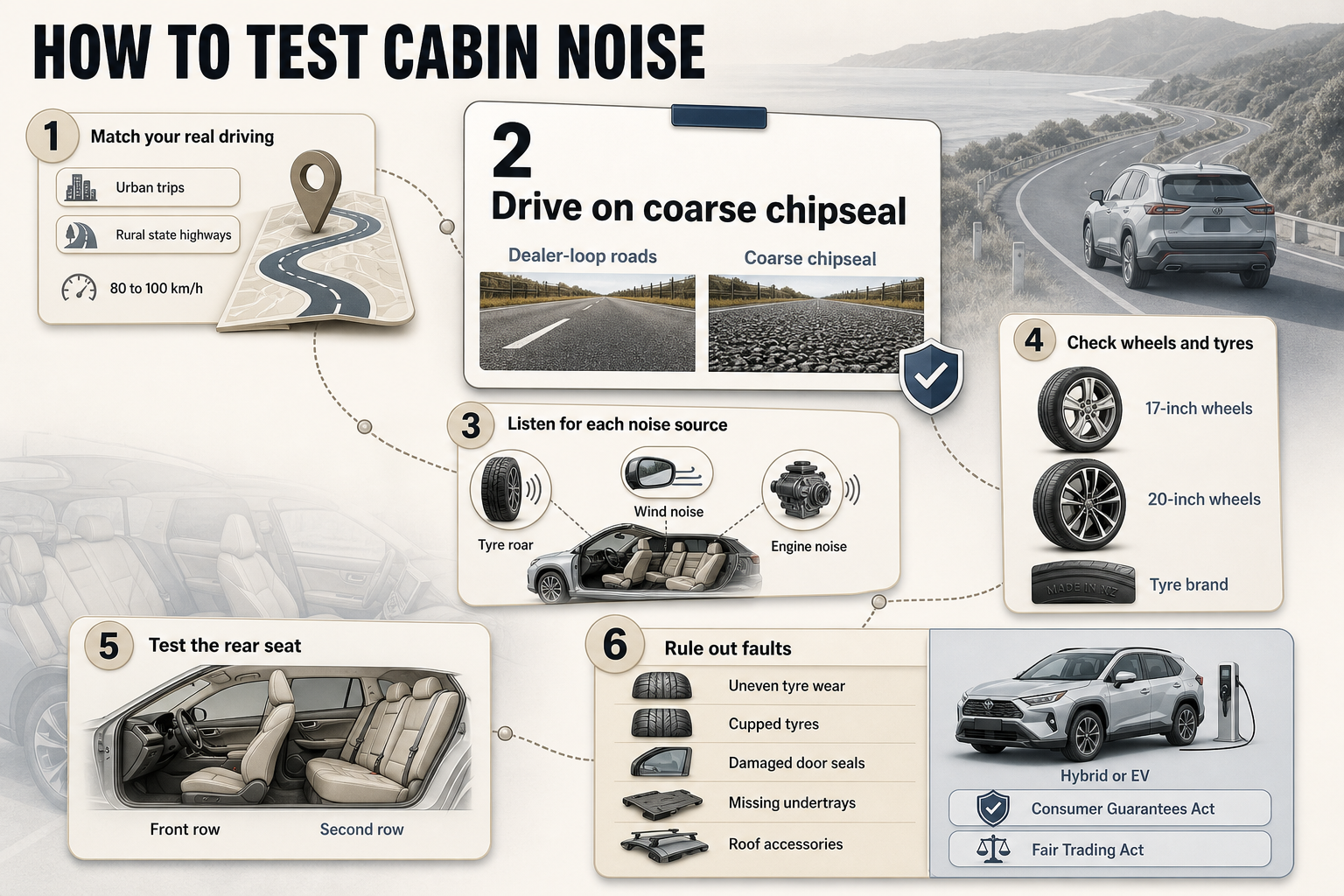
Ask which wheel and tyre package the review score applies to. This is one of the easiest ways to be misled. A model praised for refinement on 17-inch wheels may be less comfortable and noisier in a sports trim with 20-inch wheels. If you are buying used, check the exact tyre brand fitted as well. Cheap replacement tyres can make a previously quiet car sound coarse and hollow.
Rear-seat noise matters if you carry family. Some vehicles are reasonably hushed in the front but much louder in the second row, especially seven-seat SUVs and vans where passengers sit closer to the rear wheel arches. On a family test drive, sit in the back yourself for part of the route. If children regularly sleep in the car, a quiet cabin is not a luxury feature. It is part of everyday usability.
Also check for signs of abnormal noise that suggest a fault rather than a poor rating. Uneven tyre wear, cupped tyres, damaged door seals, missing undertrays and roof accessories can all add noise. If a dealer describes a vehicle as refined or quiet and it clearly is not, New Zealand consumer law may matter. Under the Consumer Guarantees Act, goods sold by businesses must be of acceptable quality, and the Fair Trading Act prohibits misleading claims about a product’s characteristics or quality. (consumerprotection.govt.nz)
NZ context
New Zealand conditions make noise ratings more relevant than they may appear in overseas reviews. Waka Kotahi states that asphalt produces a low level of road noise, while chipseal is common across New Zealand, and its research notes that local road surfaces can materially influence traffic noise levels. That means a car praised in a UK or European test may not feel as quiet here as you expect. (nzta.govt.nz)
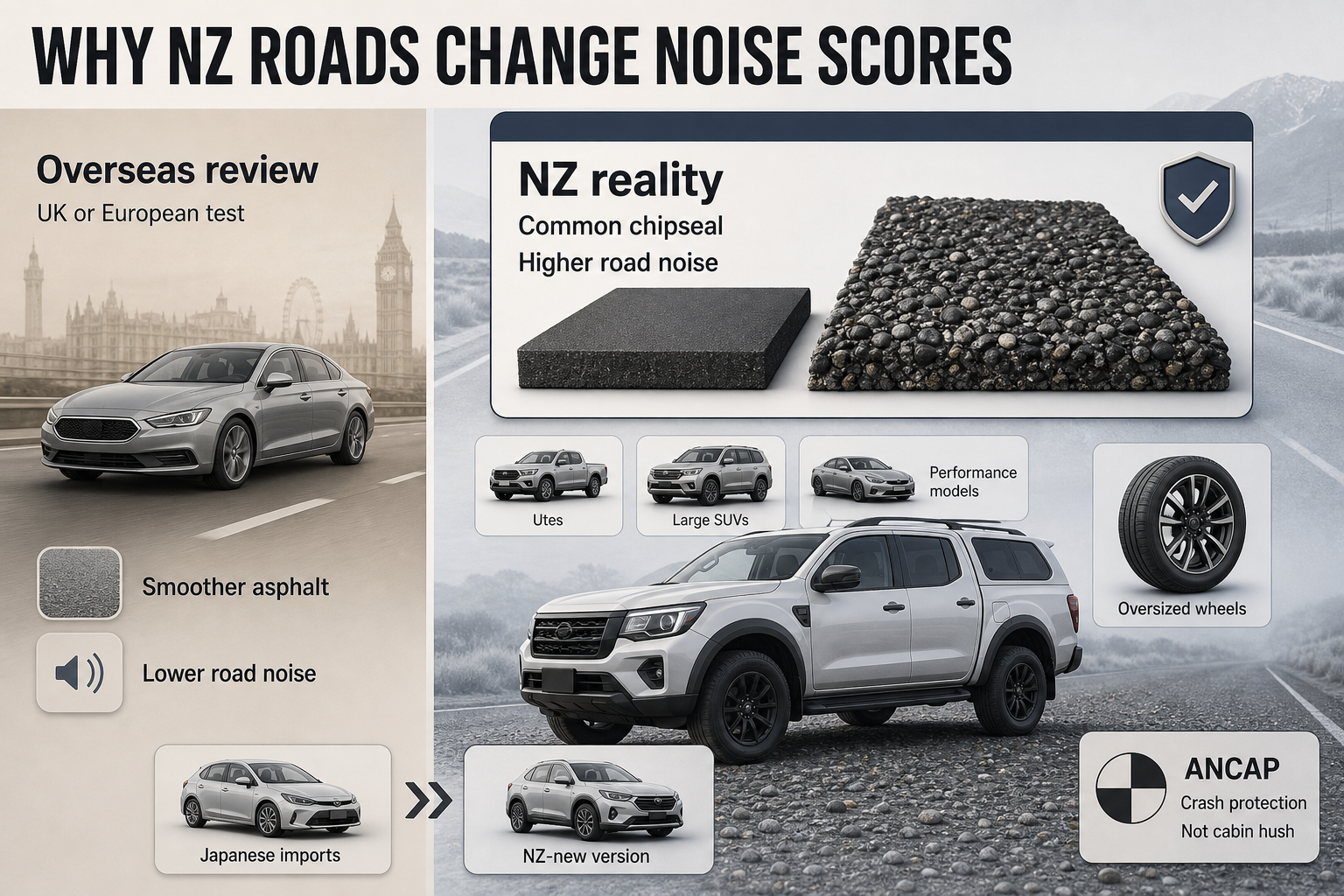
This is especially true for utes, large SUVs and performance models on oversized wheels. They may suit towing, gravel roads or ski-trip duties, but they often pay for that ability with more cabin noise. If you regularly drive on South Island highways, Northland back roads or rural Bay of Plenty routes, a strong noise rating can be as valuable as a fancy stereo because it reduces fatigue over distance.
There is also a used-import angle for NZ buyers. Japanese imports can be excellent value, but trim levels, tyre choices and sound insulation can vary more than many shoppers realise. You should never assume a model name alone guarantees the same refinement as a New Zealand-new version. Compare the exact variant and drive it on the sort of road you use every week.
Finally, remember that noise comfort sits outside the headline ratings most people know. ANCAP tells you about crash protection, not cabin hush. A warranty can help with faults, but it does not turn a fundamentally noisy design into a quiet one. If a calm cabin matters to you, treat the noise rating as a real buying factor, then confirm it with a proper NZ test drive on the right road surface. (consumerprotection.govt.nz)
You may also be interested in these independent articles
Sources
- [1]Waka Kotahi NZ Transport Agency: Road surface
- [2]Waka Kotahi NZ Transport Agency: Road surfacing
- [3]Waka Kotahi NZ Transport Agency: Research Report 292 Road traffic noise
- [4]Waka Kotahi NZ Transport Agency: Noise and vibration research
- [5]Consumer Protection NZ: Consumer Guarantees Act
- [6]Consumer Protection NZ: Solving issues with your car dealer
- [7]Consumer Protection NZ: Fair Trading Act
- [8]ANCAP: Vehicle Selection, Specification, Testing and Retesting Protocol
© 2026 pyfoi. All rights reserved.