
Does oral glutathione lighten skin? What the trials actually show
Does oral glutathione lighten skin? Trials suggest only modest short term changes for some users. See what the evidence actually shows.
Say you're catching up over coffee and a friend swears her new supplement has brightened her skin. She flashes a before-and-after, quotes a milligram number, and calls it "clinically backed". By the time you've drained your flat white you're half-decided to order a bottle of oral glutathione yourself. That call, made on a phone over a coffee, is where a lot of skin journeys begin. It's also where they can quietly go wrong.
So is oral glutathione a proven skin whitener?
Here's the shift most buyers miss. The handful of studies people point to didn't test a promise. They tested an ingredient, briefly, in a small group, and measured colour with an instrument rather than asking whether anyone noticed in real life. Treating that as proof of a reliable shade change is like hiring someone off a single glowing reference from one short work trial: a few good weeks tell you almost nothing about the long haul.
So the better questions aren't "how many milligrams?" or "is it liposomal?" They're: how big was the change, and did it hold after stopping? Was my exact product tested, or only the raw ingredient? And who actually responded, people like me, or a narrow group in one study?
What do the glutathione trials actually show?
Not much, and not for long. When you line the research up, the picture is thin:
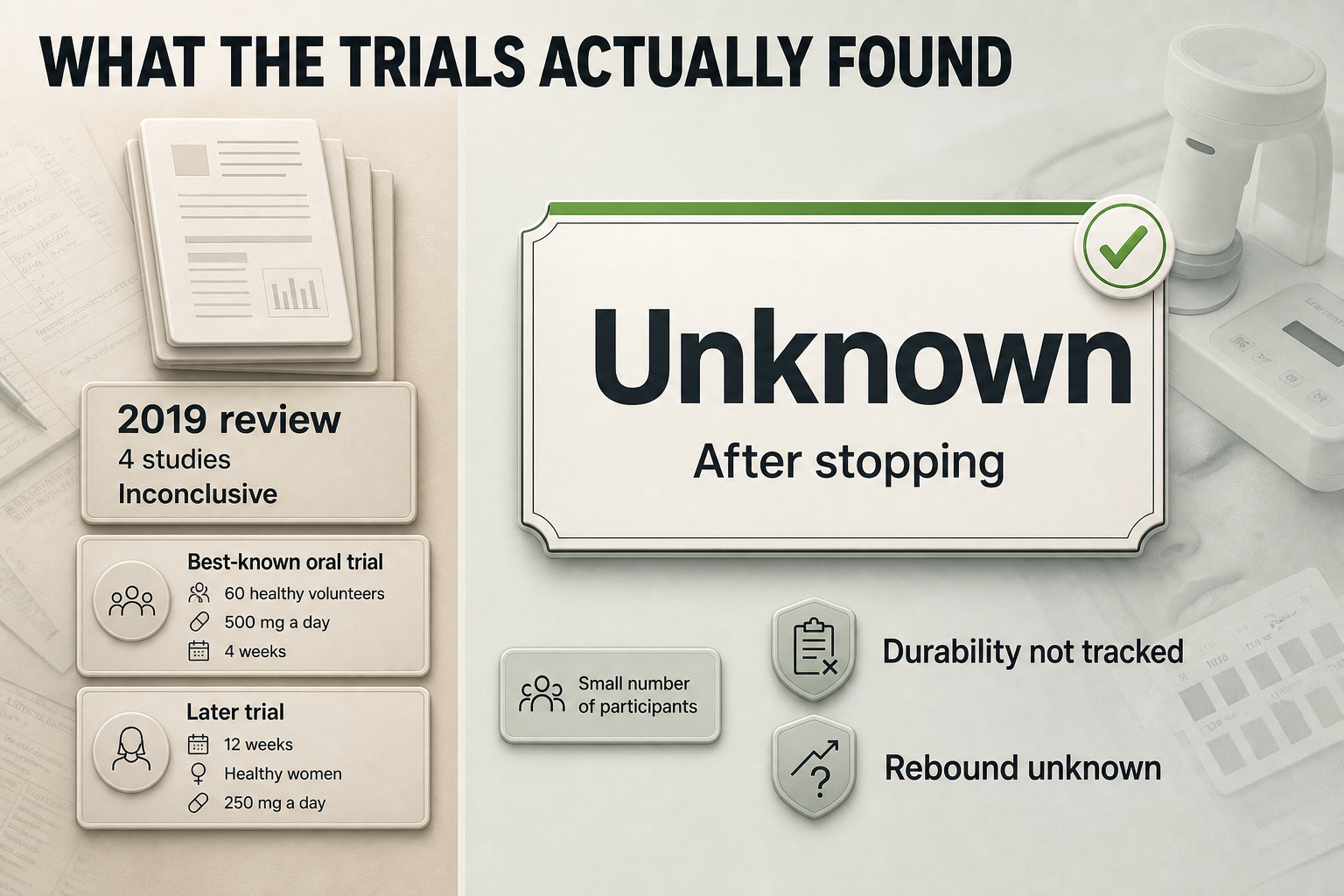
- A 2019 systematic review gathered every eligible clinical study and found just four. Its verdict: the evidence for a skin-whitening effect was inconclusive, because the studies were few, small and inconsistent [1].
- The best-known oral trial gave 60 healthy volunteers 500 mg a day or placebo for four weeks. Its own cautious conclusion was lightening in a small number of participants, not a broad or dramatic shift [2][4].
- A later 12-week trial in healthy women, at 250 mg a day, found a modest drop in melanin readings at some sites versus placebo. Measurable, but nowhere near transformative [3].
- None of these trials tracked what happens once you stop. Durability, rebound, whether the effect fades in a fortnight: all unknown [1][2][3].
That gap between "possible modest effect" and "guaranteed glow" is the whole story.
What could three months of glutathione cost you?
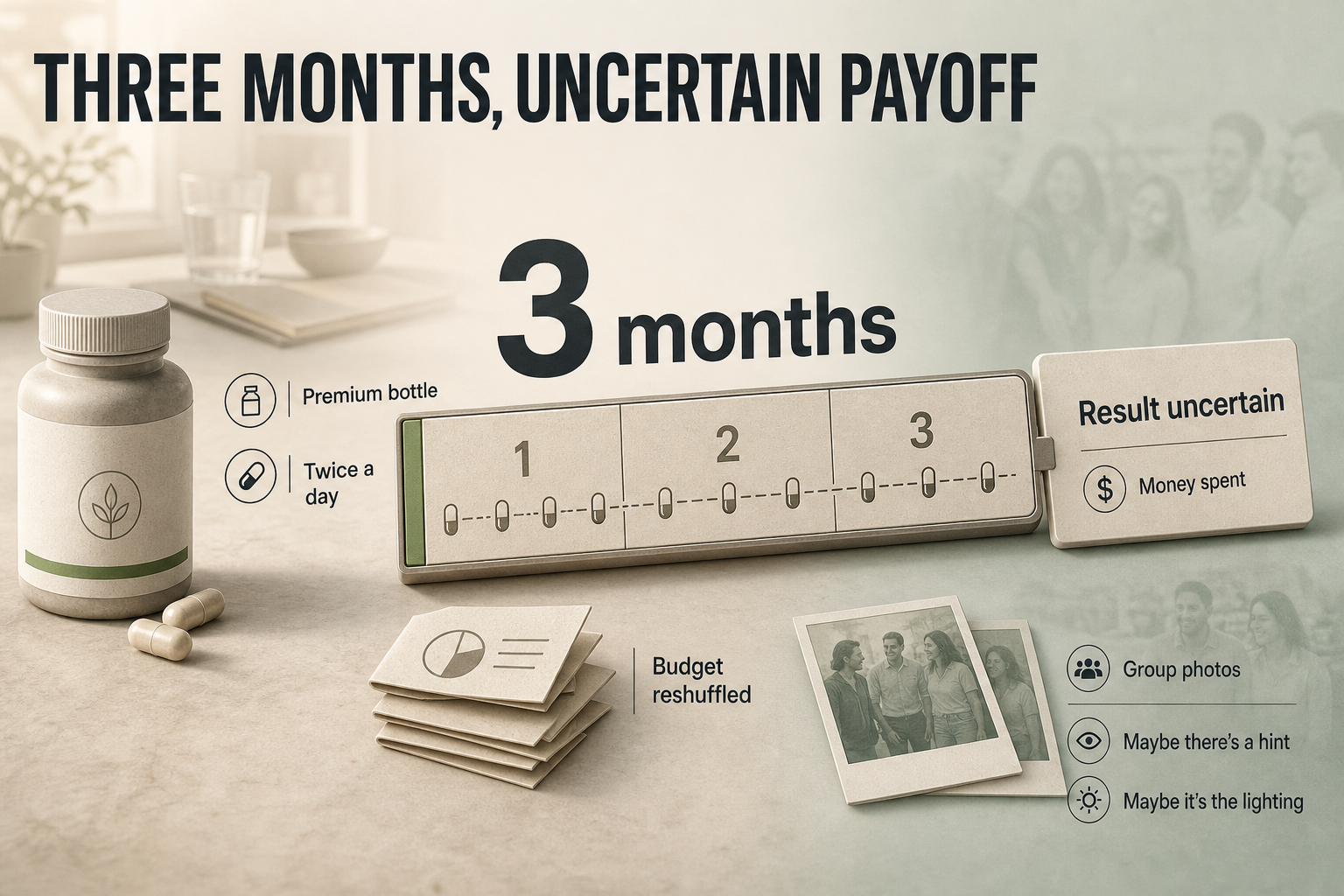
Take a wedding you've circled on the calendar. Say you start a premium bottle in autumn, telling yourself the change will land by spring. You take it faithfully, twice a day, and quietly rebuild the budget around it, because the good capsules aren't cheap. Three months on you line the group photos up against last year's, tilt your head, and honestly can't tell. Maybe there's a hint. Maybe it's the lighting.
Meanwhile the money's gone, and so is the small daily hope you'd pinned to it. The sting isn't only the spend. It's having chased a certainty the evidence never offered.
How should you weigh up oral glutathione?
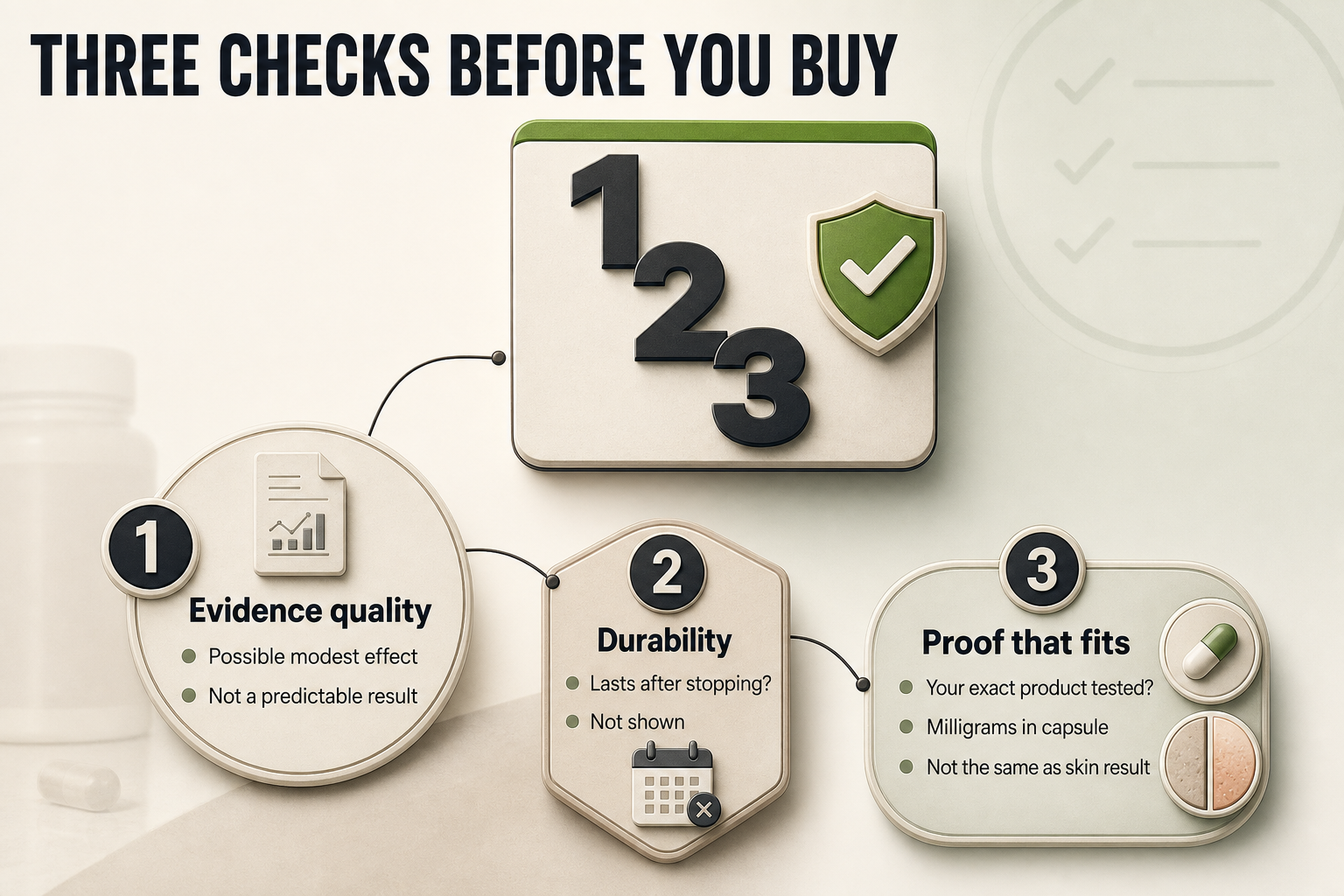
You don't need a lab to make a smarter call. Weigh three things. First, evidence quality: is anyone promising a predictable result, or honestly admitting it's a possible modest effect in some people? Second, durability: nobody has shown the change lasts after you stop, so plan for that blank before you spend. Third, proof that fits: absorption figures and milligram counts describe what's in the capsule, not what happens to your skin. Doing nothing but trusting the marketing isn't neutral here. It's how you end up paying premium prices for certainty that doesn't exist.
How can you buy oral glutathione without regret?
Reset your expectations to match the evidence. Treat oral glutathione as, at most, a possible small short-term brightening for some users, not a guaranteed shade change. If a seller or creator promises a predictable result from their specific product, that promise is running ahead of what's been shown. No retail product in this category has a published trial on its own formulation [1][4].
Run it as a time-boxed personal test, not an open-ended habit. Photograph your starting point in consistent daylight, set a clear end date around 12 weeks, and here's the part people skip: keep checking for a month or two after you stop, to see whether anything you noticed actually lasts. Judge the result against your own before-and-after, not the number on the label.
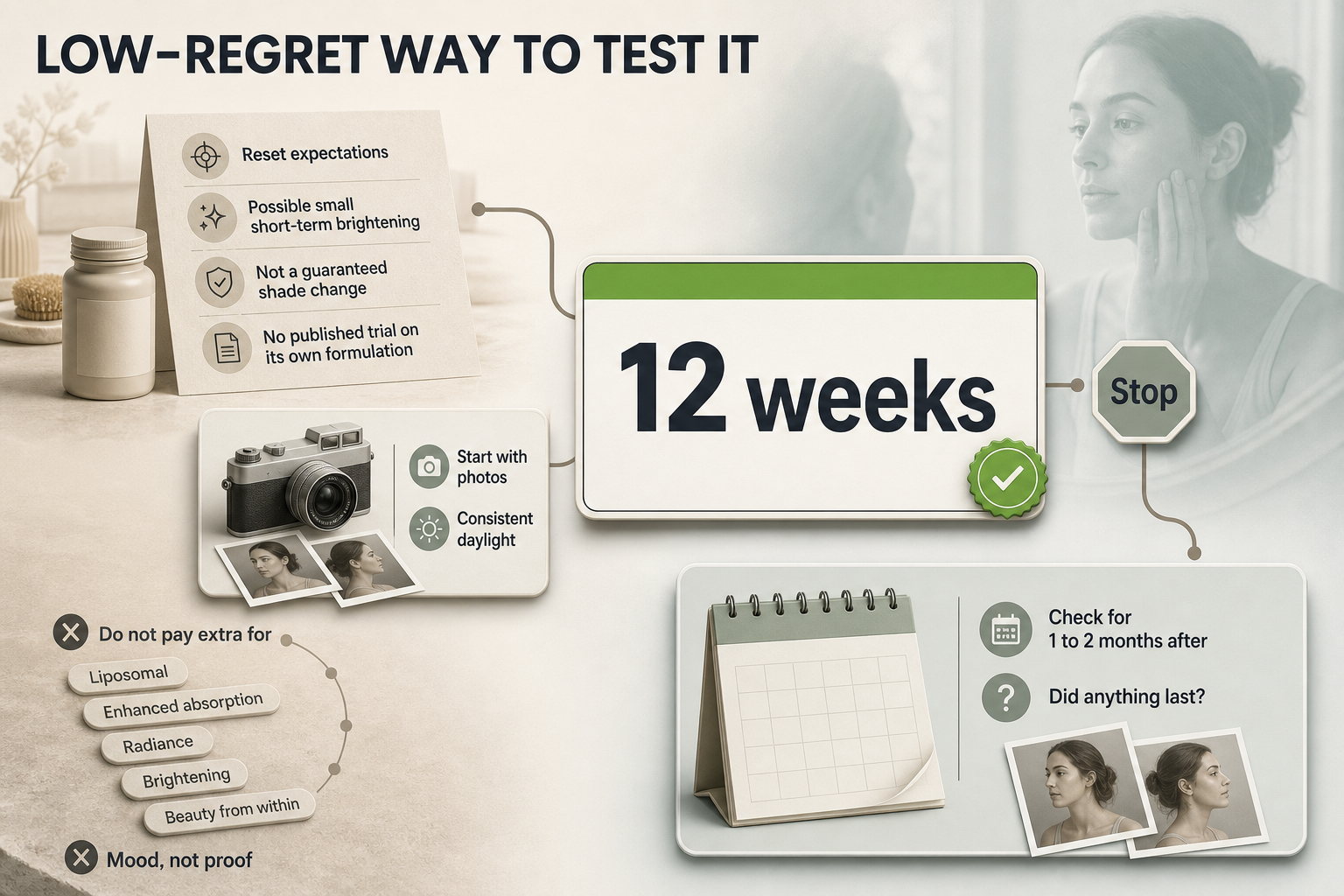
Don't pay a premium for the wrong reason. "Liposomal", "enhanced absorption" and bigger doses describe delivery, and better absorption still isn't the same as a proven cosmetic result [5]. If the extra money buys a format you'll genuinely stick with, fair enough. If it's buying an implied outcome, you're overpaying. The same caution applies if you're rationalising the purchase through "liver support" or "antioxidant" perks; in healthy people, that evidence is mixed and largely unproven too [6][7][8].
One last local note. Because NZ and Australian rules limit hard therapeutic claims, sellers lean on soft language like "radiance", "brightening" and "beauty from within" [9][10][11]. Read those as mood, not proof. Go in curious, keep your receipt logic honest, and let your own eyes over 12 weeks, not a stranger's before-and-after, decide whether it earns a repeat.
What the brands say
These brands have chosen to respond directly to this independent research. We publish brand responses unedited because we believe transparency builds trust - and that brands willing to engage openly with independent analysis deserve to be heard.
You may also be interested in these independent articles
Sources
- [1]PubMed - The clinical effect of glutathione on skin color and other related skin conditions: A systematic review, 2019
- [2]Europe PMC - Glutathione as an oral whitening agent: a randomized, double-blind, placebo-controlled study, 2010
- [3]PubMed - Glutathione and its antiaging and antimelanogenic effects, 2017
- [4]ClinicalTrials.gov - Role of Oral Glutathione in Skin Whitening (NCT01016080), 2009
- [5]PubMed Central - A Targeted Metabolomic Assessment of Oral Glutathione Bioavailability and Safety in Humans: A Randomized Crossover Clinical Trial, 2025
- [6]PubMed - Effects of oral glutathione supplementation on systemic oxidative stress biomarkers in human volunteers, 2011
- [7]EFSA Journal - Guidance for the scientific requirements for health claims related to antioxidants, oxidative damage and cardiovascular health, 2018
- [8]PubMed - A review of the potential benefits and limitations of oral glutathione supplementation, 2025
- [9]Medsafe - Regulation of Dietary Supplements, 2025
- [10]Therapeutic Goods Administration - Determining if your product is a cosmetic or therapeutic good, 2024
- [11]ABC News - Beauty supplement claiming to be made in Australia to 'whiten skin' criticised as 'unethical', 2020
© 2026 pyfoi. All rights reserved.