
What Is a Quiet Fridge Noise Level in NZ?
Learn what fridge noise level in dBA means, what counts as quiet in NZ, and why 35 dBA or less matters in open-plan homes before you buy.
Refrigerator noise level tells you how loud a fridge is when it is running, usually measured in decibels, written as dB or dBA. For many New Zealand buyers, this matters more than it first appears because a fridge runs day and night, and in an open-plan home the hum, fan noise, clicks and ice-maker sounds can carry further than you expect. (consumer.org.nz)
What the Numbers Mean
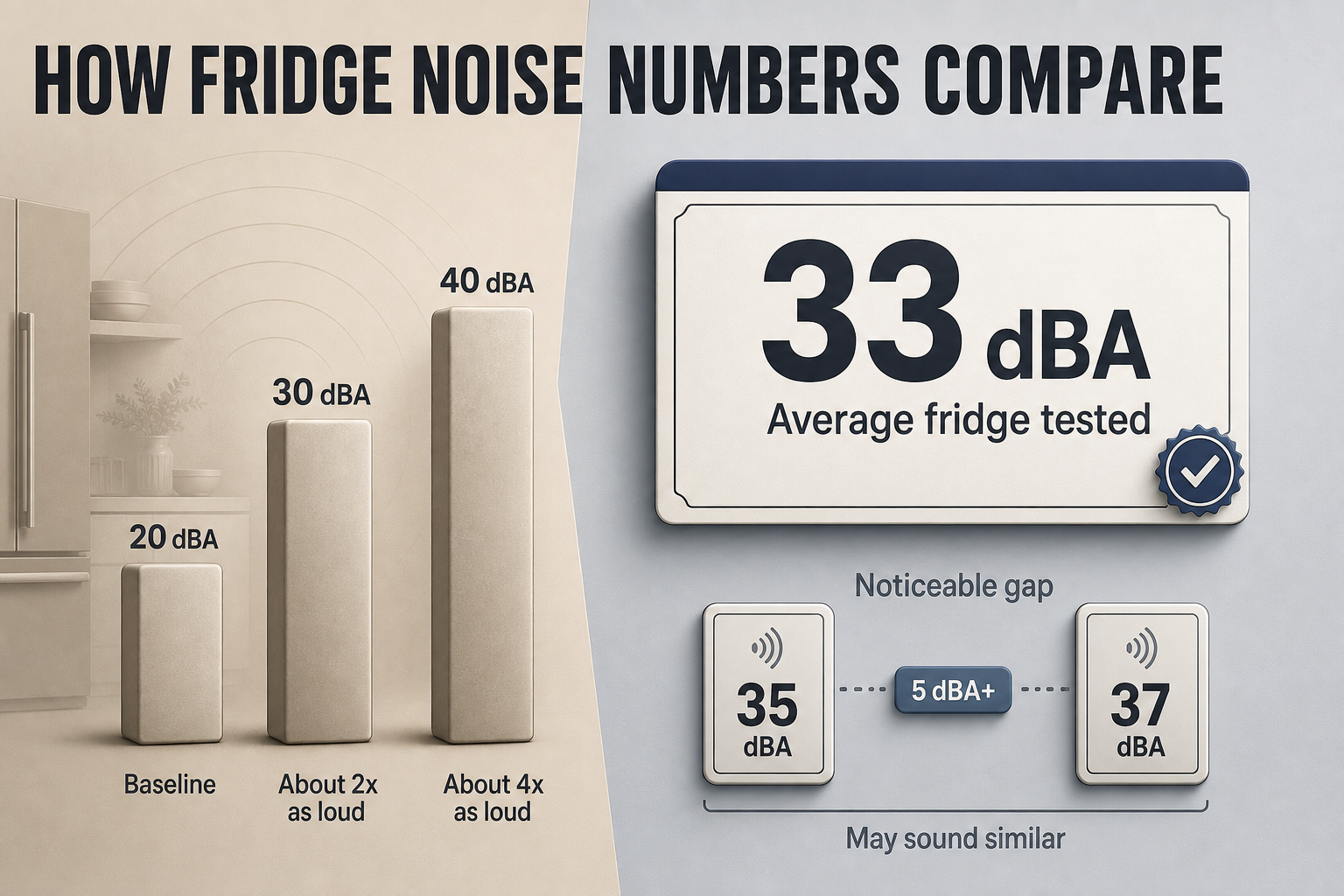
A refrigerator’s noise figure is usually given in dBA, which is a decibel scale adjusted to reflect how people actually hear sound. The key thing to understand is that decibels are logarithmic, not linear, so a small change in the number can sound bigger than you might think. Consumer NZ notes that a 30 dBA refrigerator will sound about twice as loud as a 20 dBA model, and a 40 dBA fridge will sound about four times as loud. (consumer.org.nz)
In practical terms, many household fridges sit in the low-to-mid 30s dBA, and Consumer NZ says the average running noise for fridges it has assessed is about 33 dBA. It also notes that most people only notice a difference once the gap is around 5 dBA or more, so two models rated at 35 dBA and 37 dBA may sound fairly similar in real use. (consumer.org.nz)
It also helps to remember that the published figure is only part of the story. The stated dBA level usually reflects standardised operation, not every sound you may hear at home. A fridge can also make short-term noises from fans, refrigerant flow, defrost cycles, cabinet expansion, door alarms and ice makers, even when the headline dBA figure looks low. Manufacturer guidance from Fisher & Paykel and LG both points out that some humming, gurgling, airflow and clicking noises are normal refrigerator behaviour. (fisherpaykel.com)
Typical Ranges
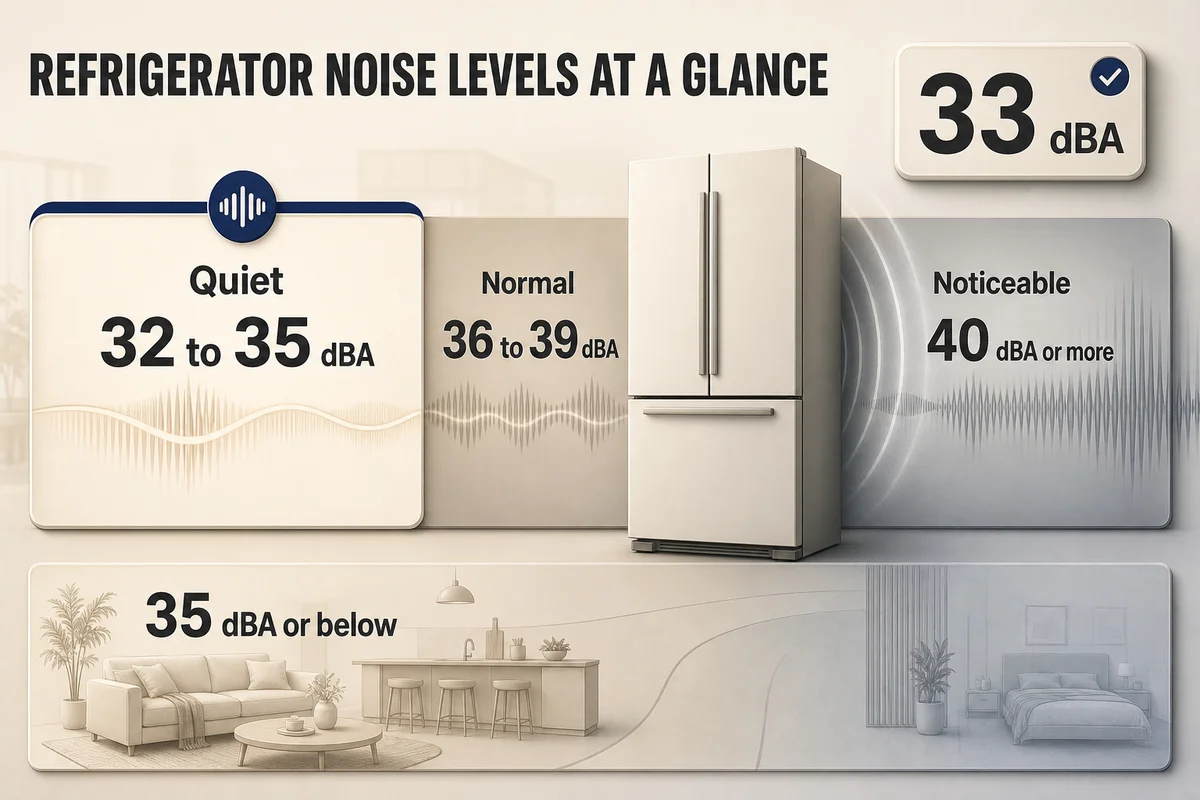
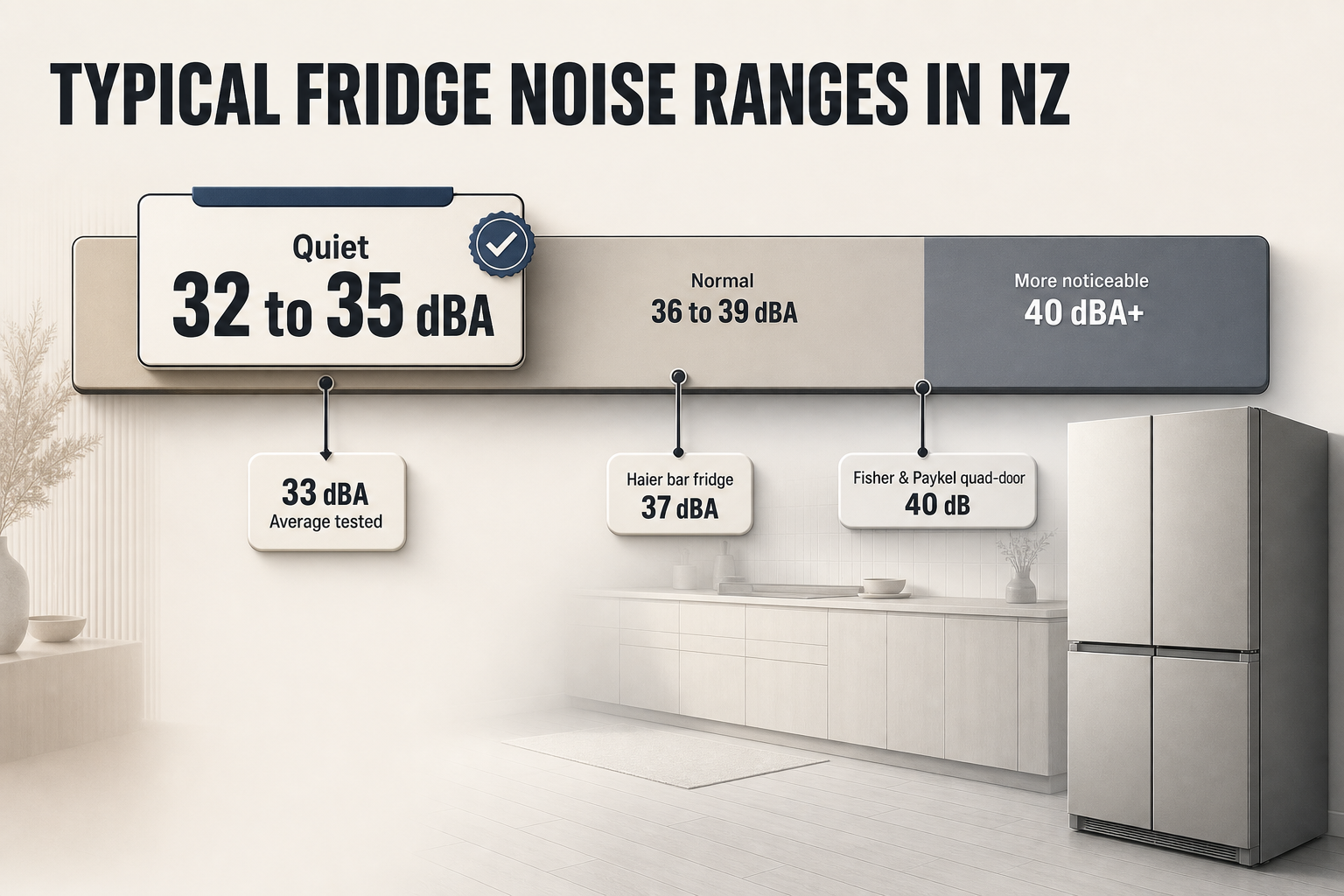
For modern refrigerators sold in New Zealand, a quiet model is generally around 32 to 35 dBA. That is the range you are likely to want if the fridge sits near your dining table, lounge or a bedroom wall. Consumer NZ’s average of 33 dBA is a useful benchmark for what a reasonably quiet household fridge sounds like in practice. (consumer.org.nz)
A mid-range noise level is usually about 36 to 39 dBA. This is still normal for many full-size bottom-mount, top-freezer and French-door fridges, especially larger units with more airflow and more complex cooling systems. For example, Haier lists 37 dBA for one 114 L bar refrigerator, while Fisher & Paykel’s product information sheet for one quad-door fridge-freezer lists noise emissions of 40 dB. (haier.co.nz)
Once you get to about 40 dBA and above, the fridge is more likely to be noticeable in a quiet kitchen, especially overnight. That does not automatically make it a bad buy. Large side-by-side models, quad-door units, models with ice and water dispensers, or fridges with stronger fan systems can sit around this level. But if you are sensitive to background noise, that extra few decibels can matter. Consumer NZ says open-plan areas do little to minimise fridge noise, so layout matters as much as the spec sheet. (consumer.org.nz)
Very compact bar fridges are not always the quietest, despite their size. Some are quiet, but others can sound sharper or more obvious because they are often installed in small rooms, home offices, sleepouts or studio flats where there is less background sound to mask them. A 37 dBA bar fridge in a silent office can feel more intrusive than a similar figure suggests on paper. This is an inference based on how decibel perception and room layout affect audibility. (consumer.org.nz)
Use-Case Guidance
If your fridge will live in an open-plan kitchen and living area, aim for 35 dBA or below if you can. This is the safest target for households that notice low-level hum, work from home nearby, or spend evenings in the same room as the appliance. If you are comparing two otherwise similar refrigerators, noise can be a sensible tie-breaker once capacity, layout and energy use are already suitable. (consumer.org.nz)
For a standard separate kitchen, a fridge in the 36 to 39 dBA range is usually acceptable. In many NZ homes, that level will blend into normal daytime activity, especially if the fridge is recessed into cabinetry or positioned away from the main seating area. The trade-off is that larger and more feature-heavy models may sit in this bracket, so rejecting them purely on noise can be too simplistic if they better suit your storage needs. (consumer.org.nz)
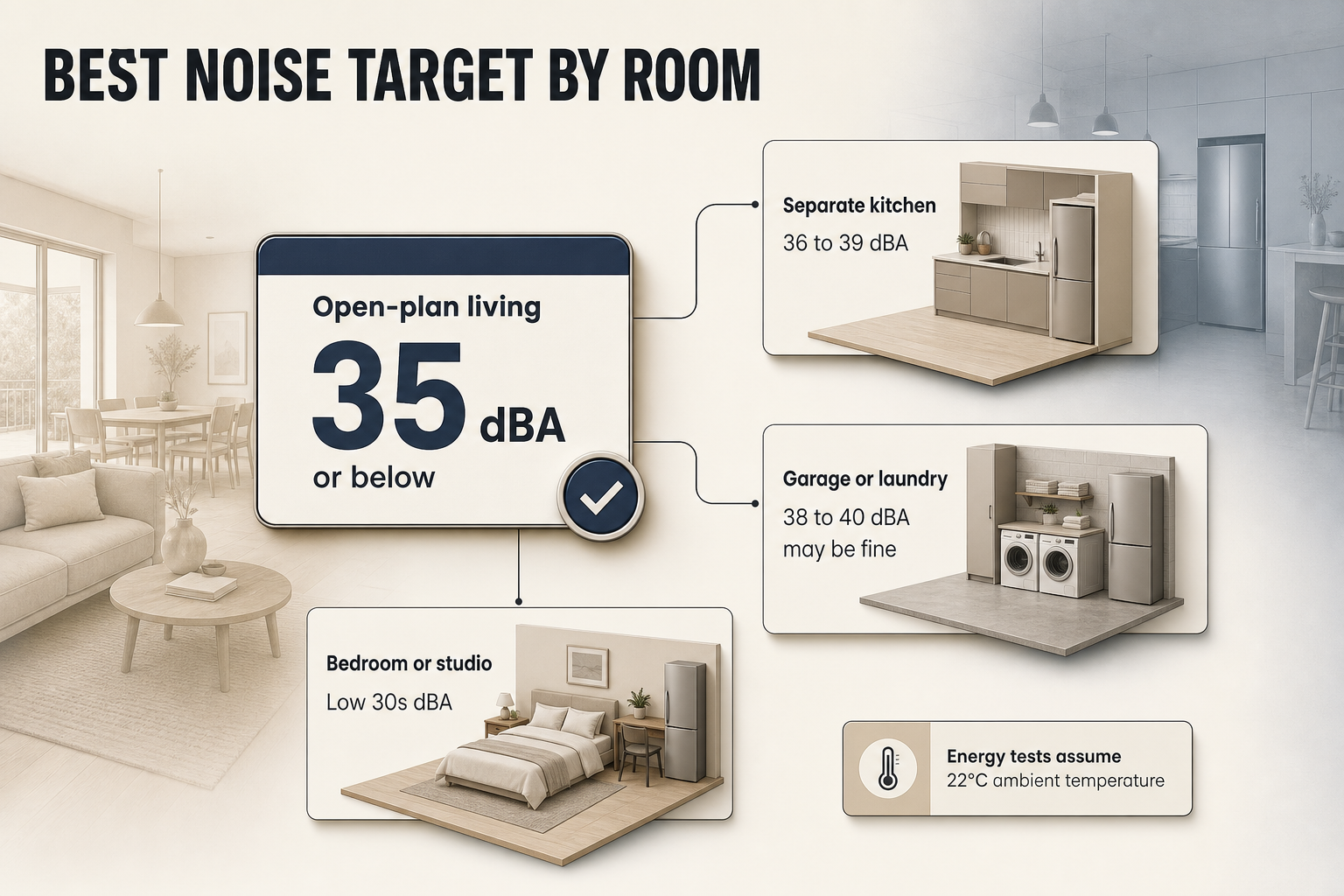
If the fridge is going near a bedroom, in a studio apartment, or in a small apartment with hard surfaces, be stricter. Try to stay in the low 30s dBA, and pay close attention to whether the model has an ice maker, water dispenser or extra fans. Those features can add intermittent sounds that are not always obvious from the headline number alone. (fisherpaykel.com)
For garages, laundries and utility spaces, noise matters less than it does in living zones. Here, a 38 to 40 dBA fridge may be perfectly fine if the appliance offers the right volume, shelving and freezer layout. The bigger issue in these spaces is often ambient temperature rather than sound, because fridge energy use and cooling performance are tested under standard conditions, not every real NZ garage setup. EECA says fridge energy ratings are calculated assuming an ambient temperature of 22°C. (eeca.govt.nz)
NZ-Specific Factors
New Zealand homes often have open-plan kitchen and living spaces, which makes refrigerator noise more noticeable than in older homes with enclosed kitchens. Consumer NZ specifically warns that open-plan areas do little to reduce fridge noise, so a model that seems fine in a showroom can feel much louder once it is running in a quiet home at night. (consumer.org.nz)
You should also separate noise level from energy efficiency. In NZ, residential fridges and freezers must display an Energy Rating Label, and EECA says that label focuses on annual energy use, star rating, model details and test standard. Noise is not the headline figure on the NZ energy label, so you often need to dig into the detailed specifications or product information sheet to find the dBA figure. (eeca.govt.nz)
That is why noise can be harder to compare than energy use. Some brands publish a clear “noise emissions” figure, while others bury it in downloadable documents or omit it from retail listings altogether. If the manufacturer does not state a dB or dBA number, treat the noise level as unknown rather than assuming a premium fridge will automatically be quiet. This is especially relevant because the parameter is often missing from refrigerator listings in the NZ market, even when energy and volume data are easy to find. (haier.co.nz)
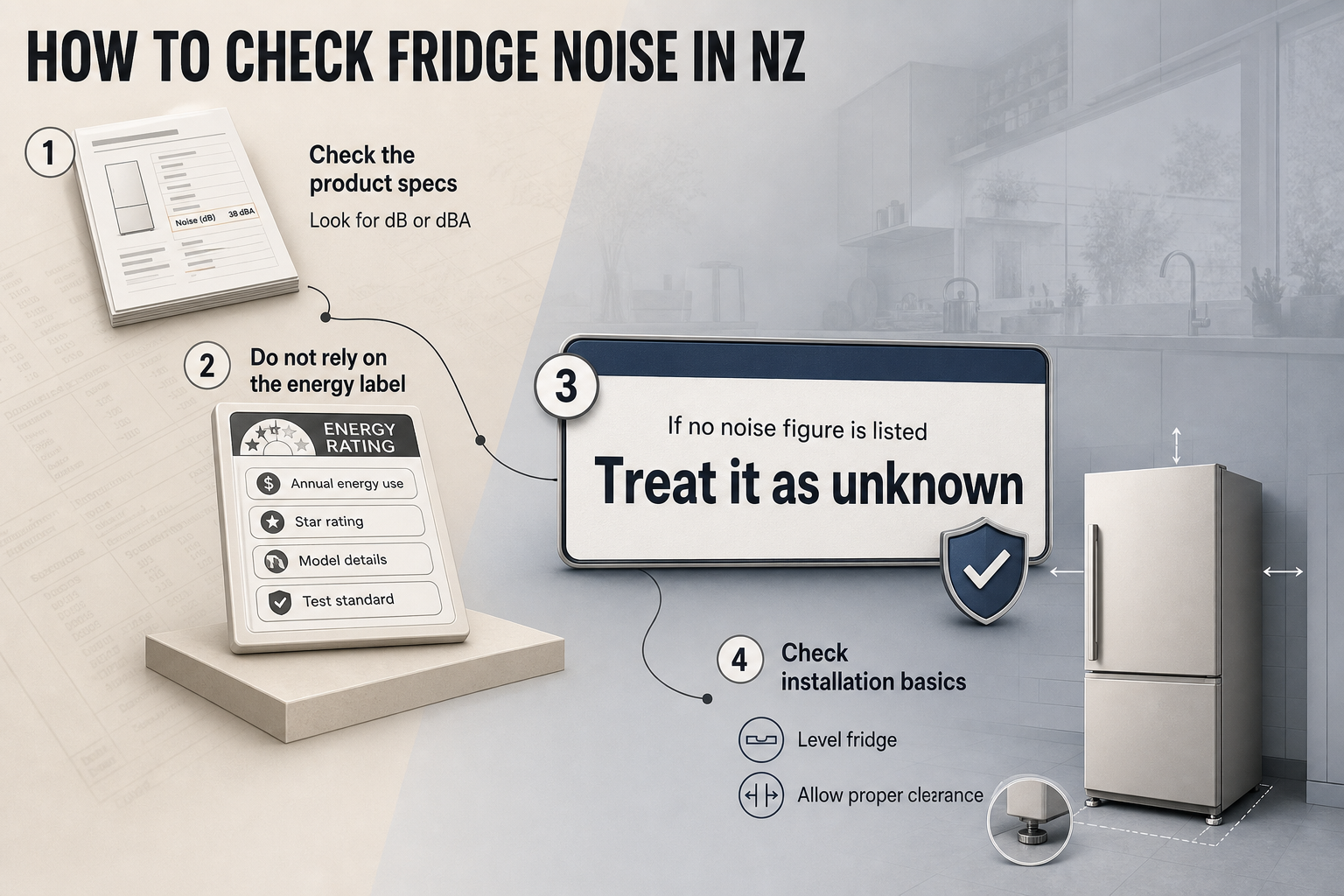
Installation has a big effect on real-world noise too. A fridge that is not level can vibrate more, and poor clearance around the cabinet can make fan and compressor sounds more obvious. Manufacturer support material from Fisher & Paykel, Haier and LG all points to levelling and correct installation as part of keeping refrigerator noise under control. (fisherpaykel.com)
For most NZ buyers, the sweet spot is simple. Under 35 dBA is quiet, 36 to 39 dBA is normal, and 40 dBA or more is worth thinking about carefully if the fridge will sit close to where you relax, work or sleep. Once you frame the number around your floor plan, not just the spec sheet, it becomes much easier to choose a fridge you will still be happy hearing every day. (consumer.org.nz)
You may also be interested in these independent articles
Sources
- [1]Consumer NZ: How to buy the best fridge
- [2]EECA: Fridges and Freezers Energy Rating Labels
- [3]EECA: How to use Energy Rating Labels and star ratings
- [4]Haier New Zealand 114L 300 Series Bar Refrigerator Freezer
- [5]Fisher & Paykel Product Information Sheet, Quad Door Fridge Freezer
- [6]LG: How to Lower Your Refrigerator’s Noise Level
- [7]Fisher & Paykel User Guide: ActiveSmart Refrigerator
© 2026 pyfoi. All rights reserved.