
What a Fridge Config Rating Really Means
Fridge Config Rating can mislead NZ buyers. Learn how it differs from the official energy rating label, what the stars mean, and what to check.
A refrigerator Config Rating can be confusing because it is not a standard consumer label in the same way as volume or width. In practice, listings that show a star-based “Config Rating” for fridges often use it as a shorthand score for how practical, efficient, or well-designed the refrigerator’s layout and overall setup are, rather than a formal government-certified measure. For New Zealand buyers, that means you should treat it as a guide, not a rule, and check what sits behind the stars before you buy. (consumer.org.nz)
What Goes Into the Rating
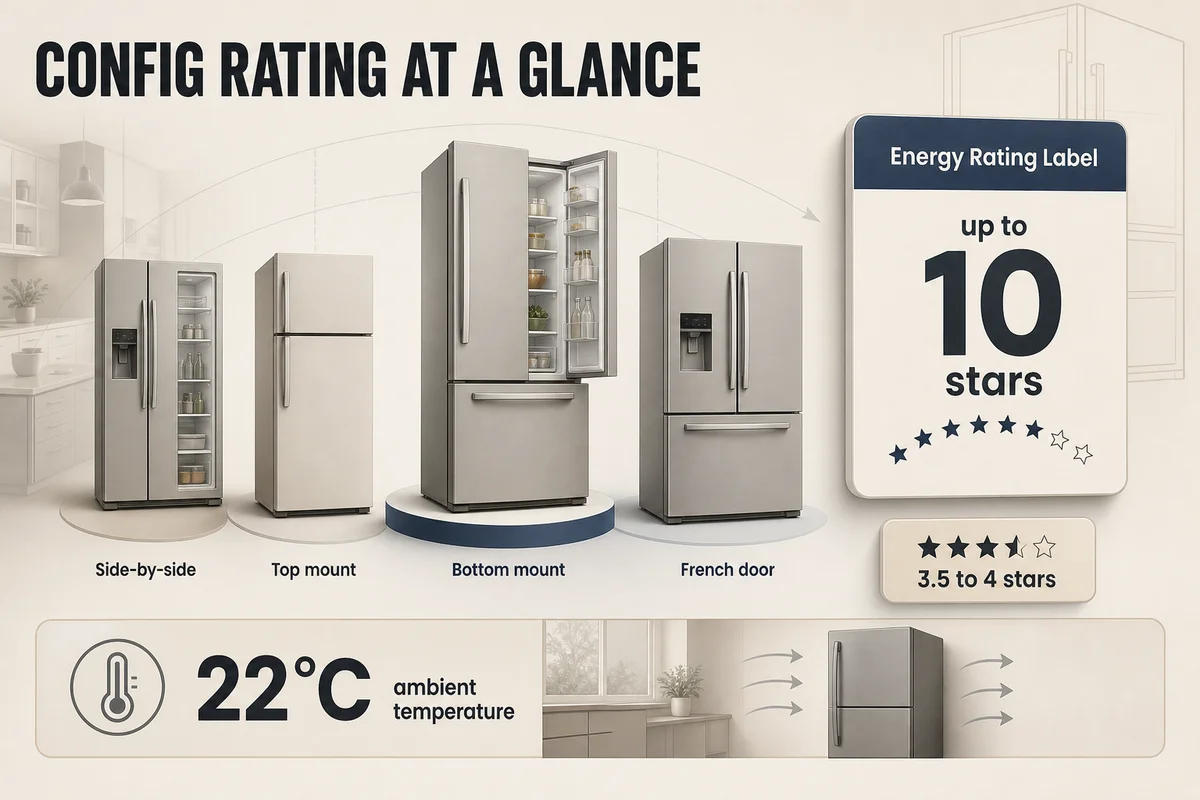
The first thing to know is that New Zealand does have an official star system for refrigerator energy efficiency, shown on the Energy Rating Label. EECA explains that fridges and freezers can display a rating of up to 10 stars, and that this label is based on a formal test standard rather than a retailer’s opinion. Consumer NZ also notes that the label combines star rating information with annual electricity use in kWh, so buyers can compare similar-sized models more fairly. (eeca.govt.nz)
That matters because a “Config Rating” is usually something different. It may reflect how well a fridge’s configuration suits everyday use: top mount, bottom mount, French door, side-by-side, or a standalone fridge and freezer setup. Retailers and brand buying guides often discuss configuration in terms of access, storage layout, freezer position, and door design, which strongly affect convenience but are not part of the official energy label itself. (samsung.com)
In real buying terms, a low star configuration score would usually suggest a layout that is less practical for typical households. That could mean narrow shelves, awkward freezer access, poor use of vertical space, or limited flexibility in door bins and drawers. A high score would usually point to a fridge that makes day-to-day storage easier, with sensible shelf spacing, clear produce storage, and a freezer arrangement that matches how most people actually use their appliance. This is an inference from how NZ refrigerator guides describe configuration choices, rather than an official national rating definition. (samsung.com)
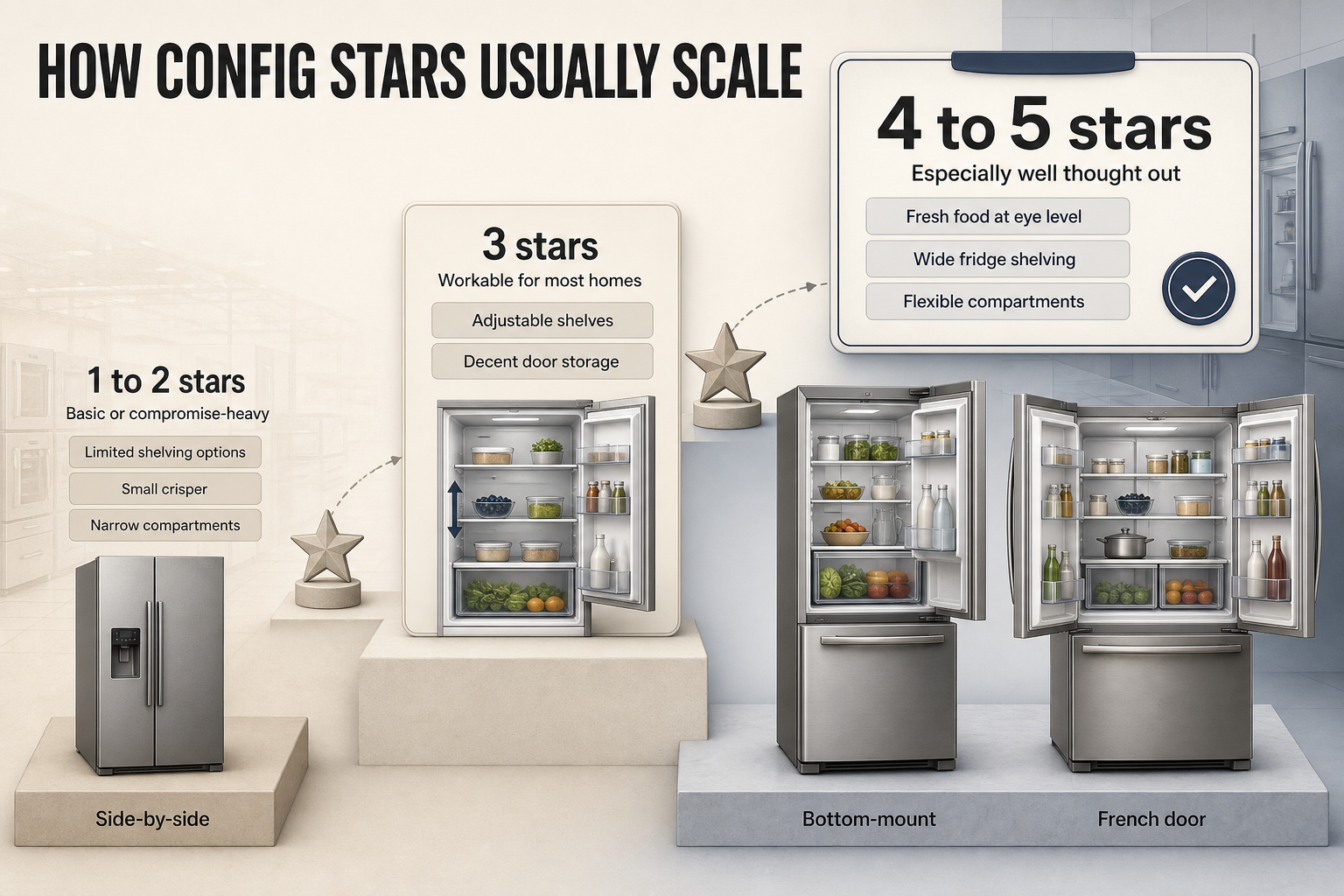
A 1-star to 2-star configuration rating would generally fit basic or compromise-heavy designs. Think of a compact fridge with limited shelving options, a small crisper, or a side-by-side model where both compartments are tall but quite narrow. Consumer NZ points out that side-by-side models tend to have narrower and deeper compartments, which can make storage less convenient for wide platters or pizza boxes even when the total litre figure looks generous. (consumer.org.nz)
A 3-star configuration rating would usually mean the fridge is workable for most homes, with no major flaw but no standout storage advantage either. You might get adjustable shelves and decent door storage, but not the kind of flexibility that makes a busy family kitchen easier to manage. This middle ground often suits smaller households, flats, or buyers replacing an older fridge without changing kitchen cabinetry. (100percent.co.nz)
A 4-star to 5-star configuration rating would usually mean the fridge layout is especially well thought out. Examples include bottom-mount models that keep everyday fresh food at eye level, or French door models that combine wide fridge shelving with flexible compartments. Electrolux NZ highlights the ergonomic advantage of bottom-mount designs because the fresh-food section, which most households use more often, sits higher and is easier to reach. (electrolux.co.nz)
What to Look For
Start by asking whether the stars refer to energy efficiency or to a seller’s own convenience score. If the product page just says “Config Rating” without explanation, it is not the official Energy Rating Label. The official label should also show annual energy consumption in kWh and be based on the Australian/New Zealand testing framework used for fridges and freezers. (eeca.govt.nz)
Next, look at the actual fridge layout rather than trusting the star number alone. A family in Wellington or Christchurch that cooks often may need wide shelves for platters, large vegetable drawers, and freezer drawers that separate meat, bread, and frozen meals. A couple in an Auckland apartment may care more about fitting the appliance into a tight kitchen footprint and having easy access to frequently used chilled food. The best configuration is the one that matches your shopping habits, not the one with the fanciest door arrangement. (consumer.org.nz)
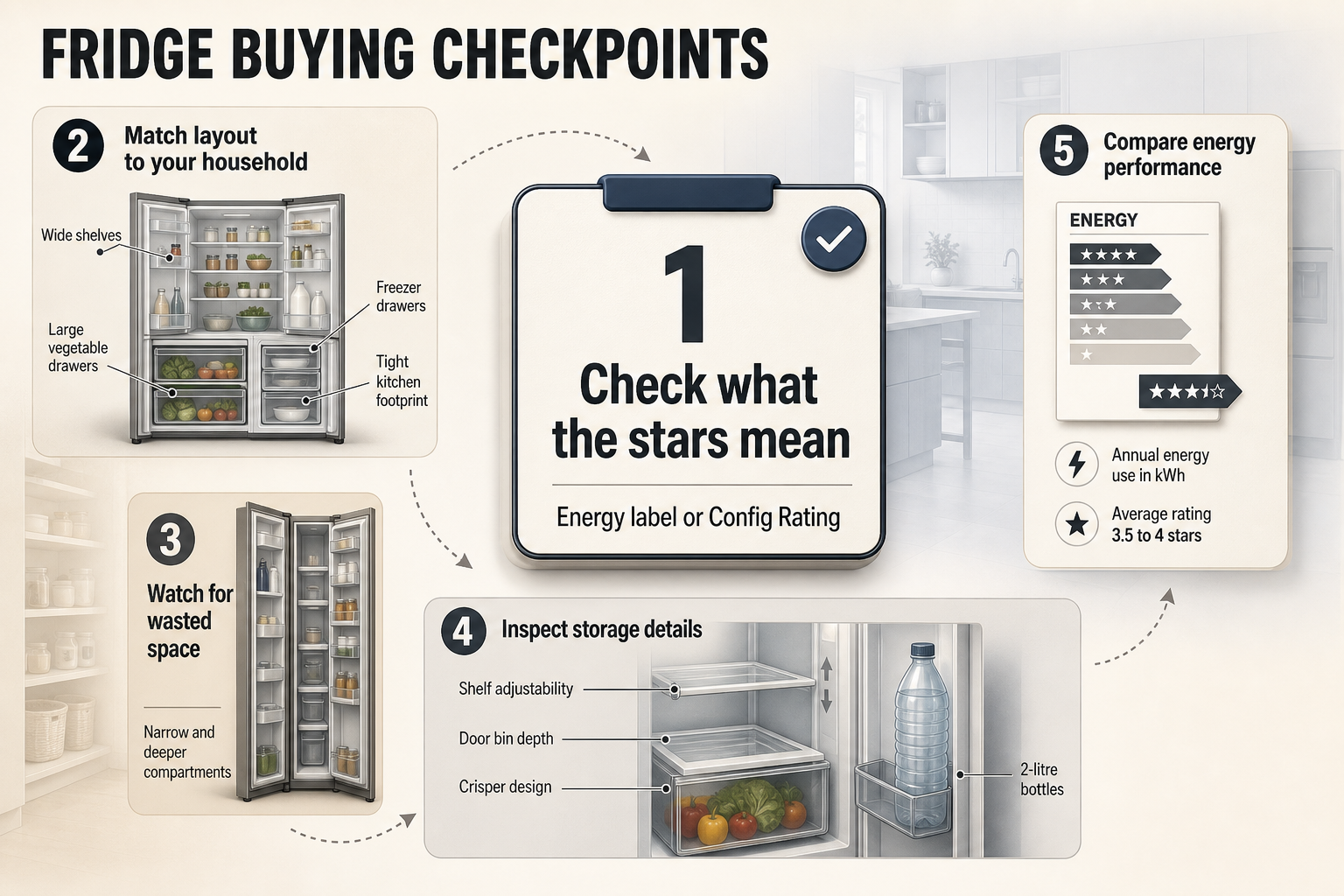
Check whether the configuration wastes usable space. Side-by-side refrigerators can look generous on paper, but narrow compartments can make them less practical than a bottom-mount or French door model with a similar total capacity. Consumer NZ specifically warns that side-by-side fridge and freezer sections are narrower and deeper than vertically stacked designs. (consumer.org.nz)
Pay attention to shelf adjustability, door bin depth, and crisper design. These details make more difference than many buyers expect. A fridge with one extra shelf position, a full-width deli drawer, or bins that actually hold 2-litre bottles can feel far better to live with than a higher-capacity model with a clumsy interior. This is where an informal configuration score may be useful, but only if the retailer explains how it was judged. (samsung.com)
You should also compare configuration with energy performance. EECA says more stars on the Energy Rating Label means a model is more efficient than similar-sized alternatives, while Consumer NZ notes that average fridge or fridge-freezer ratings are often around 3.5 to 4 stars. A fridge with an excellent layout but poor efficiency may cost more to run over the long term, especially because refrigerators operate all year. (eeca.govt.nz)
NZ Context
For New Zealand buyers, electricity cost and room temperature both matter. EECA says refrigerator energy labels are calculated using a test assumption of 22°C ambient temperature. Actual running costs can be higher in warmer kitchens, sun-exposed homes, or poorly ventilated spaces, which means a practical configuration should also allow good airflow around the cabinet and suit where the fridge will sit in your home. (eeca.govt.nz)
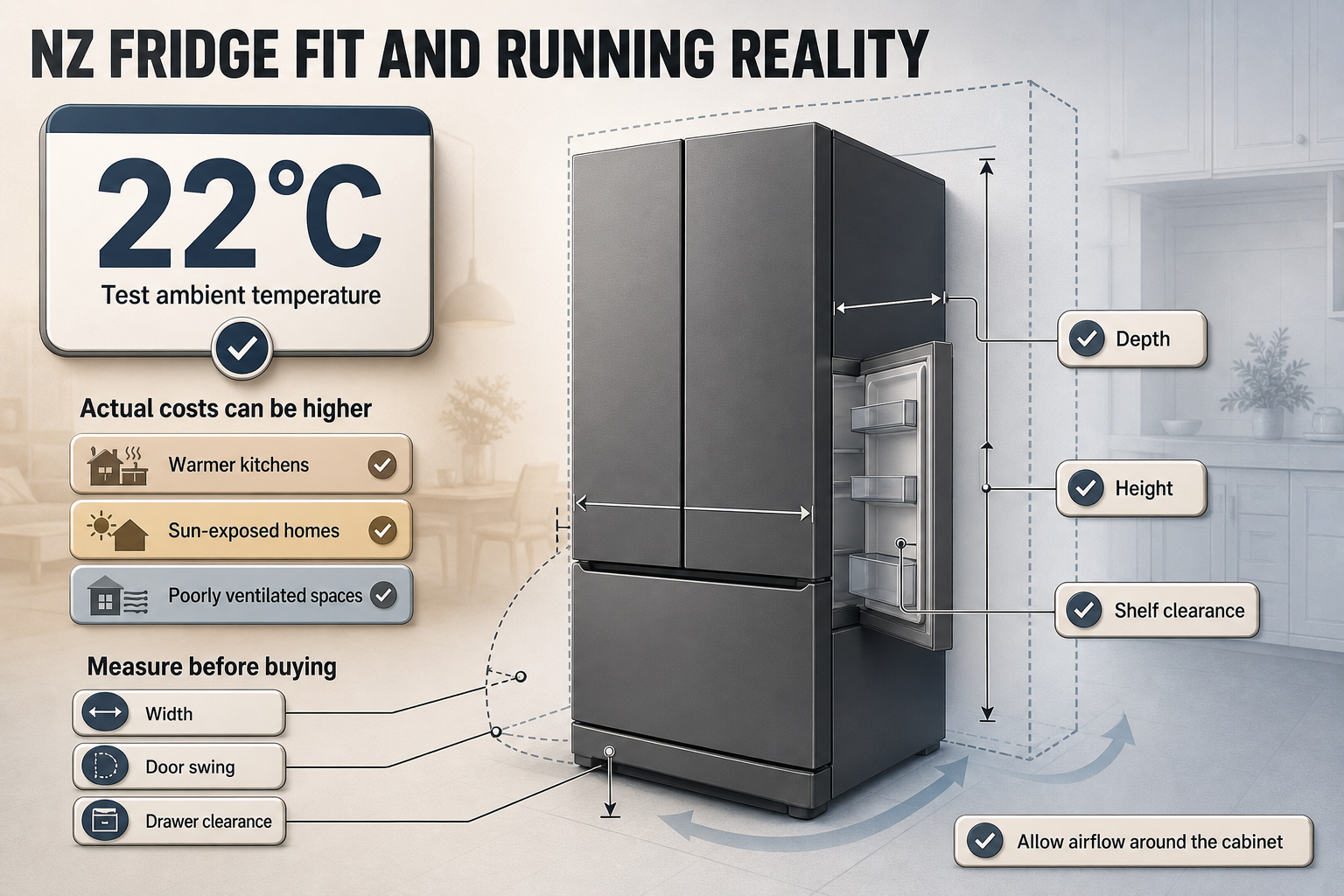
New Zealand homes also vary a lot in kitchen size. Older villas and smaller city apartments often have tighter fridge cavities, while newer homes may suit wider French door models. Before giving too much weight to any configuration rating, measure width, depth, height, door swing, and clearance for drawers and shelves to open fully. Retailer buying guides in NZ repeatedly stress matching fridge dimensions and layout to the actual kitchen space. (samsung.com)
There is also a legal angle. Under the Consumer Guarantees Act, a refrigerator sold in New Zealand must be of acceptable quality and fit for purpose. That does not mean you can claim simply because you dislike the shelf layout, but it does mean a retailer should not mislead you with vague star language that implies an official certification where none exists. If “Config Rating” is used on a listing, ask what criteria were scored and whether the rating comes from the brand, the retailer, or customer reviews. This is a practical interpretation based on NZ consumer law and the difference between official energy labels and informal retail descriptors. (eeca.govt.nz)
Finally, remember that configuration and efficiency are linked, but they are not the same thing. EECA’s guidance and Consumer NZ’s fridge advice both point buyers toward comparing similar fridge types, sizes, and intended use. A well-chosen refrigerator for a New Zealand home is one with a layout that suits your food habits, enough usable space for your household, and an official energy rating that keeps annual power use under control. (consumer.org.nz)
You may also be interested in these independent articles
Sources
© 2026 pyfoi. All rights reserved.