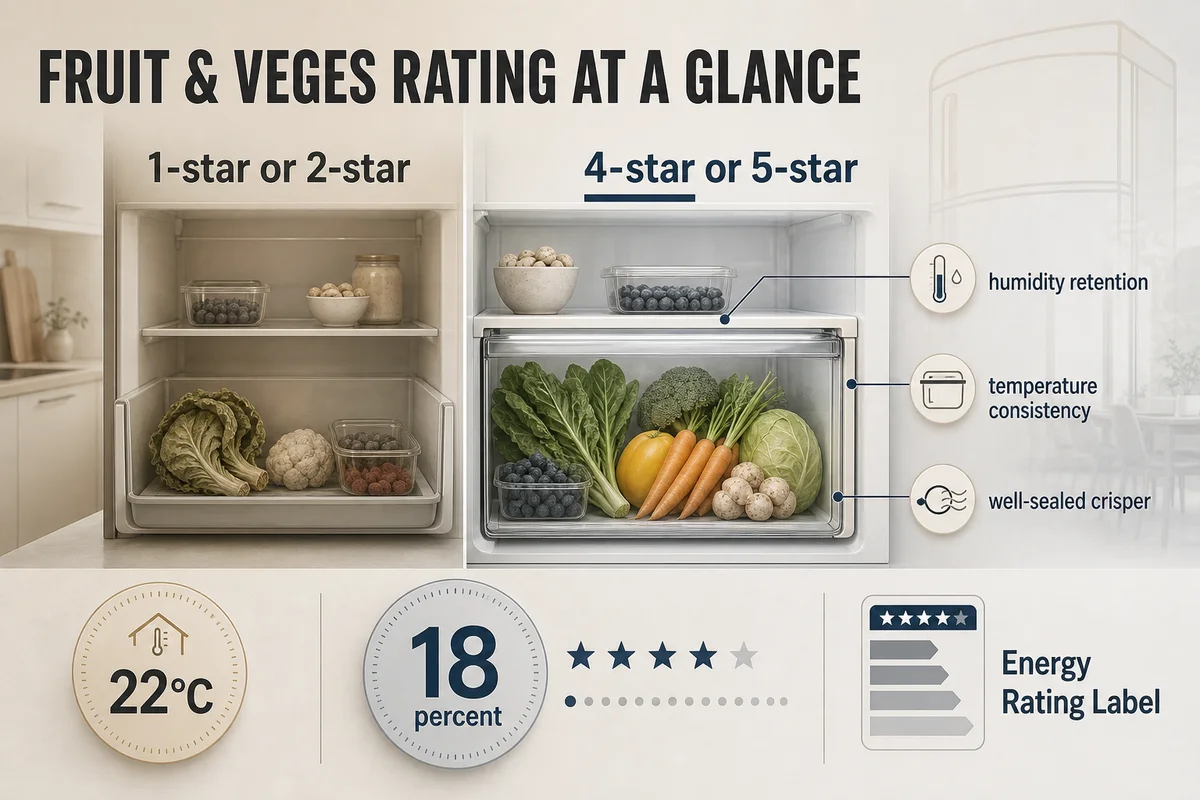

What a Fridge Fruit & Veges Rating Really Means
Learn what a fridge Fruit & Veges Rating really measures in NZ, how crisper design affects produce freshness, and why energy stars tell a different story.
A fridge’s Fruit & Veges Rating is a practical score for how well it keeps produce fresh, not a measure of power use or overall build quality. For New Zealand buyers, that matters because fresh food is expensive, and a fridge that dries out spinach or turns cucumbers limp too quickly can cost you more in wasted groceries than you save on the sticker price.
What the Rating Measures
Fruit and vegetable storage is mostly about humidity, temperature stability, and airflow inside the crisper area. Consumer NZ notes that a crisper drawer is meant to keep temperature and humidity more even for perishable foods, and that the humidity level in the crisper gives a guide to how well unwrapped vegetables will stay fresh. (consumer.org.nz)
That is why a higher star score usually reflects better conditions for produce rather than a magic “freshness” setting. A top-rated fridge will generally have a crisper that holds moisture well enough to slow dehydration, while still staying cold and stable enough to avoid spoilage. A low-rated one may simply be a basic bin at the bottom of the fridge, with little control over humidity and more exposure to dry circulating air. (consumer.org.nz)
In plain terms, the gap between a 2-star and 5-star produce rating often shows up in your weekly shop. Leafy greens, herbs, broccoli, carrots, berries and capsicums tend to stay firmer and fresher for longer in a well-designed crisper. In a poor one, they can wilt, wrinkle or go slimy sooner, especially if your household shops once a week rather than topping up every second day.
What Goes Into the Rating
A strong Fruit & Veges Rating is usually built on a few key things. The first is humidity retention. Many vegetables keep better in a more humid drawer, because they lose water more slowly. Consumer NZ points out that if the slider is closed, the drawer stays more humid than the rest of the fridge, though not all vegetable crispers have humidity controls. (consumer.org.nz)
The second factor is whether the drawer is actually sealed well enough to work as a crisper. Consumer NZ says that unless the drawer has an airtight lid, it will not function as a proper vegetable crisper. That is a useful dividing line between lower and higher scores. A 1-star or 2-star setup may be little more than a storage tray, while a 4-star or 5-star setup is more likely to be a properly engineered compartment with better sealing and moisture control. (consumer.org.nz)
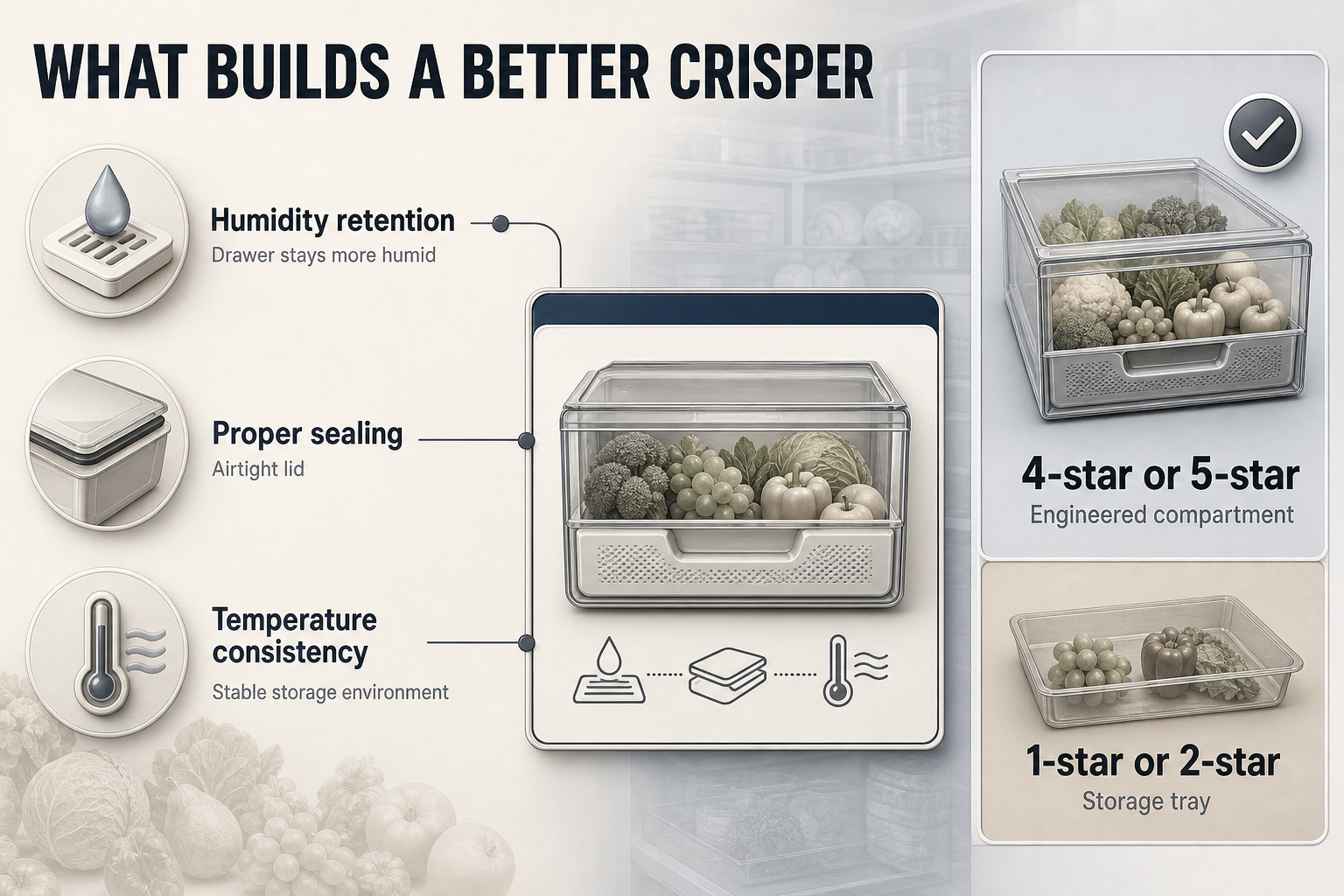
The third factor is temperature consistency. Fridges cycle on and off, doors open and close, and warm groceries are added. EECA says fridge energy testing now accounts for steady-state running, defrost, door openings and the cooling of warm food, which shows how much real-world variation modern testing recognises. While that is an energy standard rather than a produce-freshness score, it highlights how much door openings and internal design affect actual fridge performance. A crisper that sits in a more stable part of the cabinet tends to do a better job than one heavily affected by each door opening. (eeca.govt.nz)
A 5-star produce rating, then, should suggest a drawer that keeps humidity high, avoids excessive drying airflow, and maintains a more even storage environment. A 1-star rating suggests your produce is likely to be stored cold, but not especially well protected from moisture loss.
What to Look For
Start by looking past the star score itself and checking the crisper design. If the drawer has a humidity slider, separate produce zones, or a dedicated middle drawer with its own climate control, that is usually a good sign. Consumer NZ notes that some multi-drawers regulate humidity like a crisper but with more stable temperatures, which can be useful if you buy a lot of fresh produce. (consumer.org.nz)
Then check whether there are one or two crispers. Two drawers can be handy because fruit and vegetables often store best in slightly different conditions. Fruit that gives off ethylene gas, such as apples and pears, can speed up ripening in nearby vegetables. A split-drawer layout gives you more control, especially if your household buys both salad vegetables and fruit in larger quantities. This separation point is an inference from how produce storage works, rather than a formal NZ rating rule, but it is a sensible feature to look for. (consumer.org.nz)
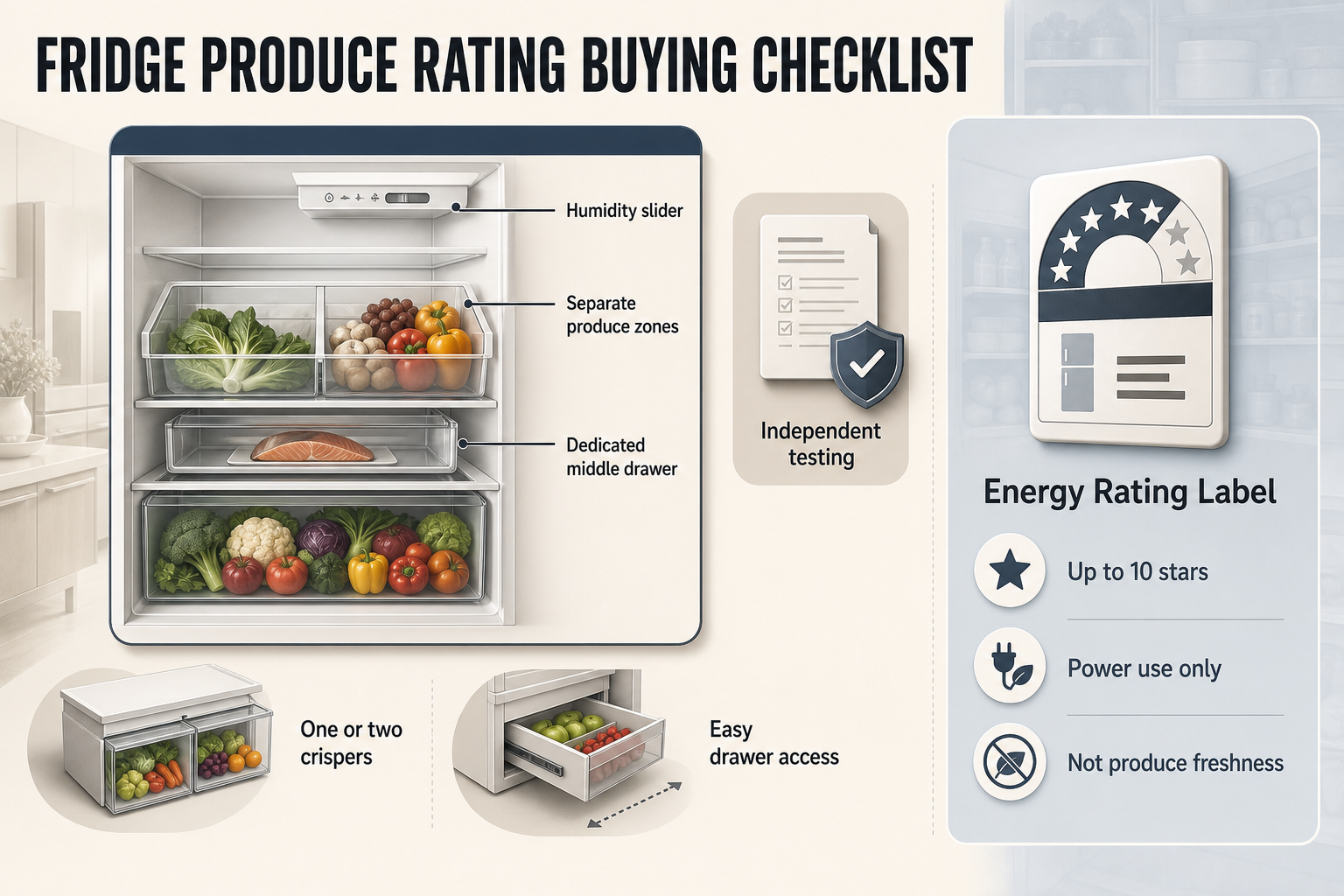
Pay attention to drawer access as well. If the crisper jams against a wide-open door, catches on shelves, or becomes awkward when the fridge is full, you may stop using it properly. That matters because even a well-rated drawer is only useful if it is easy to load and unload after a Pak’nSave or New World shop.
It is also worth asking whether the rating was independently tested and by whom. If a retailer or brand uses its own “freshness” stars, treat that as marketing until you can see the method. Independent testing is more useful than brand-created labels. Consumer NZ’s fridge testing includes crisper humidity measurement, which is the sort of evidence you want behind a produce-related score. (consumer.org.nz)
Finally, do not confuse this rating with the official Energy Rating Label. In New Zealand, fridges and freezers sold new must display an Energy Rating Label showing annual energy use and an efficiency star rating. EECA says the energy label is for comparing energy efficiency and running costs of similar appliances, and the star score can run up to 10 stars on the current label system. That label tells you about power use, not how well lettuce lasts. (eeca.govt.nz)
NZ Context
New Zealand households often do one big weekly grocery run, which makes produce storage more important than it might be in places where people shop daily. If you are feeding a family and buying a full trolley of salad greens, carrots, broccoli, berries and school lunch fruit, a better Fruit & Veges Rating can have real value because it helps reduce waste between shops.
Climate also matters. Many NZ homes see warm kitchens in summer and cooler indoor temperatures in winter, and fridge doors may be opened often during busy family routines. EECA says fridge energy calculations assume an ambient temperature of 22°C, but real homes vary. If your kitchen runs warmer than that, or your fridge is tucked beside an oven or in direct sun, produce performance can suffer, so a well-designed crisper becomes more useful. (eeca.govt.nz)
Running costs should still be part of the picture. EECA says the Energy Rating Label helps you compare annual electricity use and cost differences between similar fridges, and there is an 18 percent reduction in energy consumption with each star increase on the current fridge label scale. A fridge with excellent produce storage but poor energy efficiency may still cost more over time, so you should weigh both. (eeca.govt.nz)
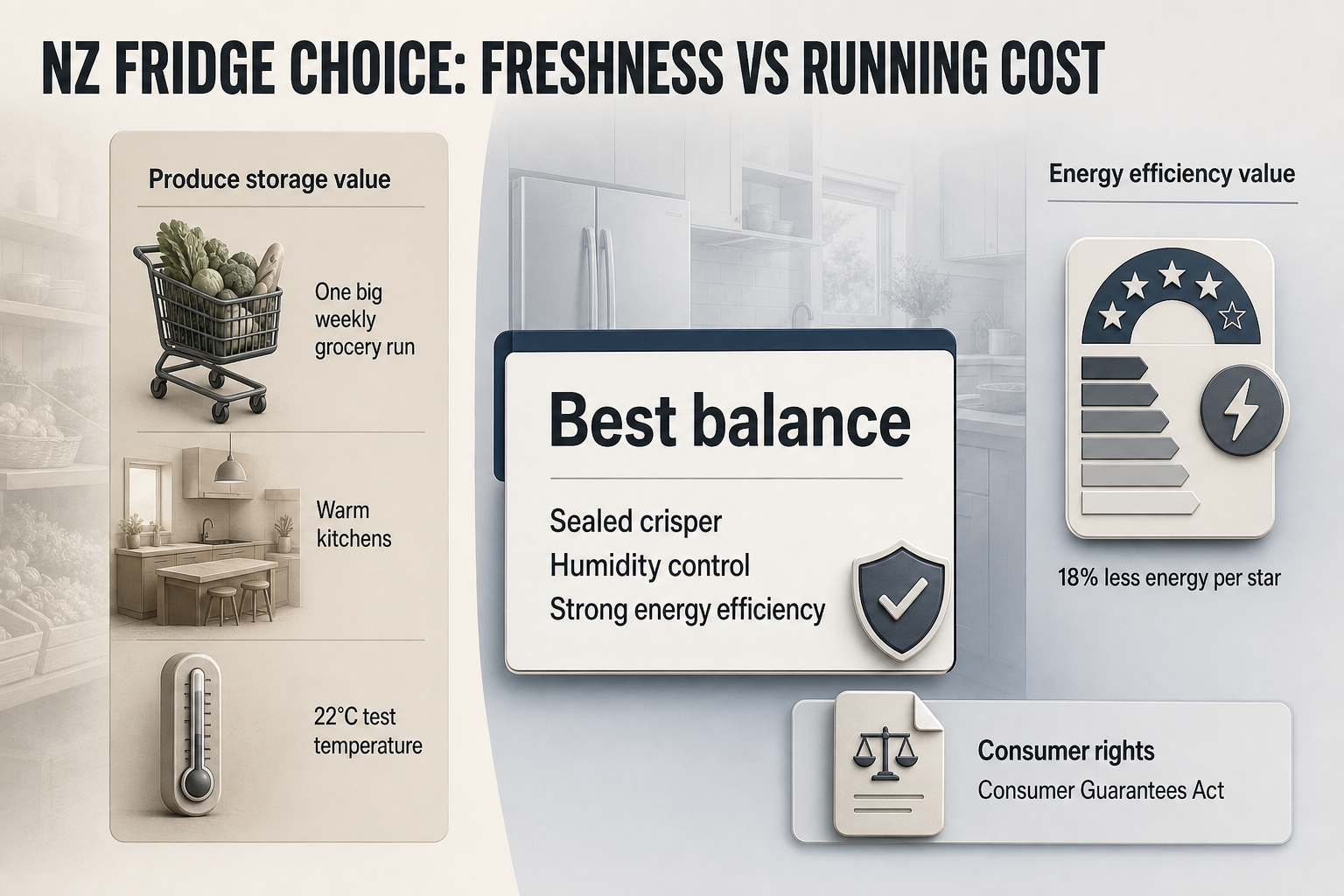
Your consumer rights matter too. If a fridge does not perform as a reasonable buyer would expect, the Consumer Guarantees Act applies regardless of any extra warranty. Consumer Protection says the CGA sets minimum guarantees around quality and usability, and those rights sit alongside or instead of a manufacturer warranty. That will not usually cover ordinary disappointment that your parsley went limp after a week, but it does matter if a fridge has a faulty drawer, poor sealing, temperature faults, or other defects affecting normal use. (consumerprotection.govt.nz)
For many NZ buyers, the sweet spot is a fridge with a genuinely well-sealed crisper, easy humidity control, and strong energy efficiency. If you mostly buy frozen meals, drinks and condiments, the Fruit & Veges Rating may not matter much. If your fridge is full of fresh produce from the supermarket, weekend market, or your own garden, it is one of the more useful ratings to pay attention to.
You may also be interested in these independent articles
Sources
- [1]Consumer NZ: How to buy the best fridge
- [2]Consumer NZ: How to organise your fridge and what food should go where
- [3]EECA: Fridges and Freezers
- [4]EECA: How to use Energy Rating Labels and star ratings
- [5]EECA: Choose an efficient fridge or freezer to cut costs
- [6]Consumer Protection NZ: Consumer Guarantees Act
- [7]Consumer Protection NZ: Warranties
© 2026 pyfoi. All rights reserved.