
Annual energy use explained for NZ buyers
Annual energy use in kWh per year shows true appliance running costs in New Zealand. Learn how to compare labels, tariffs, and long-term power bills.
Annual energy use, usually shown as kWh per year, tells you how much electricity an appliance is expected to use over 12 months under standard test conditions. For New Zealand buyers, this number matters because it turns a vague idea of “efficient” into a running-cost figure you can compare against your power bill.
What the Numbers Mean
A kilowatt-hour is a unit of energy, not speed or power. One kWh is the amount of electricity used by a 1kW appliance running for one hour. On appliance labels in New Zealand, the figure is usually shown as annual energy consumption, which lets you compare likely running costs between similar products. EECA says the Energy Rating Label includes annual energy consumption in kWh per year, based on standardised testing and assumed usage. (eeca.govt.nz)
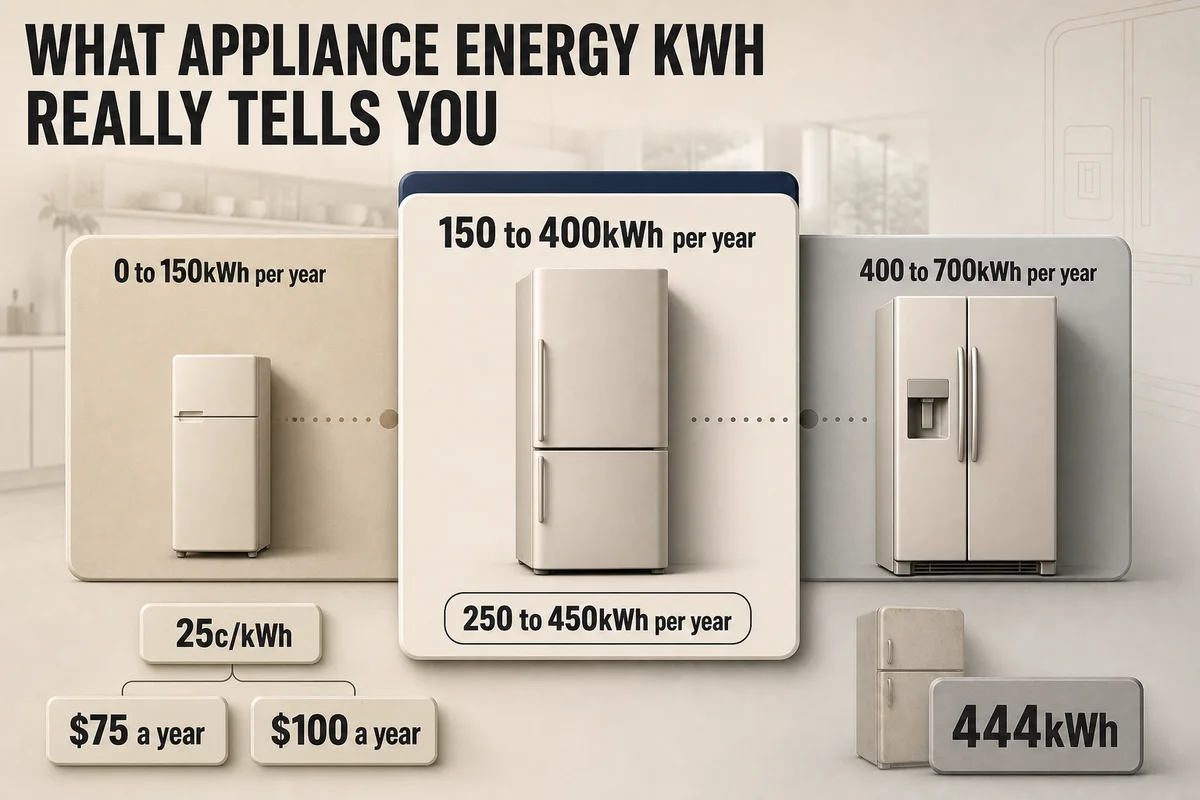
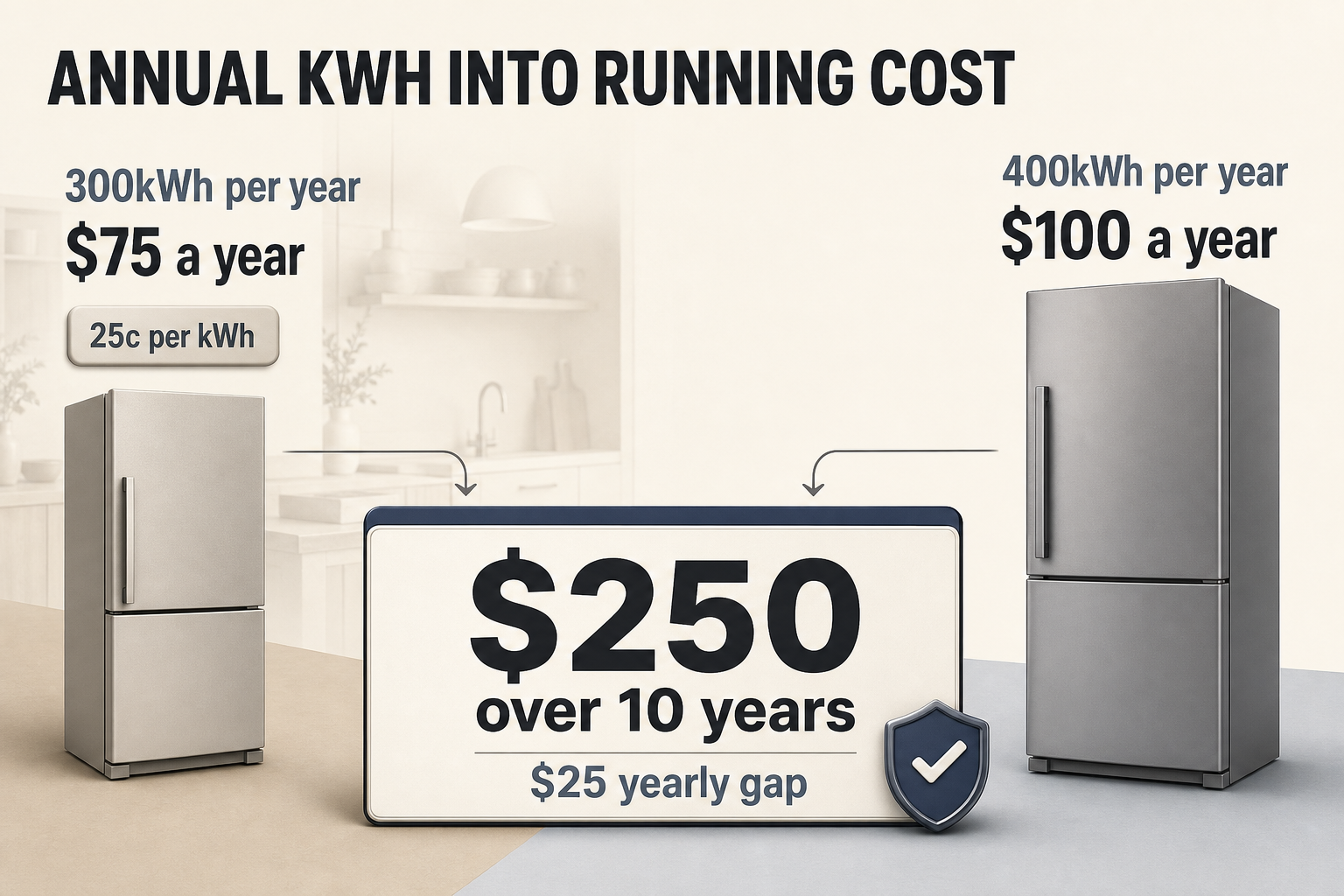
In practical terms, the kWh figure is the number you can multiply by your electricity tariff to estimate yearly running cost. Consumer NZ explains that you can use the label’s kWh figure and your own tariff to work out cost, and its running-cost comparisons use an average electricity cost of 25 cents per kWh. (consumer.org.nz) If an appliance is rated at 300kWh per year, that works out to about $75 a year at 25c/kWh. At 400kWh per year, it is about $100 a year. The gap sounds small, but over 10 years that is roughly $250 before any rise in power prices.
That is why annual kWh often matters more than the star graphic on the label. Star ratings are useful, but only for comparing similar-sized appliances in the same category. EECA and Consumer NZ both note that if you are comparing different sizes or formats, the annual kWh figure is the better guide to actual running cost. (eeca.govt.nz)
Typical Ranges
For this parameter, a low number means lower electricity use and usually lower running costs. A high number means the appliance will cost more to run, though it may also be larger or more powerful.
At the low end, roughly 0 to 150kWh per year is typical for very small or highly efficient appliances. In fridge terms, that might include compact bar fridges or smaller specialist units, although some niche products may not display a standard annual figure. You should be careful here, because very low usage often comes with less storage, fewer features, or lighter insulation.
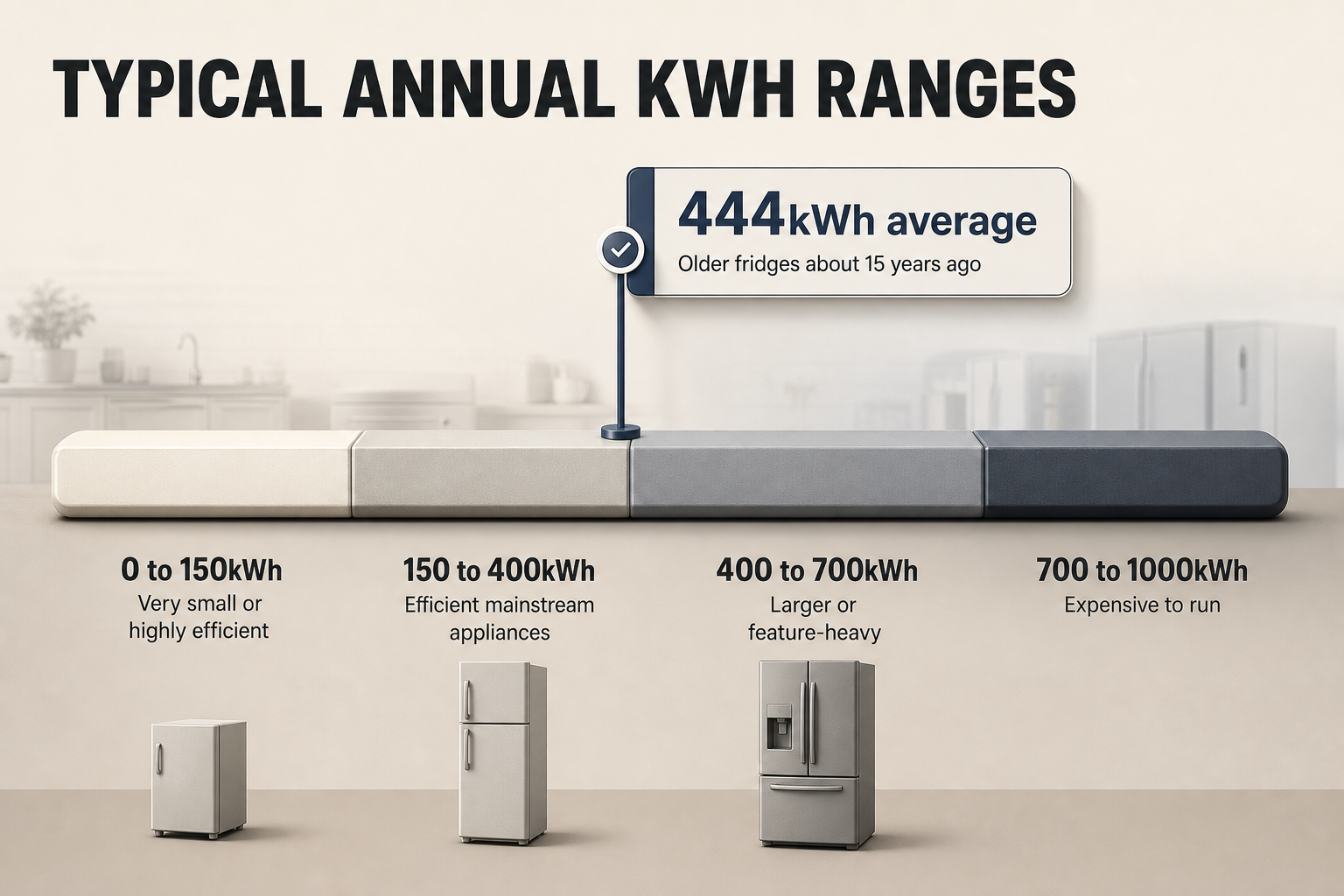
A mid-range figure of about 150 to 400kWh per year is where many efficient mainstream household appliances sit, especially standard fridges and freezers aimed at average homes. This is often the sweet spot for buyers who want sensible running costs without sacrificing size. Consumer NZ notes that older fridges were commonly far less efficient, with an average annual consumption of 444kWh for models made about 15 years ago. (consumer.org.nz) That gives you a useful benchmark: a modern model below that level is not automatically exceptional, but it is likely to be better than an older unit.
A higher figure of about 400 to 700kWh per year is common for larger, feature-heavy, or less efficient appliances. Think big French-door fridges, large side-by-side units, or appliances with ice makers and extra cooling zones. Once you get toward 700 to 1000kWh per year, you are firmly in “expensive to run” territory for a household appliance. That does not always make it a bad buy, but it means you should be getting a clear benefit in capacity, layout, or performance.
Use-Case Guidance
If you live in a small Auckland or Wellington flat and just need a basic appliance for one or two people, chasing the lowest practical kWh figure makes sense. For many buyers in that situation, a model under 250kWh per year will usually be easier on the power bill and still offer enough capacity. The compromise is that very compact appliances can become frustrating if you shop in bulk or need freezer space.
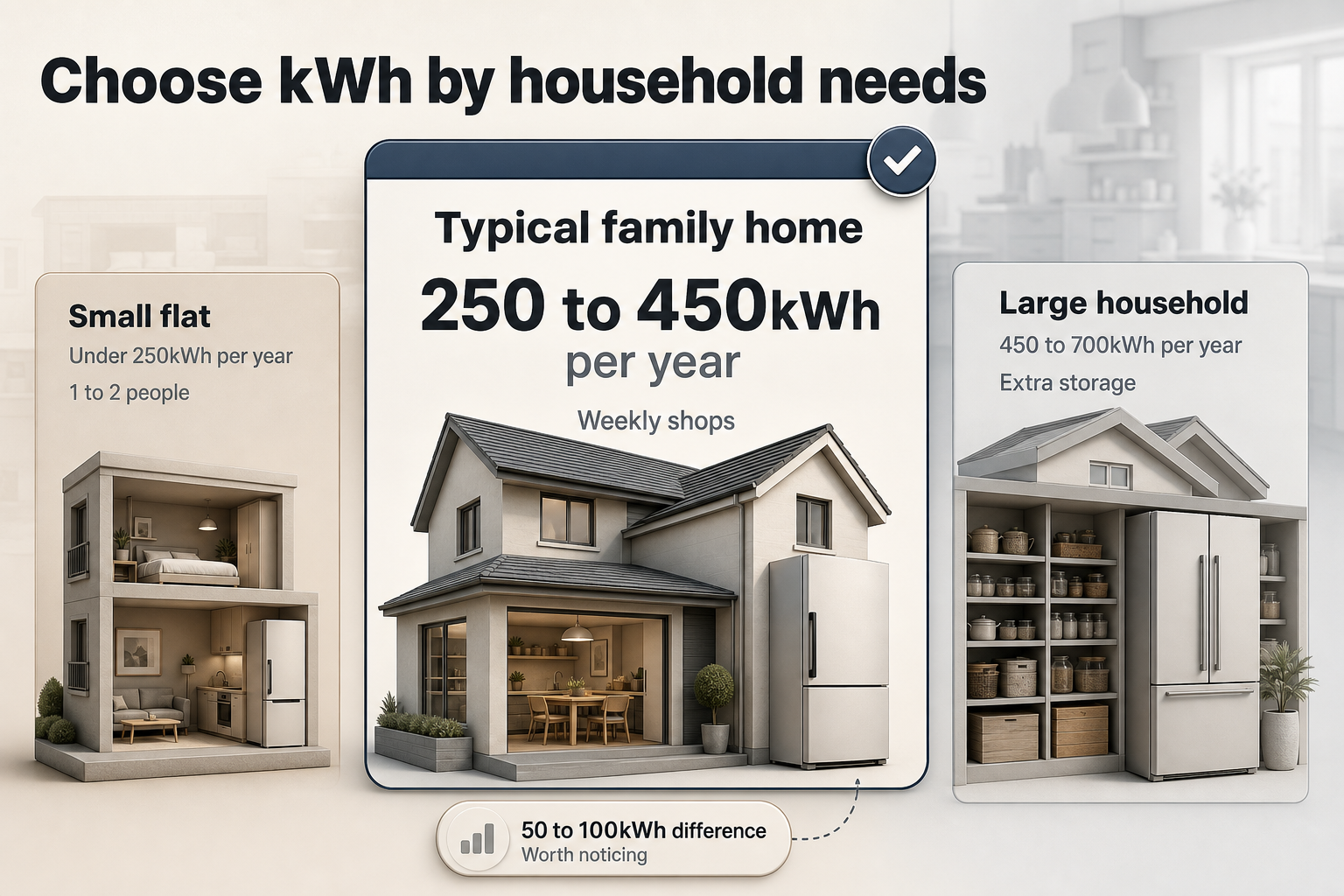
For a typical family home in Hamilton, Christchurch, or Tauranga, the best balance is often in the 250 to 450kWh per year range for a major kitchen appliance like a fridge-freezer. That usually gives you enough usable space for weekly shops without pushing running costs too high. If two similarly sized models are on your shortlist, even a 50 to 100kWh annual difference is worth noticing because the appliance will probably run for many years.
If you have a large household, entertain often, or need extra storage for meal prep, fishing catch, or bulk supermarket runs, you may reasonably end up in the 450 to 700kWh per year bracket. That can still be the right choice if the layout suits your life better. A bigger appliance that prevents food waste can make more sense than a tiny efficient one that is always overstuffed and poorly organised.
For holiday homes, sleepouts, or garage overflow appliances, be especially strict about annual kWh. A second old fridge in the garage can quietly chew through electricity year after year. Consumer NZ’s figures on older fridges show why this matters: appliances from previous decades can use far more power than modern equivalents. (consumer.org.nz) If you only need extra cooling a few times a year, replacing an old spare unit with a newer efficient model can cut running costs noticeably.
NZ-Specific Factors
New Zealand electricity prices vary by region, retailer, plan structure, and time of use, so your own bill matters more than any national average. MBIE tracks domestic electricity price data, while Consumer NZ uses 25c/kWh as an average figure for appliance running-cost comparisons. (mbie.govt.nz) If your household pays closer to 30c/kWh, a 500kWh appliance costs about $150 a year to run instead of $125. Over the life of the appliance, that difference adds up fast.
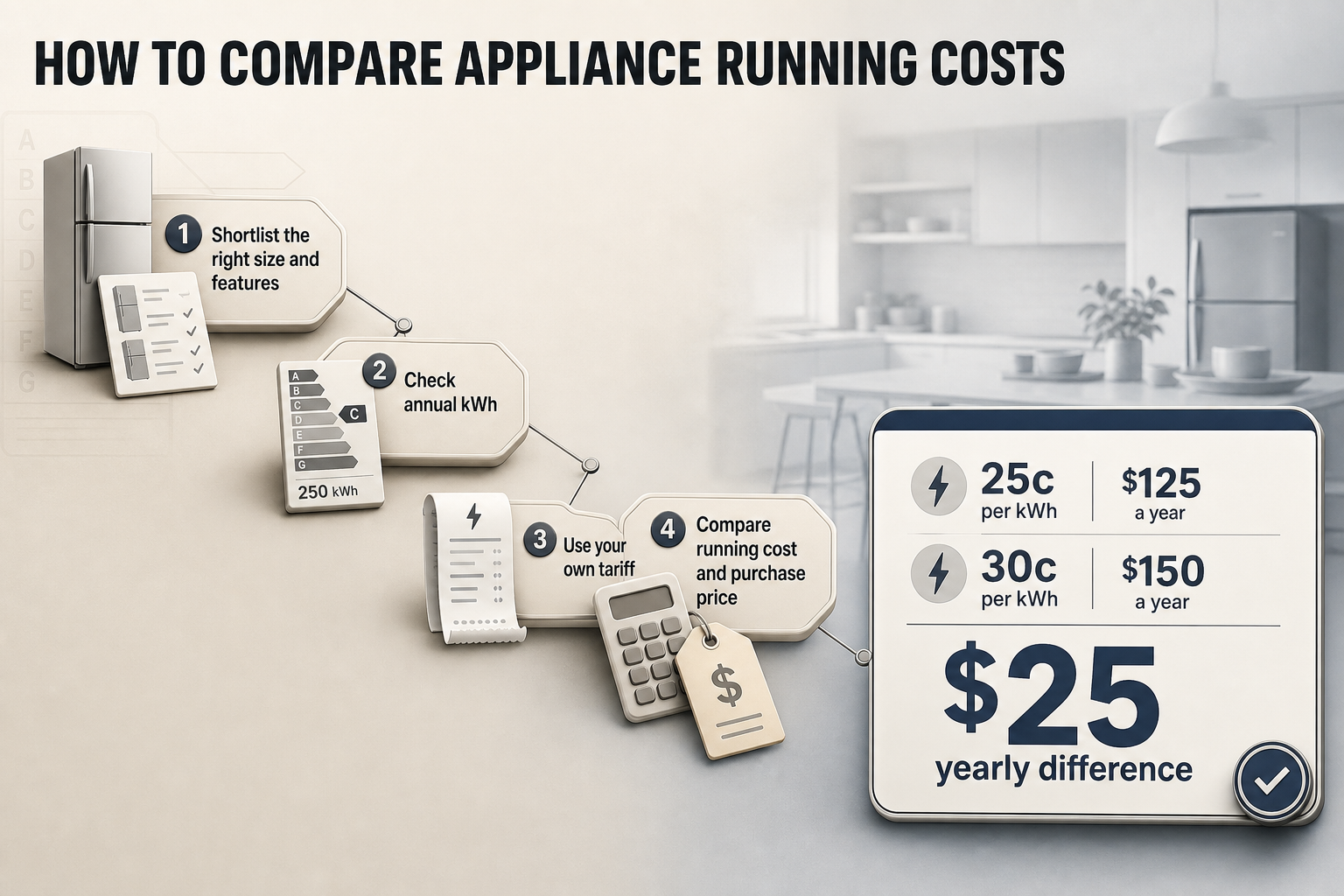
New Zealand’s Energy Rating Label is also worth reading properly. EECA says the label shows annual energy consumption in kWh per year and is designed to help consumers compare appliances and choose products that cost less to run. (eeca.govt.nz) For fridges and freezers, the label is mandatory and based on standard testing, so it gives you a common yardstick across brands. (eeca.govt.nz)
Climate and placement matter too. A fridge in a cool Dunedin kitchen may not work as hard as one in a hot, sun-exposed room in Northland, even if both have the same label figure. The test number is still useful, but your real-world usage can be higher if the appliance sits in a warm garage, next to an oven, or is opened constantly by a busy family.
The smartest way to use this parameter is simple. First, compare only appliances that genuinely meet your size and feature needs. Then look at annual kWh, convert it into dollars using your own tariff, and weigh that against the purchase price. EECA advises using the annual energy consumption number alongside the label rather than relying on stars alone, and that is the best approach for New Zealand buyers trying to keep both upfront cost and ongoing power bills under control. (eeca.govt.nz)
You may also be interested in these independent articles
Sources
- [1]EECA: How to use Energy Rating Labels and star ratings
- [2]EECA: Fridges and Freezers
- [3]EECA: Choose an efficient fridge or freezer to cut costs
- [4]Consumer NZ: Appliance running costs
- [5]Consumer NZ: Energy Rating Labels explained
- [6]Consumer NZ: Can fridges be more energy efficient?
- [7]MBIE: Energy prices
- [8]MBIE: Electricity cost and price monitoring
© 2026 pyfoi. All rights reserved.