
Refrigerator Height Guide for NZ Kitchens
Refrigerator height affects fit, storage and door clearance in NZ kitchens. Learn the right fridge height, cavity space and checks before you buy.
Refrigerator height looks simple on a spec sheet, but it has a big effect on whether a fridge actually works in your kitchen. In New Zealand homes, height can decide how much food space you get, whether the doors open properly, and whether the appliance fits under cabinetry or into a fridge cavity at all. (fisherpaykel.com)
What the Numbers Mean
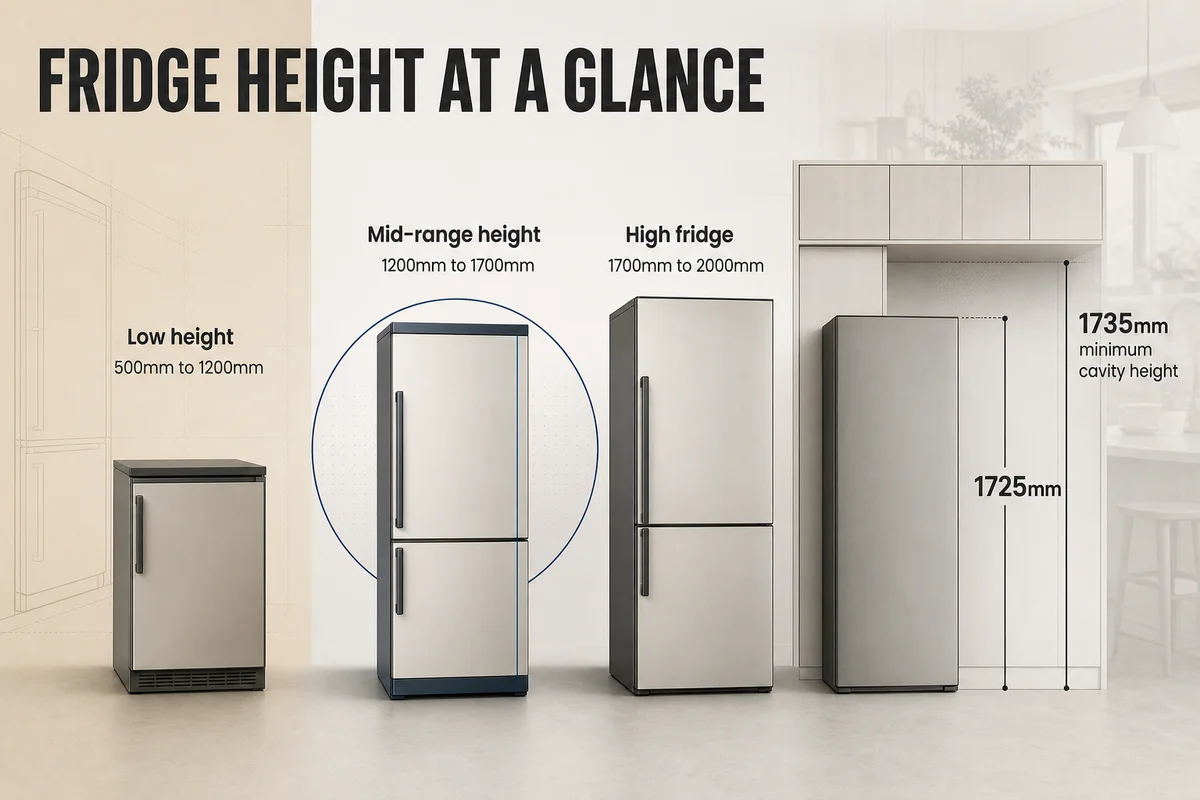
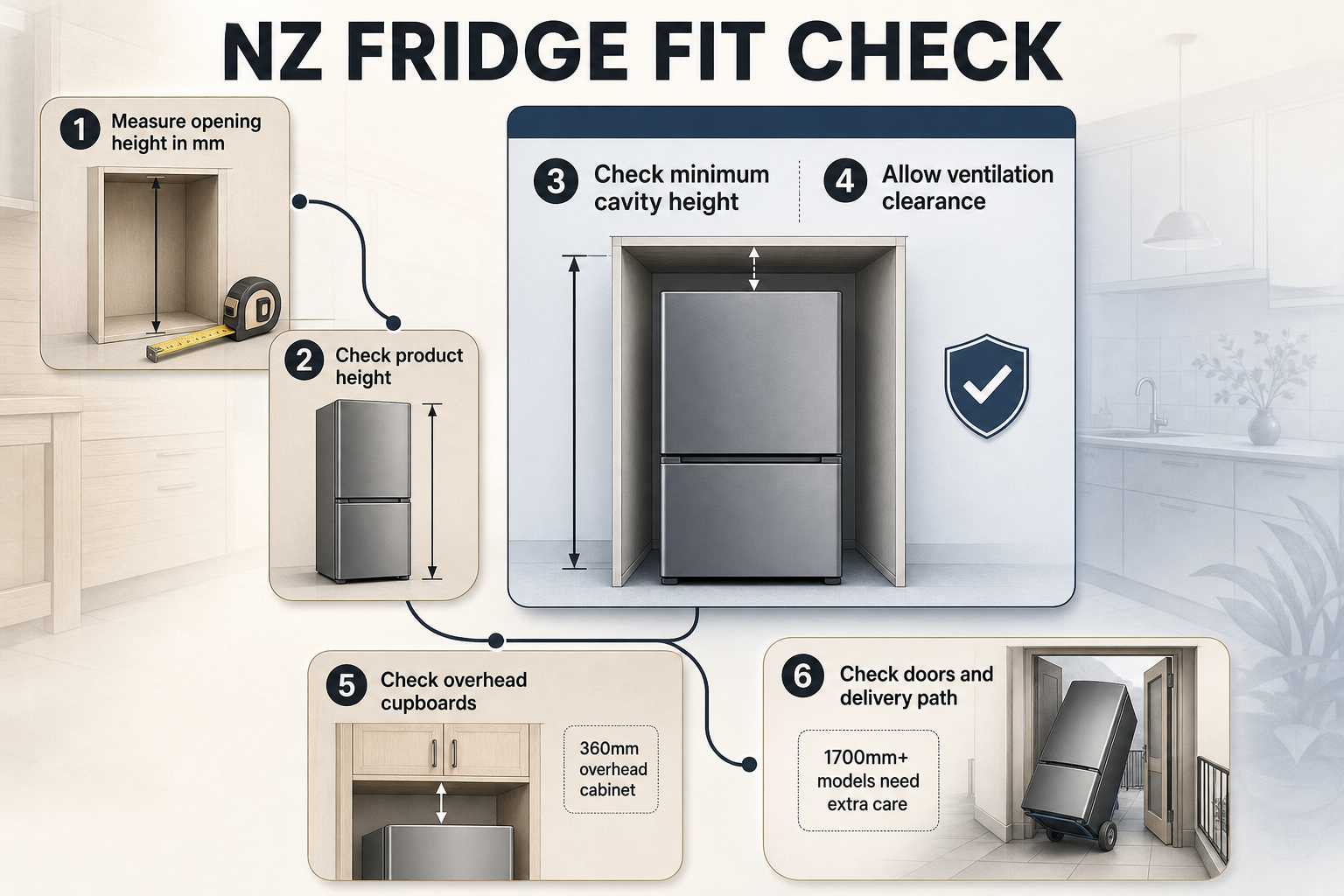
Height is the overall top-to-bottom measurement of the refrigerator, usually given in millimetres. If a product page lists dimensions as width x height x depth, the middle number is usually the height, but you should always double-check because some brands change the order. Manufacturer planning guides also separate product height from minimum cavity height, which matters because the gap above the fridge is part of the installation requirement, not wasted space. (fisherpaykel.com)
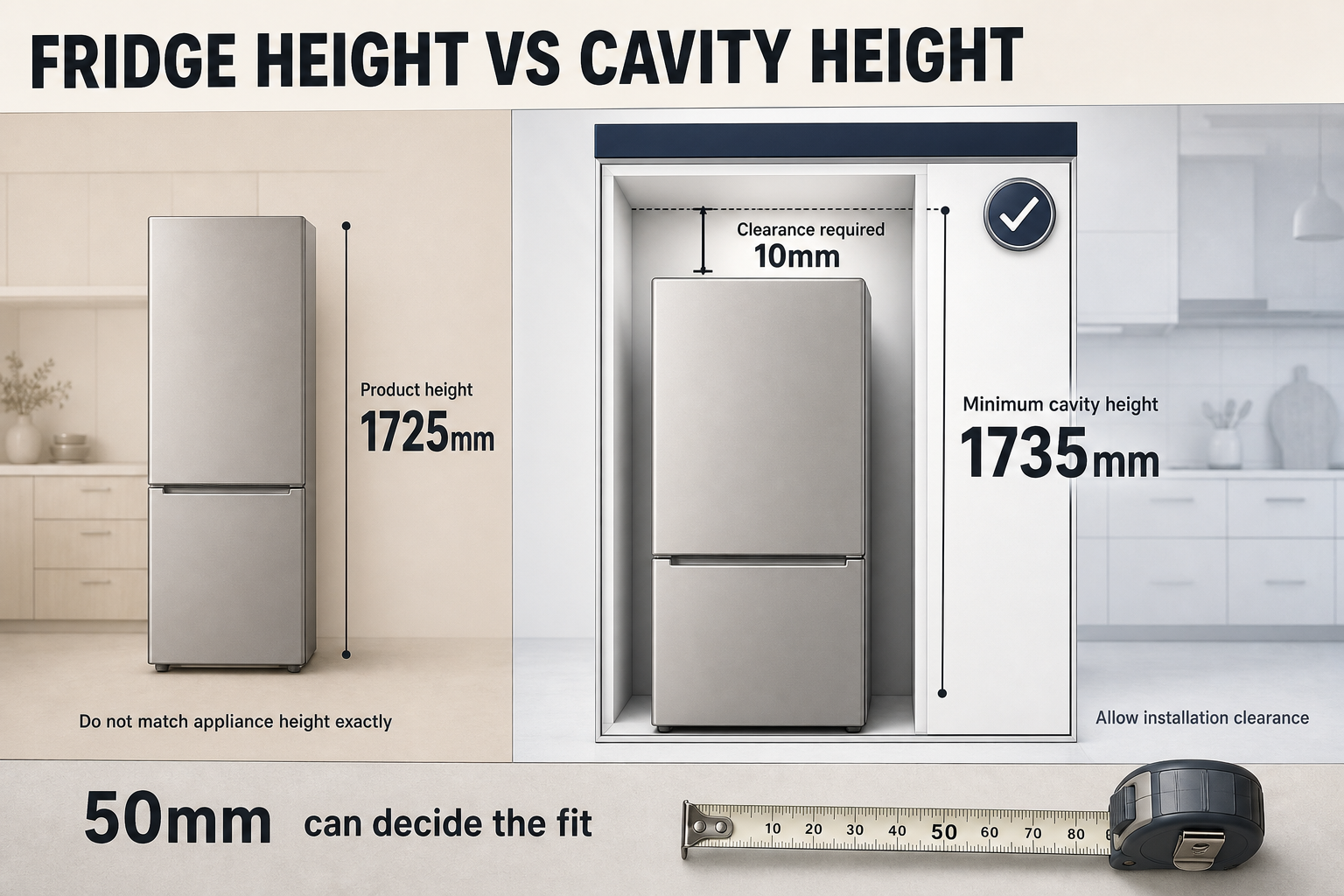
In practical terms, a difference of 50mm can be the gap between a clean fit and a fridge that simply will not slide into place. Fisher & Paykel’s planning guide for one refrigerator freezer shows a product height of 1725mm but a minimum cavity height of 1735mm, which shows why you must allow clearance rather than matching the appliance height exactly to the hole in your cabinetry. (fisherpaykel.com)
Height also affects usable storage. A taller fridge often gives you more volume without taking up more floor area, which is useful in compact Auckland apartments or smaller townhouses where width is limited. That said, extra height can make the top shelf harder to reach, especially for shorter users or in homes where the fridge sits under an overhead cabinet. (haier.co.nz)
Typical Ranges
For refrigerators, a low height usually means roughly 500mm to 1200mm. At the bottom end, these are bar fridges, compact fridges, and under-bench models that suit studios, offices, sleepouts, or as a second drinks fridge in the garage. They are easy to place, but you give up a lot of fresh-food and freezer space. The trade-off is convenience and flexibility rather than family-sized storage.
A mid-range height is about 1200mm to 1700mm. This is where many smaller top-mount and bottom-mount fridges sit, especially models aimed at couples, small families, or homes with tighter kitchen layouts. These can be a sweet spot if you want a full-height appliance feel without stepping into the tallest French-door or side-by-side designs.
A high fridge is usually 1700mm to 2000mm. This is the zone for many larger family fridges, including French-door, side-by-side and tall bottom-mount models. Current NZ examples include a Haier 574L three-door fridge at 1775mm high and a Fisher & Paykel 569L French-door model at 1790mm high. Fisher & Paykel also publishes planning information for integrated refrigeration around the 2.1m class, showing how premium built-in models can push well above standard freestanding heights. (haier.co.nz)
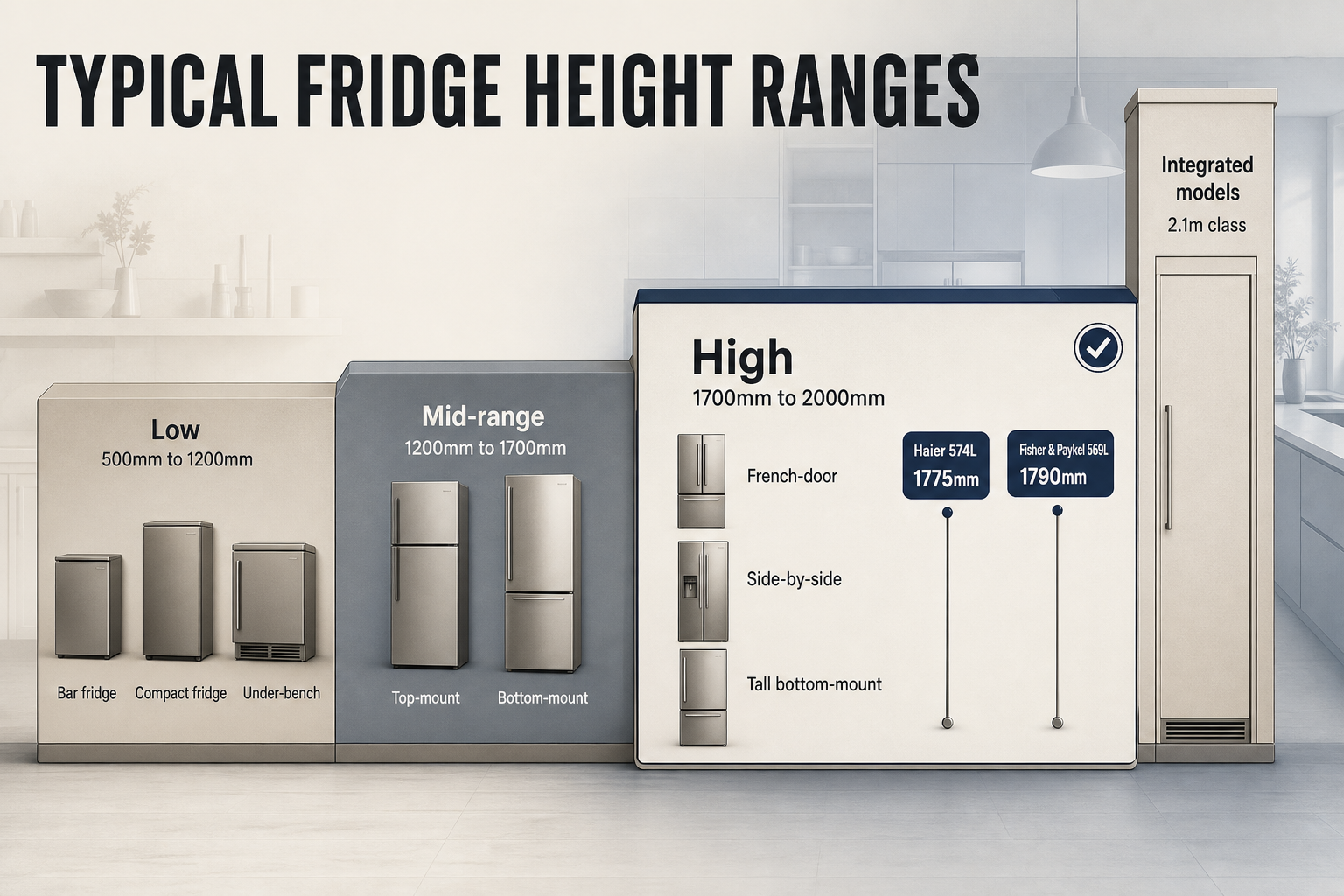
The important point is that taller does not always mean better. A 1790mm fridge can offer excellent capacity, but only if your kitchen cavity, overhead cupboards and ceiling line allow proper installation and ventilation. (fisherpaykel.com)
Use-Case Guidance
If you live in a flat, apartment, or smaller home and mostly shop every few days, a fridge around 1200mm to 1700mm often makes the most sense. You still get proper chilled and frozen storage, but the appliance is easier to fit into older NZ kitchens where cabinetry was not designed around today’s larger fridge sizes. This range is also friendlier if the fridge sits near a doorway, pantry wall, or overhead unit.
For a family of four or anyone who does one large weekly supermarket run, 1700mm to 1850mm is often the practical target. This is where you start to see more generous litre capacities without the fridge becoming excessively wide. That matters in New Zealand kitchens where floor space can be tighter than many buyers expect, especially in older villas, units and first-home townhouses. The Haier 1775mm and Fisher & Paykel 1790mm examples sit right in this family-friendly zone. (haier.co.nz)
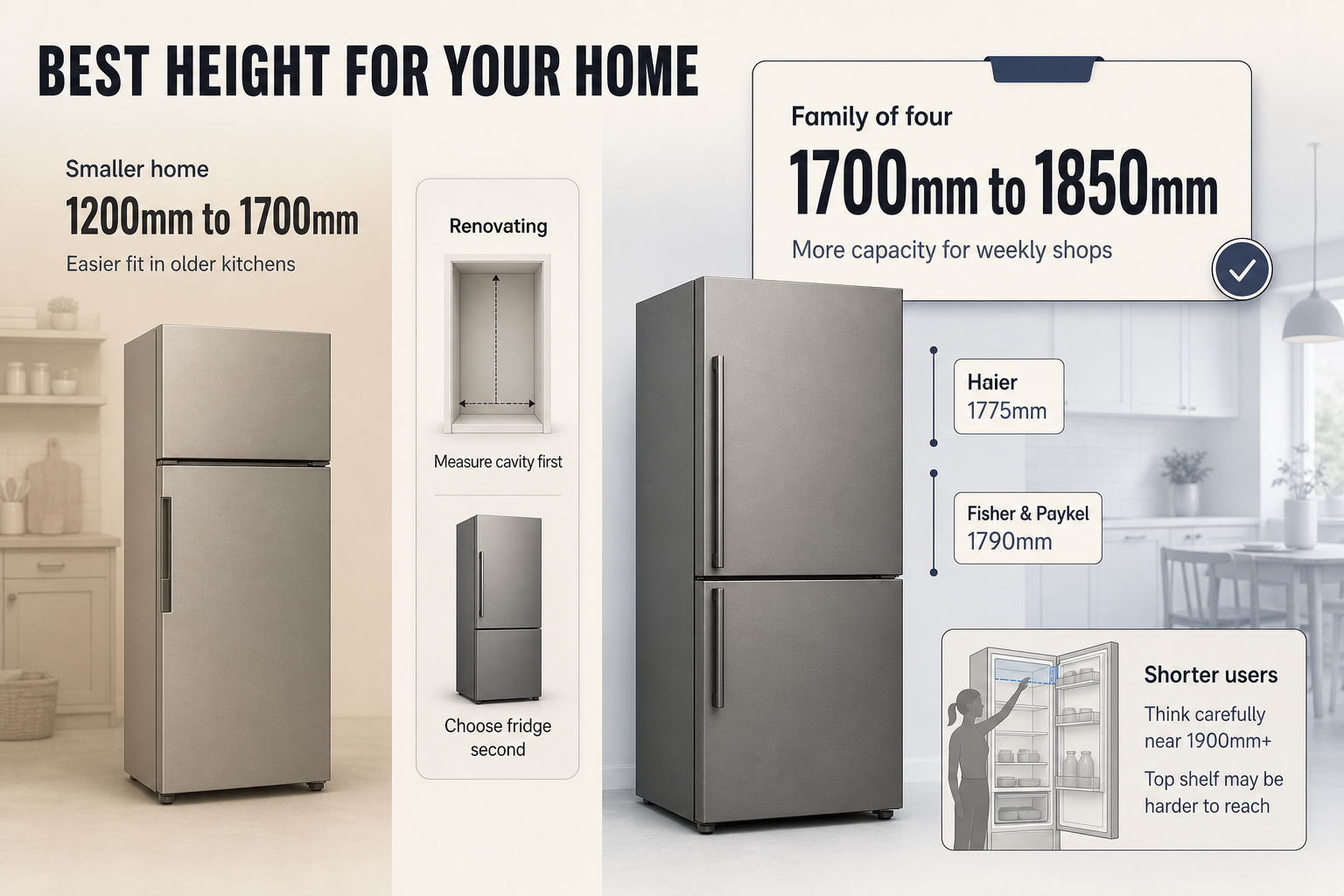
If you are renovating and planning a built-in or near-built-in look, measure for the cavity first and choose the fridge second. Do not assume a nominal 1800mm opening suits an 1800mm appliance. Planning guides show you need clearance above the product, and some designs also need space around hinges, door swing and service connections. (fisherpaykel.com)
For older homeowners or anyone shorter in stature, think carefully before buying the tallest model you can fit. A fridge near 1900mm or more may put everyday items on the top shelf out of comfortable reach. In a busy household, a slightly shorter fridge with better shelf layout can be easier to live with than a taller one with awkward access.
For garages, workshops, sleepouts or holiday homes, lower and mid-height fridges can be the safer bet. They are easier to move through standard doorways and often simpler to position under shelving or against low wall framing. If the appliance is a second fridge rather than your main one, height matters less than whether it fits the space neatly and leaves room for ventilation.
NZ-Specific Factors
Kitchen fit is the big New Zealand issue. Many local kitchens use overhead cabinetry above the fridge space, and off-the-shelf cabinet systems include dedicated overhead units for use over a fridge. Kaboodle, for example, sells an overhead cabinet specifically intended for that area, and its listed cabinet height is 360mm. That is useful because it shows how quickly vertical space gets used up once you combine floor cabinets, benchtop height, fridge height and upper storage. (kaboodle.co.nz)
Benchtop standards matter too, even though the fridge does not sit on the bench. NZ kitchen suppliers commonly work around standard benchtop systems, which shapes the remaining wall height available for tall appliances and overhead cupboards. If your kitchen has been customised, the nominal fridge gap on a plan may not match the real-world opening once panels, fillers and cabinet adjustments are installed. (cabjaks.co.nz)
Delivery access is another local reality. A tall fridge that fits the kitchen on paper still has to get through the front door, around hall corners, and sometimes up tight stairwells in Wellington or Auckland apartments. Before you buy, compare the appliance height not just with the kitchen cavity, but also with door openings and the delivery path. This is especially important for 1700mm-plus models, which are common in the NZ market. (haier.co.nz)
Power use is not directly determined by height, but larger and taller fridges often come with larger capacities, more doors, and more cooling zones. That can add convenience, but it can also increase purchase price and running costs depending on the model and energy rating. If your household does not need a 570L-class fridge, buying a shorter model can save space and money without much sacrifice in day-to-day usability. (haier.co.nz)
The best approach is simple. Measure the exact opening height in millimetres, check the manufacturer’s stated product height, then check whether the brand also gives a minimum cavity height or installation clearance. If you do that before comparing colours, door styles and ice makers, you are far less likely to end up with a fridge that looks perfect online but does not fit a New Zealand kitchen in real life. (fisherpaykel.com)
You may also be interested in these independent articles
Sources
- [1]Haier New Zealand: 574L 500 Series S+ Three-Door Side-by-Side Refrigerator Freezer - HRF575XS
- [2]Fisher & Paykel New Zealand: 569L Series 7 French Door Refrigerator Freezer, Ice & Water - RF610ADUX5
- [3]Fisher & Paykel Planning Guide: Refrigerator Freezers
- [4]Fisher & Paykel Planning Guide: 2.1M High Integrated Refrigeration
- [5]Cabjaks: Benchtop Design Basics
- [6]Kaboodle Kitchen NZ: 750mm Deep Overhead Cabinet
© 2026 pyfoi. All rights reserved.