
Budget vs Premium Fridge Styles in NZ
Comparing budget, mid-range, premium and designer fridge styles in NZ? Learn what affects energy use, value and buyer rights before you buy.
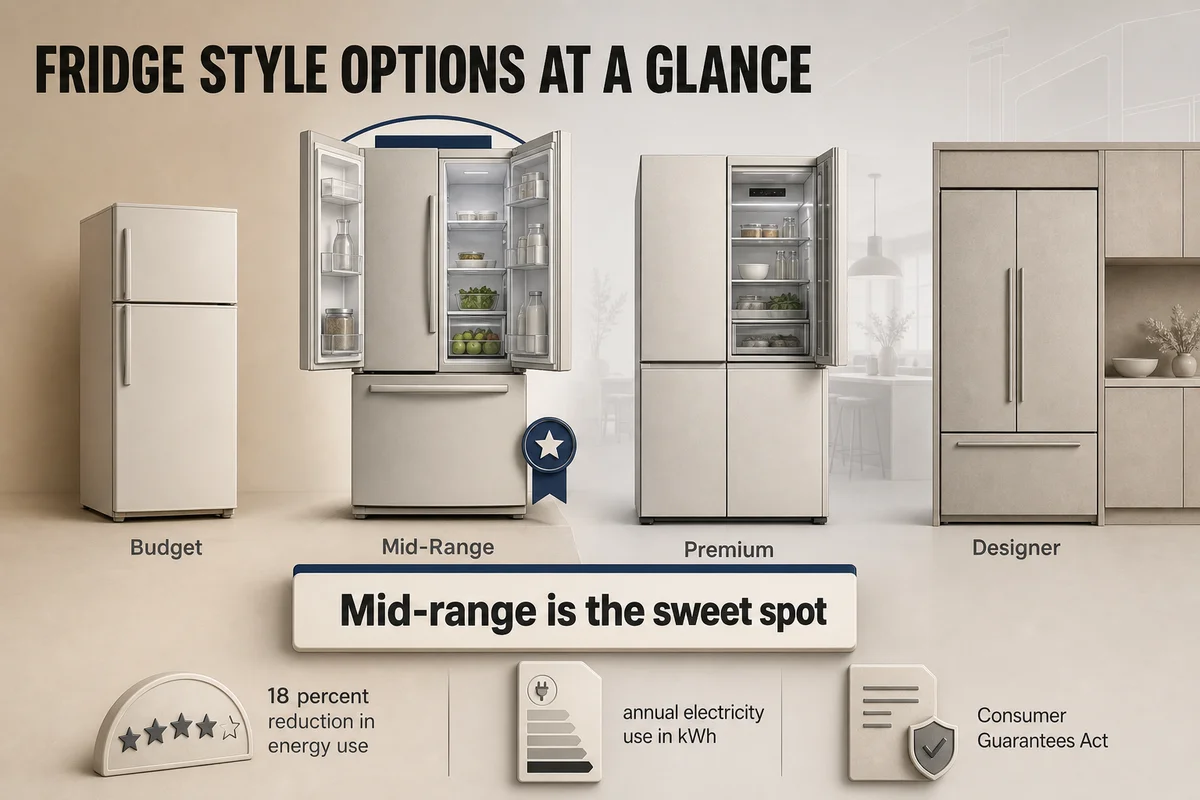
A fridge’s “style” is not just about looks. In practice, it usually signals the overall level of finish, features, materials, technology and brand positioning you are paying for. For New Zealand buyers, that matters because two fridges with similar capacity can feel very different to live with, and can differ a lot in running costs, storage flexibility and long-term ownership rights under local consumer law. (eeca.govt.nz)
The Options
Budget
A budget fridge is the value end of the market. You will usually get the basics done properly: safe food storage, simple shelves, a standard freezer layout and straightforward temperature controls. The finish is often plain white, black or basic stainless-look, with less emphasis on premium materials, hidden hinges, flush-fit cabinetry or advanced cooling systems.
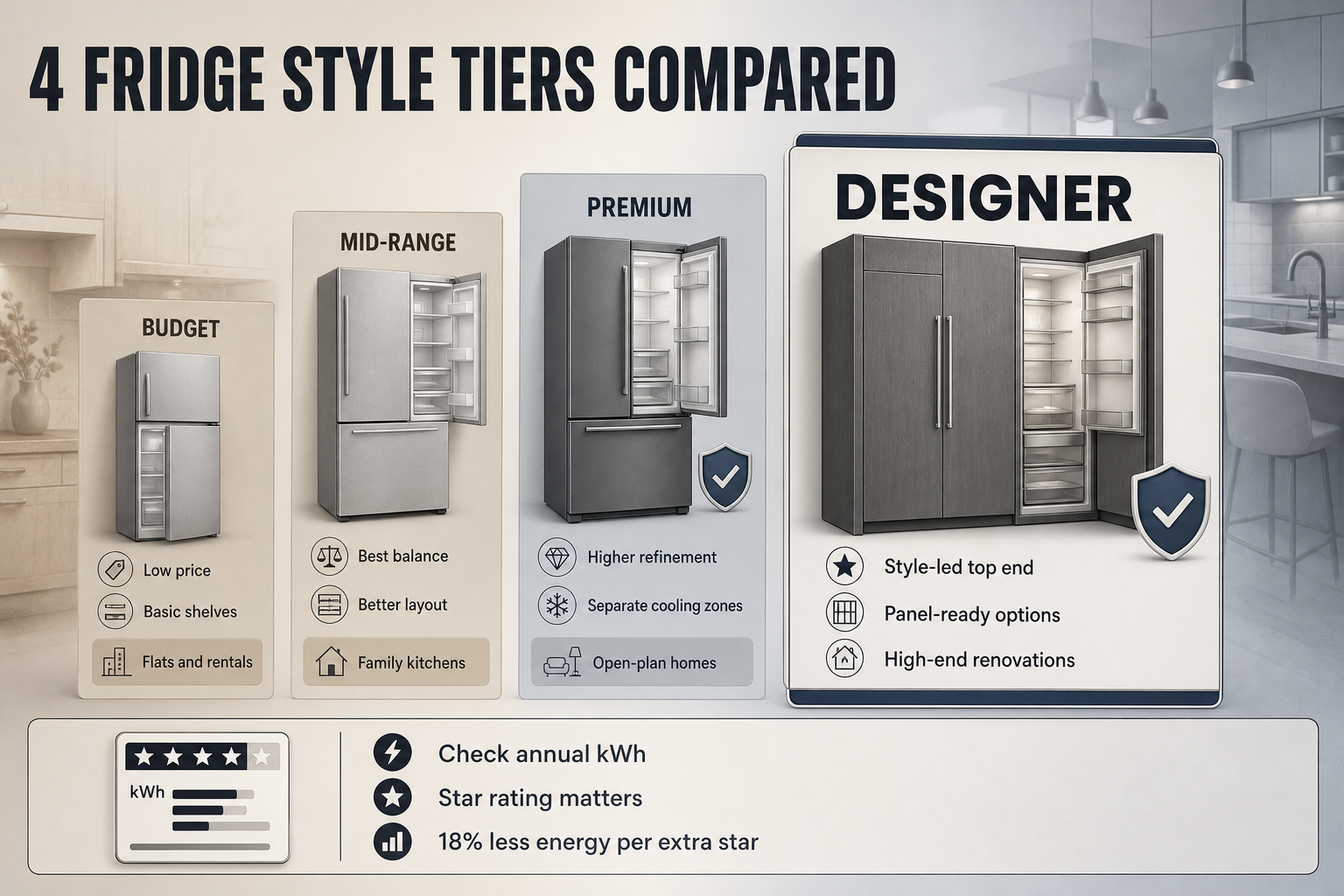
The upside is obvious. Budget models are often the smartest buy if you want dependable refrigeration without paying for features you may never use. They suit flats, rentals, first homes, garages and holiday homes well. If you are replacing a failed fridge quickly, a budget model can also be the least painful option financially.
The trade-off is that you may get noisier operation, fewer shelf positions, less polished drawer hardware and fewer convenience features such as chilled water, dual cooling circuits, smart connectivity or flexible temperature zones. Energy efficiency can also vary, so a cheap purchase price does not always mean low ownership cost. In New Zealand, fridges and freezers sold for home use must display an Energy Rating Label, so you can compare annual electricity use in kWh and the star rating before buying. (eeca.govt.nz)
For NZ households, budget style makes the most sense if your kitchen is simple, your household is small, or the fridge is doing secondary duty in a sleepout, bach or workshop. If you live in Auckland or Wellington and power prices are already biting, check the energy label carefully. EECA says each extra star represents about an 18 percent reduction in energy use for fridges and freezers on the new label scale, which can matter over years of ownership. (eeca.govt.nz)
Mid-Range
Mid-range fridges are where many Kiwi buyers should start. This is the broad middle of the market, where you usually get a noticeable step up in fit and finish, internal layout, lighting and usability without jumping into luxury pricing. Think better shelf design, cleaner exterior styling, more useful door storage and often quieter, more refined operation.
This category often gives you the best balance of price and day-to-day satisfaction. A mid-range fridge is likely to feel nicer every time you open it, not just better on a spec sheet. You may also see improved humidity drawers, frost-free performance, inverter compressors, better LED lighting and more practical family-friendly layouts.
The downside is that mid-range can be a crowded category, and not every model is equally good value. Some brands charge a little more for appearance rather than meaningful gains in food preservation or efficiency. That is why comparing the Energy Rating Label and storage design is more useful than relying on showroom impressions alone. The label’s annual kWh figure makes it easier to compare similar appliances on running cost, not just purchase price. (eeca.govt.nz)
Mid-range suits a lot of New Zealand homes. It is a strong fit for family kitchens in Hamilton, Christchurch and Tauranga, where you want enough flexibility for supermarket shops, lunchboxes and leftovers, but do not need a statement appliance. If you buy fresh produce often, better crisper design and temperature stability can be worth paying for over a bare-bones unit.
Premium
A premium fridge sits above the mainstream on both price and specification. Here you start to see stronger materials, more advanced cooling systems, more precise temperature management and more polished design details. Premium models often offer features such as separate cooling zones, flatter doors, better-quality runners and hinges, quieter compressors, internal water dispensers or more flexible compartments.
The main benefit is a better ownership experience. Premium fridges are usually easier to organise, more pleasant to use and often more convincing in open-plan kitchens where the appliance is in full view. They can also make sense for larger households because the better internal design can be more useful than simply buying more litres.
The catch is diminishing returns. A premium model can cost much more than a mid-range one without doubling your real-world benefit. Some of what you are paying for is refinement rather than necessity. If your fridge lives in a scullery, laundry or rental, that extra spend may not translate into much value for you.
In NZ terms, premium style suits buyers renovating a long-term home, households that cook a lot, or families that need better food management through the week. If you live in a newer build with an open-plan kitchen and want the fridge to match better cabinetry and higher-end finishes, premium is often the point where the appliance starts to feel properly integrated into the room rather than just placed in it.
Designer
A designer fridge is the top end of style-led refrigeration. This category is about visual impact, architectural integration and brand identity as much as cooling performance. Designer models may include panel-ready options, highly distinctive finishes, seamless built-in appearance, statement handles, specialist dimensions and premium interior materials. In many cases, the fridge is intended to be part of the kitchen design rather than a standalone whiteware purchase.
The appeal is clear if you are building or renovating an upscale kitchen. A designer fridge can deliver the clean, tailored look that a standard freestanding model cannot. It may also come with advanced food-preservation systems, custom storage and strong attention to tactile quality.
The drawback is value. Designer appliances often carry a steep price premium for aesthetics, exclusivity and integration. Repairs and replacement parts may also be more brand-specific. You should be especially careful about cabinet planning, ventilation clearances and whether the service network in New Zealand is strong enough for the brand you choose. Consumer Protection notes that your rights under the Consumer Guarantees Act still apply to household appliances bought in New Zealand, and those rights sit alongside any manufacturer warranty. (consumerprotection.govt.nz)
Designer style makes the most sense for high-end renovations in places such as Remuera, Queenstown or central Christchurch apartments, where kitchen appearance is a major part of the project. It is usually unnecessary for a standard family kitchen unless design cohesion matters as much to you as pure practicality.
How to Choose
The best way to choose fridge style is to start with your real use, not your aspirational kitchen mood board. If you mainly want reliable cold storage for a couple or small family, budget or mid-range will often do the job perfectly well. If you are replacing a fridge in a rental, bach or utility space, paying for designer finishes rarely makes sense.
Mid-range is the sweet spot for many NZ buyers because it often gives you the biggest jump in everyday usability for a manageable increase in price. Better shelf flexibility, smoother drawers and stronger energy performance can improve life more than flashy features. That is particularly true if your fridge is opened constantly by kids, flatmates or a busy household.
Premium is worth considering if you cook often, buy lots of fresh food or want a quieter, better-finished appliance in an open-plan home. Designer only makes sense if the fridge is part of a broader kitchen design brief and the visual outcome matters enough to justify the cost. You probably do not need a designer fridge for a standard suburban kitchen, just as you probably do not need to pay luxury money for features you will never use.
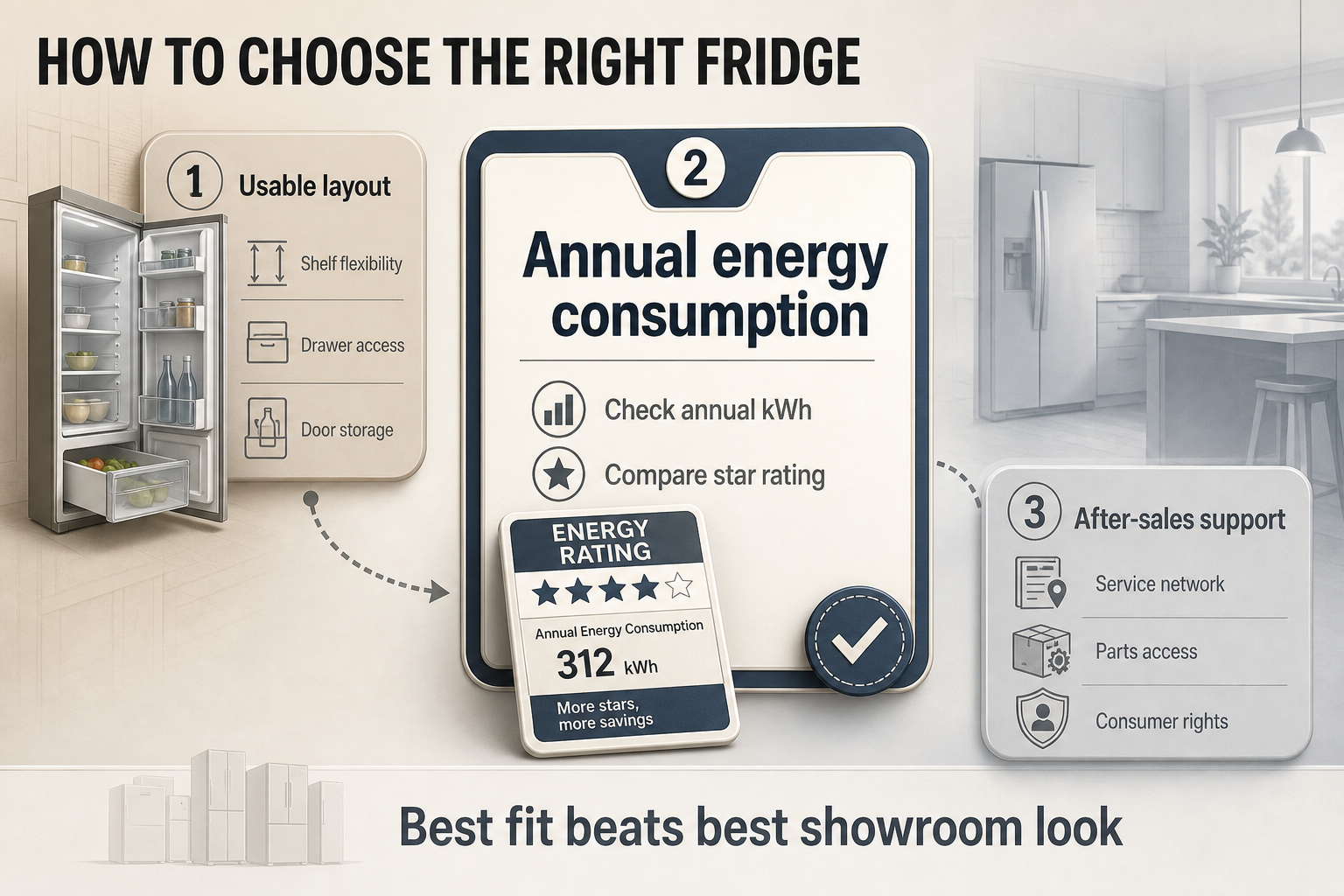
A good rule is to compare three things side by side: usable layout, annual energy consumption and after-sales support. A fridge that looks impressive in store but wastes shelf space or uses more power every year may be the weaker buy. EECA’s labelling scheme is there precisely to help you compare similar products on efficiency before you commit. (eeca.govt.nz)
NZ Context
New Zealand buyers should treat energy efficiency as part of style, not separate from it. Fridges run all year, so the Energy Rating Label matters. EECA says the label is mandatory for household fridges and freezers sold here, and it shows both star rating and annual electricity use in kWh. That gives you a clearer picture of running cost than style labels such as budget or premium ever can. (eeca.govt.nz)
Kitchen size also matters in NZ housing stock. Older villas, smaller townhouses and many apartments can limit width, door swing and ventilation space, so a premium or designer fridge may create installation headaches if you buy on looks alone. In a modest kitchen, a well-planned mid-range model can be a smarter purchase than a larger premium unit that dominates the room and wastes usable space.
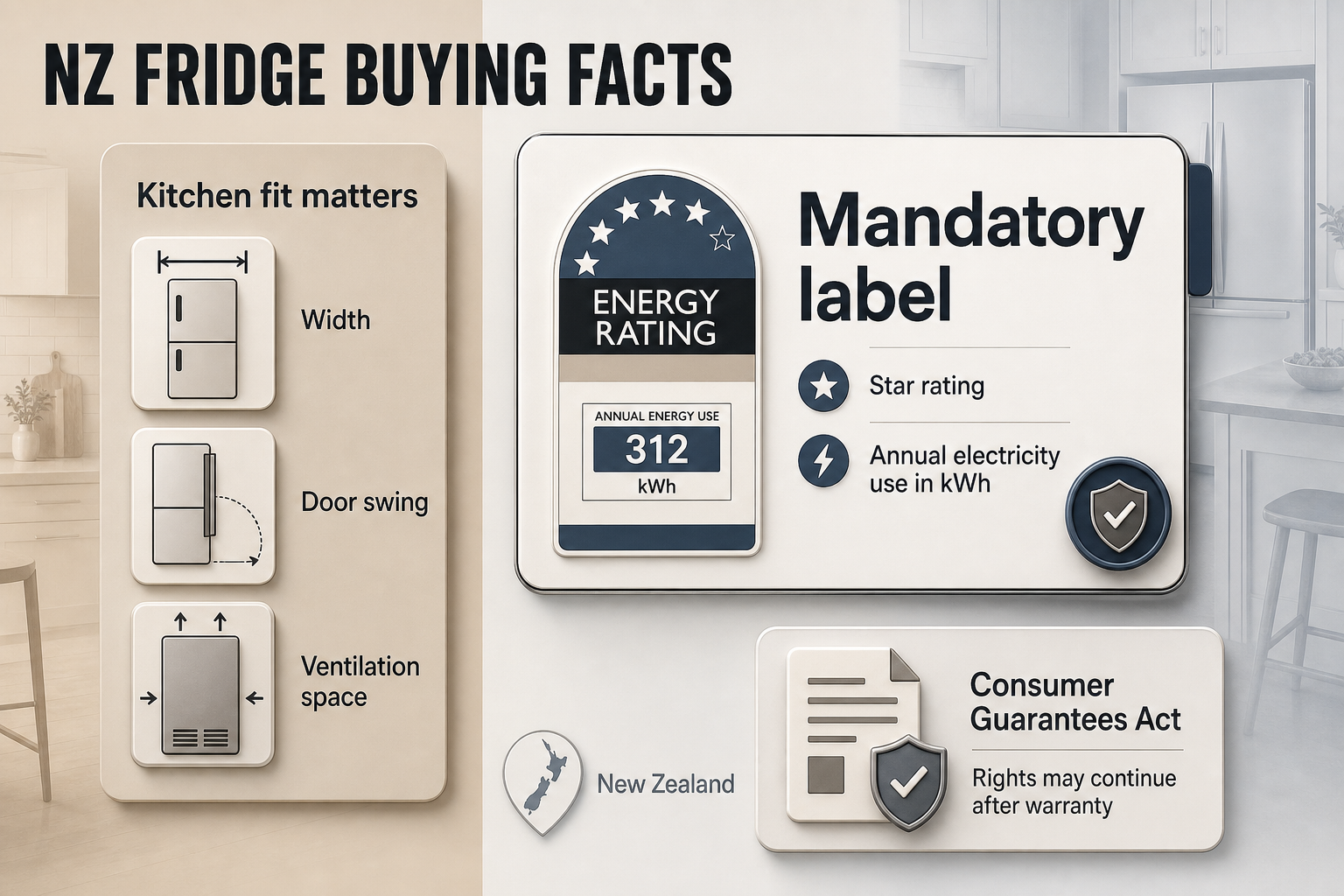
Finally, remember that price tier does not replace your legal protections. Consumer Protection says the Consumer Guarantees Act applies to household goods bought from businesses in New Zealand, and your rights can continue even after a manufacturer warranty expires. That matters at every style level, but especially when you are spending premium or designer money and expect a longer service life. (consumerprotection.govt.nz)
You may also be interested in these independent articles
Sources
- [1]EECA - Fridges and Freezers Energy Rating Labels
- [2]EECA - How to use Energy Rating Labels and star ratings
- [3]Consumer Protection NZ - Warranties
- [4]Consumer Protection NZ - Consumer Guarantees Act
- [5]Consumer Protection NZ - Faulty appliances and devices
- [6]Consumer NZ - Energy Rating Labels explained
© 2026 pyfoi. All rights reserved.