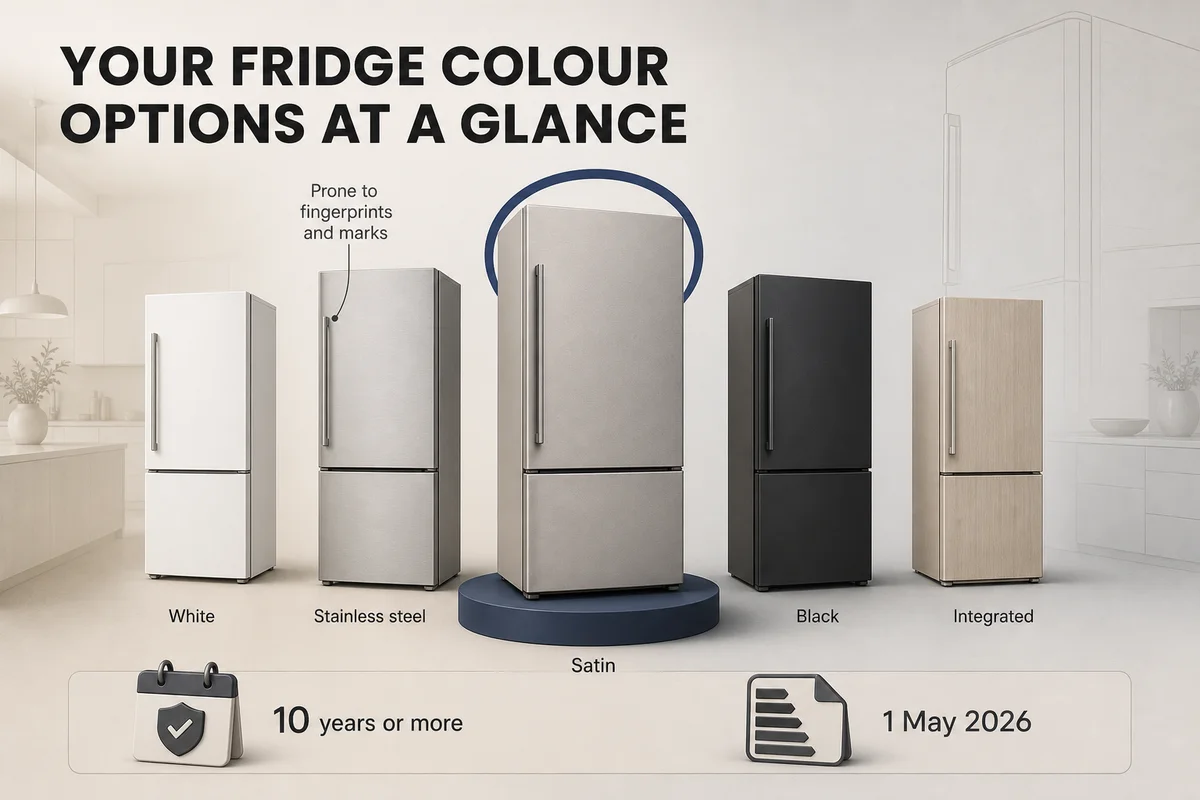

What Fridge Colour Should You Choose?
Choosing a fridge colour affects cleaning, style and resale. Compare stainless, black, white and integrated finishes for NZ kitchens in 2026.
A fridge colour sounds like a style choice, but it affects more than looks. In a New Zealand kitchen, the finish you choose can change how often you clean fingerprints, how well the appliance suits your cabinetry, and even how easy it is to live with in a busy family home.
The good news is that there is no single best colour. The right choice depends on your kitchen style, your tolerance for marks and smudges, and whether you want the fridge to stand out or disappear into the room.
The Options
Stainless steel
Stainless steel is the classic modern fridge finish. In plain terms, it is a metallic look designed to resemble brushed steel, and on many models it gives the kitchen a more premium, commercial feel. In NZ retailers and reviews, stainless steel remains one of the most common alternatives to traditional white. Consumer NZ notes that stainless steel is popular, but also prone to fingerprints and marks. (consumer.org.nz)
The main advantage is versatility. Stainless steel works in contemporary kitchens, pairs well with black, white, timber and stone surfaces, and tends to look more upmarket than basic painted finishes. It can also age well visually because it is less likely to look dated than trend colours.
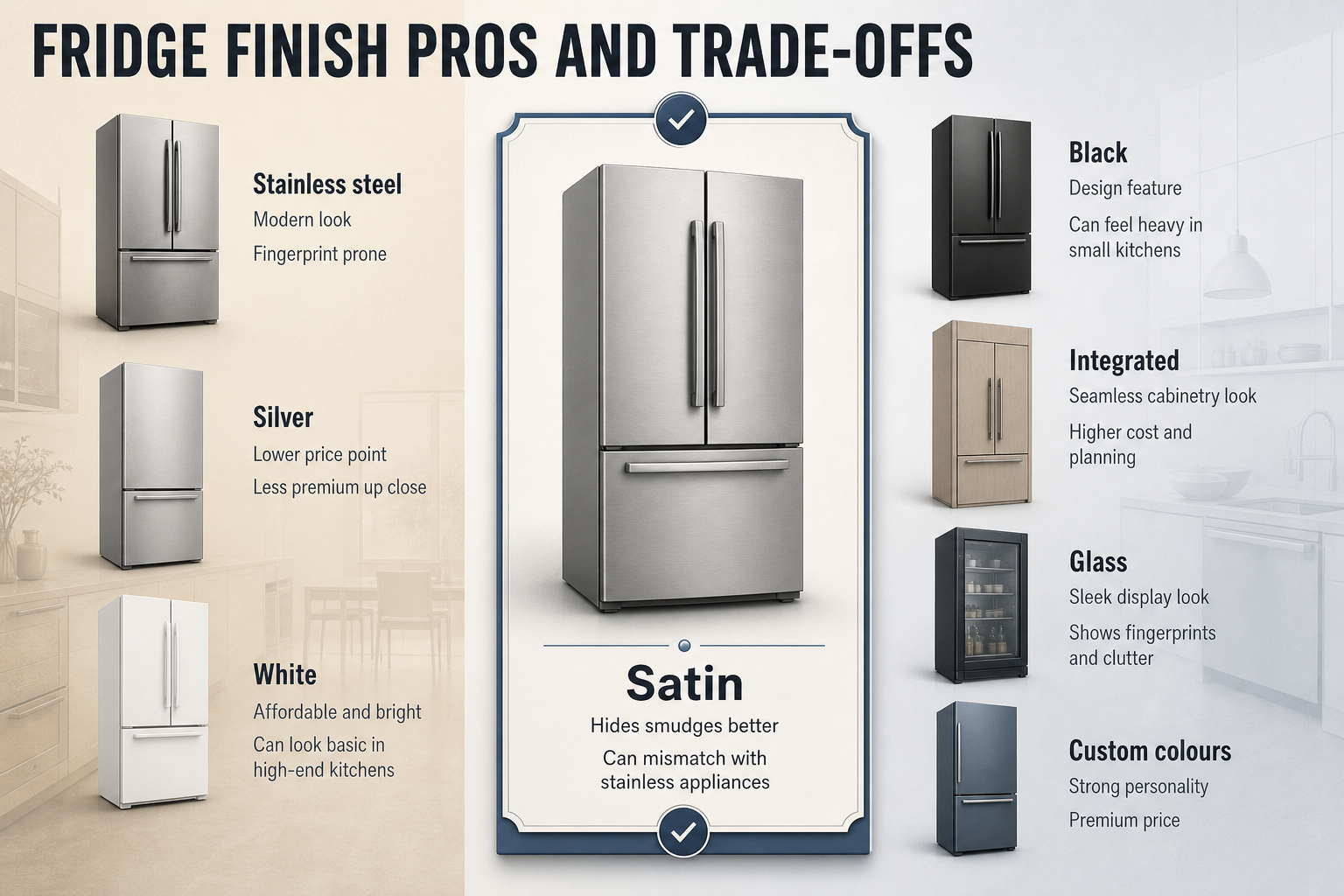
The downside is maintenance. If you have young children, you will see fingerprints around the handles and door edges quickly unless the model has a fingerprint-resistant coating. Scratches and dents can also be more obvious in bright light. In coastal NZ areas with salty air, exterior care matters more, especially if the fridge is near open-plan indoor-outdoor spaces.
Stainless steel suits buyers who want a safe, widely appealing finish. It makes sense in family kitchens in Auckland, Wellington and Christchurch where you want broad resale appeal and a modern look without going too bold.
Satin
Satin is similar to stainless steel in spirit, but softer and less reflective. Some brands use names like satina or matte metallic finishes. Think of it as a muted metal look rather than a bright brushed-steel appearance.
Its biggest strength is practicality. A satin finish usually hides smudges, streaks and fine scratches better than shinier stainless steel. That can make a real difference in a household where the fridge door is opened dozens of times a day. It also tones down reflections in smaller kitchens with strong afternoon sun.
The trade-off is that satin can be harder to match exactly with other appliances if your oven, dishwasher and microwave are all a more traditional stainless look. If the finishes are close but not identical, the kitchen can look slightly mismatched.
Satin is a smart option for busy homes that want a modern metallic finish without the constant wipe-down routine. It is especially useful in open-plan homes where the kitchen gets a lot of natural light and every smudge would otherwise show up.
Black
Black fridges have become more common in premium and design-led kitchens. This includes matte black and gloss black finishes. Technically it is just a dark exterior finish, but visually it changes the whole feel of the kitchen.
The appeal is obvious. Black can look sharp, expensive and deliberate. It works well with timber cabinetry, white benchtops, darker stone, and industrial-style interiors. Matte black in particular can hide some fingerprints better than glossy black, though dust, grease haze and light-coloured marks may still show.
The downside is that black can dominate a smaller kitchen. In compact apartments or older NZ homes with tighter galley kitchens, a large black fridge can make the space feel heavier. Gloss black also shows streaks easily. In kitchens that get strong direct sun, dark finishes can highlight dust faster than white or satin.
Black works best if you want the fridge to be a feature rather than something that blends in. It suits renovated villas, new builds with darker joinery, and buyers who are already committing to black tapware or darker appliances elsewhere.
Silver
Silver is often confused with stainless steel, but it is usually a painted or coated metallic finish rather than actual stainless-look metal. It gives you a similar light-grey appearance, often at a lower price point.
The advantage is value. Silver can deliver a modern look without the cost premium that sometimes comes with stainless models. It is also less formal visually, so it can suit more affordable kitchens or rental properties where you still want something smarter than plain white.
The compromise is that silver can look less premium up close. Depending on the coating, it may not have the same depth or texture as stainless or satin. If damaged, the underlying material may also be more noticeable.
Silver is a sensible middle-ground choice for landlords, first-home buyers and anyone updating a kitchen on a tighter budget. It gives a modern appearance without pushing the fridge into the spotlight.
Custom colours
This category covers everything outside the usual neutrals, such as red, cream, green, yellow or brand-specific designer finishes. Consumer NZ notes that black, red and other coloured models are available, and that these often command a premium price. (consumer.org.nz)
The big benefit is personality. A coloured fridge can turn a practical appliance into part of the kitchen design. In a retro-inspired home, bach renovation or eclectic apartment, that can work brilliantly. It can also soften a kitchen that would otherwise feel too plain or too white.
The downside is long-term flexibility. Strong colours are harder to match if you later change cabinetry, flooring or wall paint. They can also narrow resale appeal. What feels fun and distinctive to you may feel limiting to the next owner or tenant.
Custom colours make the most sense when the fridge is intentionally part of the decor. If you are building a kitchen around a specific style, they can be worth it. If you just want something “different”, be careful not to pay extra for a look you may tire of.
Integrated
An integrated fridge is designed to sit behind cabinetry or accept a matching panel so it blends into the kitchen. In other words, you are not really choosing an appliance colour at all. You are choosing a hidden appliance look.
This is the cleanest, most architectural option. Integrated fridges are ideal if you want a seamless kitchen where the refrigerator does not interrupt the cabinetry line. They are especially popular in higher-end renovations and compact spaces where visual calm matters.
The trade-offs are cost and planning. Integrated models usually cost more, and installation is more demanding because cabinet dimensions, ventilation and door clearances need to be right. You also need to think ahead if you ever replace the appliance. The panel system and cavity size can limit your future options. Manufacturer guidance and installation specifications matter here, especially for airflow around the unit. (consumer.org.nz)
Integrated fridges suit buyers doing a full kitchen renovation, not a simple appliance swap. They are common in premium urban homes where the kitchen joins directly to the living area and a minimalist look is part of the brief.
White
White is the traditional fridge finish, and there is a reason it has lasted. It is simple, bright, easy to live with and usually one of the most affordable options.
A white fridge can make a small kitchen feel lighter. It blends naturally into many older NZ kitchens that already have white cabinetry, pale walls or standard white appliances. It also hides dust better than black and often looks cleaner between wipes than glossy dark finishes.
The drawback is mostly aesthetic. In a high-end kitchen with stone benchtops and darker joinery, white can look basic unless the whole space is designed around that lighter look. It may also show scuffs over time, especially in rentals or busy family homes.
White is still a very sensible choice for first homes, rentals, utility spaces and households that care more about value and practicality than design statements.
Glass
Glass-door fridges use a glass front, sometimes clear and sometimes tinted or coloured. Some have a steel frame, but the defining feature is the glass-facing door. This is more common on specialist beverage fridges and some premium kitchen models than on standard family fridge-freezers.
The obvious advantage is appearance. Glass looks sleek and contemporary, and on display-style models it lets you see inside without opening the door fully. For entertaining spaces, butlers’ pantries or dedicated drinks storage, that can be a real plus.
There are downsides. Glass shows fingerprints readily, and if it is clear, you will also see clutter inside unless you keep it organised. Depending on the model, glass-front designs may be more niche and less practical as a main household fridge. In a family kitchen, that showroom look can wear thin if the shelves are full of school lunches and sauce bottles.
Glass works best for buyers who care strongly about presentation, or for secondary refrigeration in a media room, office or entertaining area rather than the main kitchen workhorse.
How to Choose
Start with your kitchen, not the showroom lights. A finish that looks stunning under retail lighting can be annoying at home if it shows every fingerprint or clashes with your cabinetry. If your kitchen is already busy with strong colours, patterned splashbacks or mixed materials, a quieter finish such as white, satin or integrated often works better.
Be honest about cleaning. If you have children, flatmates or a household that treats the fridge like a public doorway, glossy black and standard stainless can become high-maintenance. Consumer NZ specifically warns that stainless steel is prone to fingerprints and marks, so a matte or fingerprint-resistant surface is worth seeking out. (consumer.org.nz)
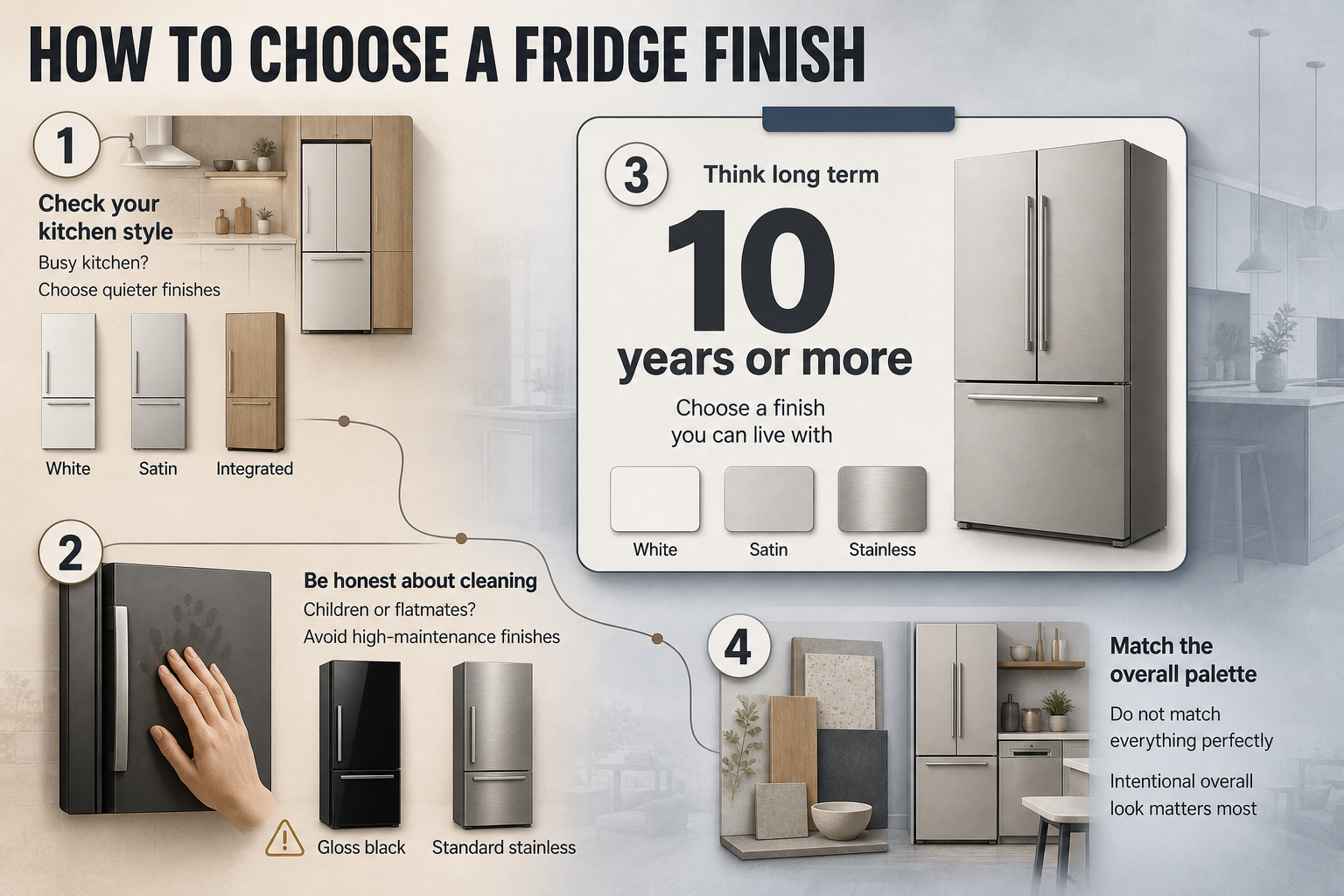
Think about how long you will keep the appliance. Consumer NZ says a new fridge should last 10 years or more, so your colour choice needs to survive changing tastes. (consumer.org.nz) A safe finish like white, satin or stainless is easier to live with over time than a bold custom colour chosen on impulse.
You also do not need to match everything perfectly. A common mistake is assuming the fridge must be the same finish as every other appliance. In many NZ kitchens, a black fridge can work with a stainless oven, or a white fridge can still look right in a timber kitchen. What matters more is whether the overall palette feels intentional.
NZ Context
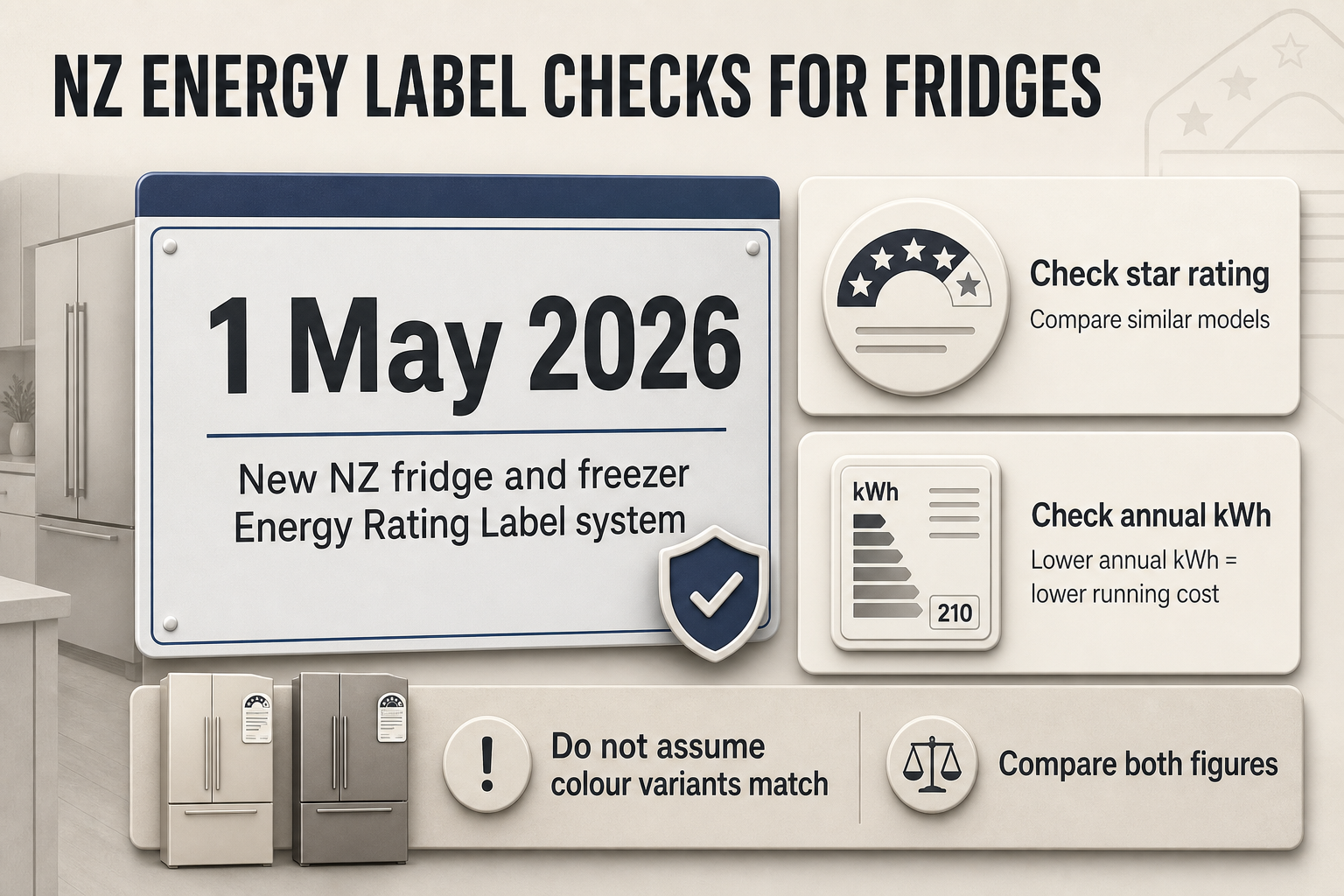
For NZ buyers, colour should never distract from energy performance. Fridges and freezers sold here must display an Energy Rating Label, and EECA says you should compare both the star rating and the annual kWh figure when shopping. The annual energy figure is based on standardised testing, and from 1 May 2026 products imported or manufactured in New Zealand must use the new fridge and freezer Energy Rating Label system. (eeca.govt.nz)
That matters because a stylish finish can tempt you into paying more for looks while ignoring running costs. EECA advises that the lower annual kWh number means lower running cost, regardless of appliance size, and that the star rating helps compare similar models. (eeca.govt.nz) If you are choosing between two colours of the same fridge, check whether both variants have identical energy figures rather than assuming they do.
NZ homes also vary a lot. A damp southern villa, a compact Auckland apartment and a new-build Waikato family home can all suit different finishes. In smaller kitchens, white and integrated models can make the room feel less crowded. In open-plan homes where the kitchen is always visible, black, satin and integrated finishes often earn their keep because they look more intentional as part of the living space.
You may also be interested in these independent articles
Sources
- [1]EECA: How to use Energy Rating Labels and star ratings
- [2]EECA: Fridges and Freezers
- [3]EECA: Choose an efficient fridge or freezer to cut costs
- [4]EECA: Requirements under E3 - Fridges and freezers
- [5]Consumer NZ: How to buy the best fridge
- [6]Consumer NZ: Fridges reviews and buying guide
- [7]Consumer NZ: How we test fridges
- [8]Consumer NZ: How to buy the best dishwasher
© 2026 pyfoi. All rights reserved.