
Fridge Additional Warranty in NZ Explained
Fridge additional warranty in NZ often covers only compressor or sealed-system parts. Learn what the years mean, what is excluded, and why it matters.
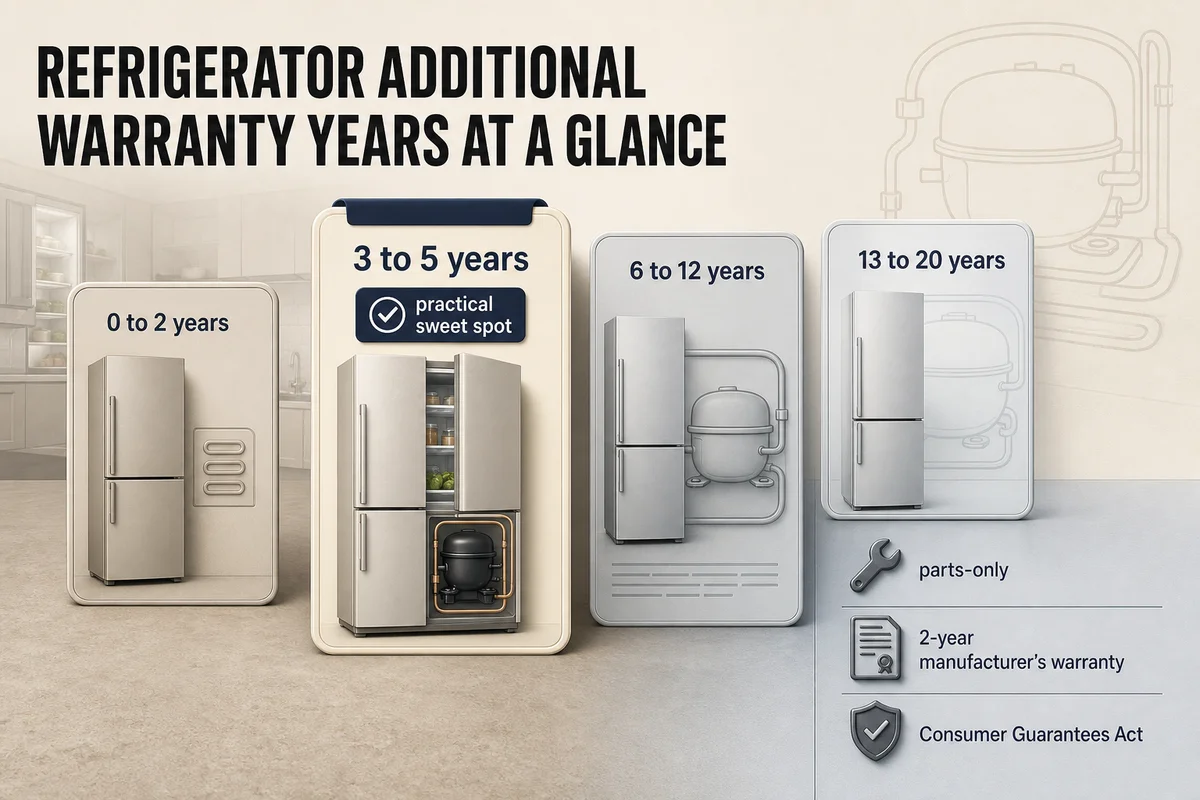
The “additional warranty” figure on a refrigerator usually refers to extra cover on major sealed-system parts such as the compressor, condenser, evaporator and connecting tubing after the standard full warranty ends. In practice, this number can look reassuring, but for New Zealand buyers it only matters if you understand what is actually covered, for how long, and whether labour is included.
What the Numbers Mean
For refrigerators, this parameter is measured in years and usually starts after the standard manufacturer warranty expires. A fridge might come with a 2-year full product warranty, then an extra 3 years on the sealed refrigeration system, giving you 5 years of cover on those specific parts. Fisher & Paykel, for example, states a 2-year manufacturer’s warranty for parts and labour in New Zealand, followed by a further 3 years of parts-only cover on the sealed refrigeration system. (fisherpaykel.com)
That distinction matters because “additional warranty” does not usually mean your whole fridge is protected for that full period. It often applies only to the compressor or sealed system, which are expensive core components but not the shelves, door seals, electronics, ice makers, fans or cosmetic finishes. LG New Zealand says it will repair the sealed refrigeration system for a further 3 years after the original warranty expires, while Samsung New Zealand notes that some refrigerators have 5, 10, 11 or even 20-year compressor-related cover depending on model, with some offers being parts-only. (lg.com)
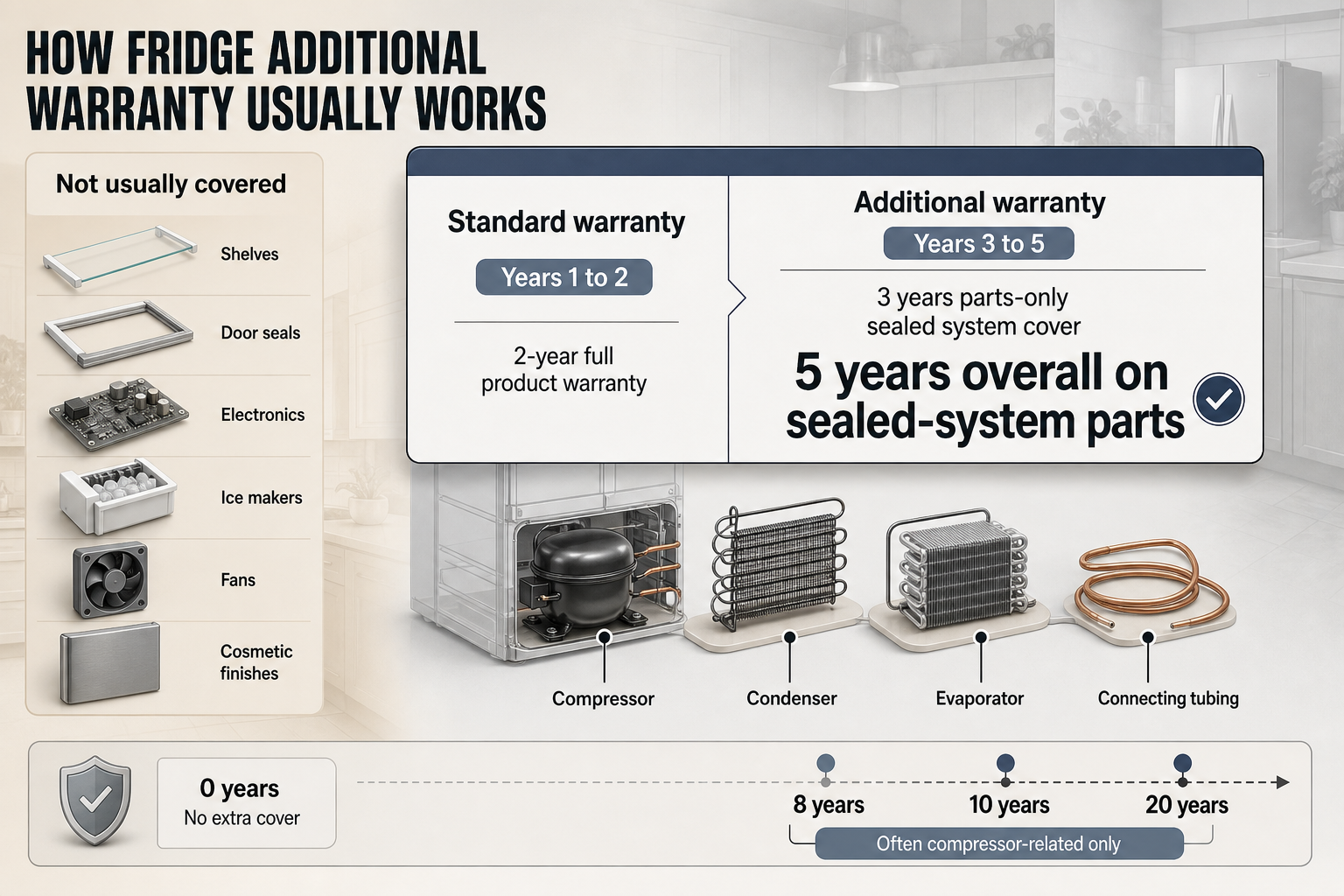
So if you see 0 years, that usually means there is no extra manufacturer-backed cover beyond the standard warranty period. If you see 3 years, it commonly means sealed-system cover to year 5 overall. If you see 8, 10 or 20 years, that often signals long compressor or inverter-compressor cover, but not necessarily full-service cover for the whole refrigerator. (fisherpaykel.com)
Typical Ranges
0 to 2 years
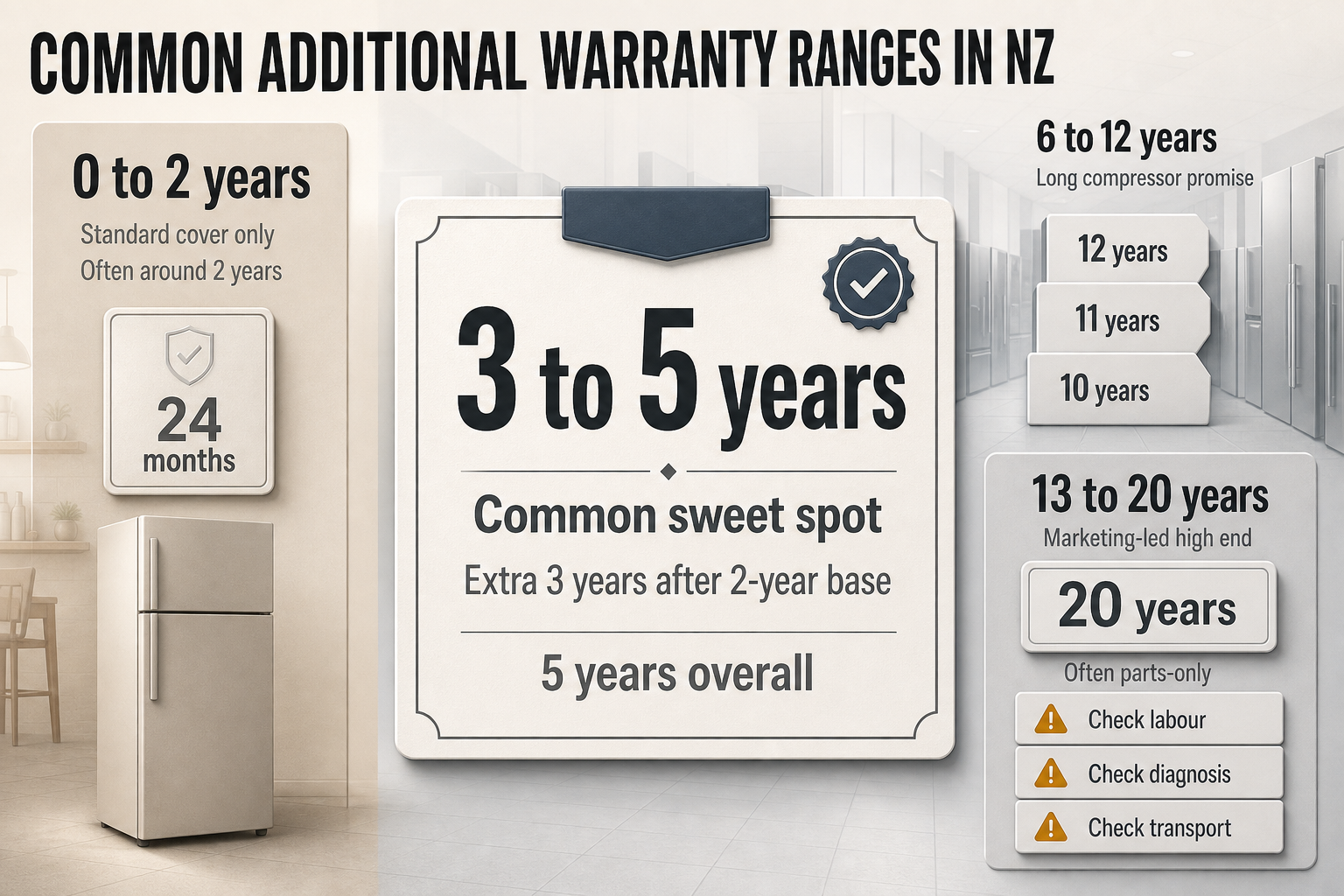
At the low end, a refrigerator may only have the standard full warranty, often around 2 years in the NZ market. Westinghouse lists 24 months for fridge and freezer warranty information, which is typical of a straightforward base warranty without a long extra compressor promise. (westinghouse.co.nz)
This is not automatically a bad buy. A simple top-mount refrigerator from a reputable brand may still be a sensible choice if the price is sharp, the service network is decent, and the model has a strong track record. But you should not pay a premium for a fridge with no meaningful extra sealed-system cover unless it offers something else valuable, such as better energy efficiency, quieter running or a layout that suits your kitchen.
3 to 5 years additional cover
This is a very common middle ground. In NZ, Fisher & Paykel and LG both publish examples of an extra 3 years on the sealed system after a 2-year base warranty, which effectively gives 5 years of protection on those major refrigeration parts. (fisherpaykel.com)
For many households, this is the practical sweet spot. Compressors are among the most expensive fridge components to replace, so having cover through year 5 reduces the risk of a costly early-life failure. Still, because this extra period is often parts-only, you need to ask whether callout charges, refrigerant work and labour are excluded.
6 to 12 years additional cover
This is where brands start using long compressor promises as a selling point. Haier New Zealand promotes a 12-year compressor warranty on selected refrigeration products, and Samsung says some NZ refrigerator models carry 10 or 11-year motor or compressor cover. (haier.co.nz)
For buyers comparing similarly priced fridges, this range can be useful, especially if you plan to keep the appliance for a decade or more. But the longer the number, the more carefully you should check the fine print. In many cases, the later years cover only the compressor part itself, not diagnosis, transport, labour or any related components needed to complete the repair.
13 to 20 years additional cover
This is the high end and is mostly a marketing-led figure tied to selected compressor designs. Samsung’s NZ refrigerator FAQ mentions 20-year parts warranty coverage for some refrigerator compressors. (samsung.com)
A 20-year promise sounds excellent, but it should not outweigh the basics. If the fridge has average energy performance, awkward storage, expensive servicing or poor local support, a huge compressor number alone should not decide the purchase. A refrigerator is a system, not just a motor.
Use-Case Guidance
If you are buying a budget refrigerator for a rental, garage overflow use or a holiday home, an additional warranty of 0 to 3 years can be acceptable if the upfront price is low and the brand has service coverage in your area. In these cases, a simple design with fewer dispensers, screens and moving parts often matters more than chasing the longest headline warranty.
For a main household fridge that runs every day and stores a week’s worth of groceries, I would treat 3 to 5 extra years on the sealed system as a good baseline. This is especially true for larger bottom-mount, French-door and multi-door models, where repair costs can climb quickly once electronics and cooling components are involved. The extra years will not guarantee a free repair for every fault, but they can lower your risk on the most expensive core hardware.
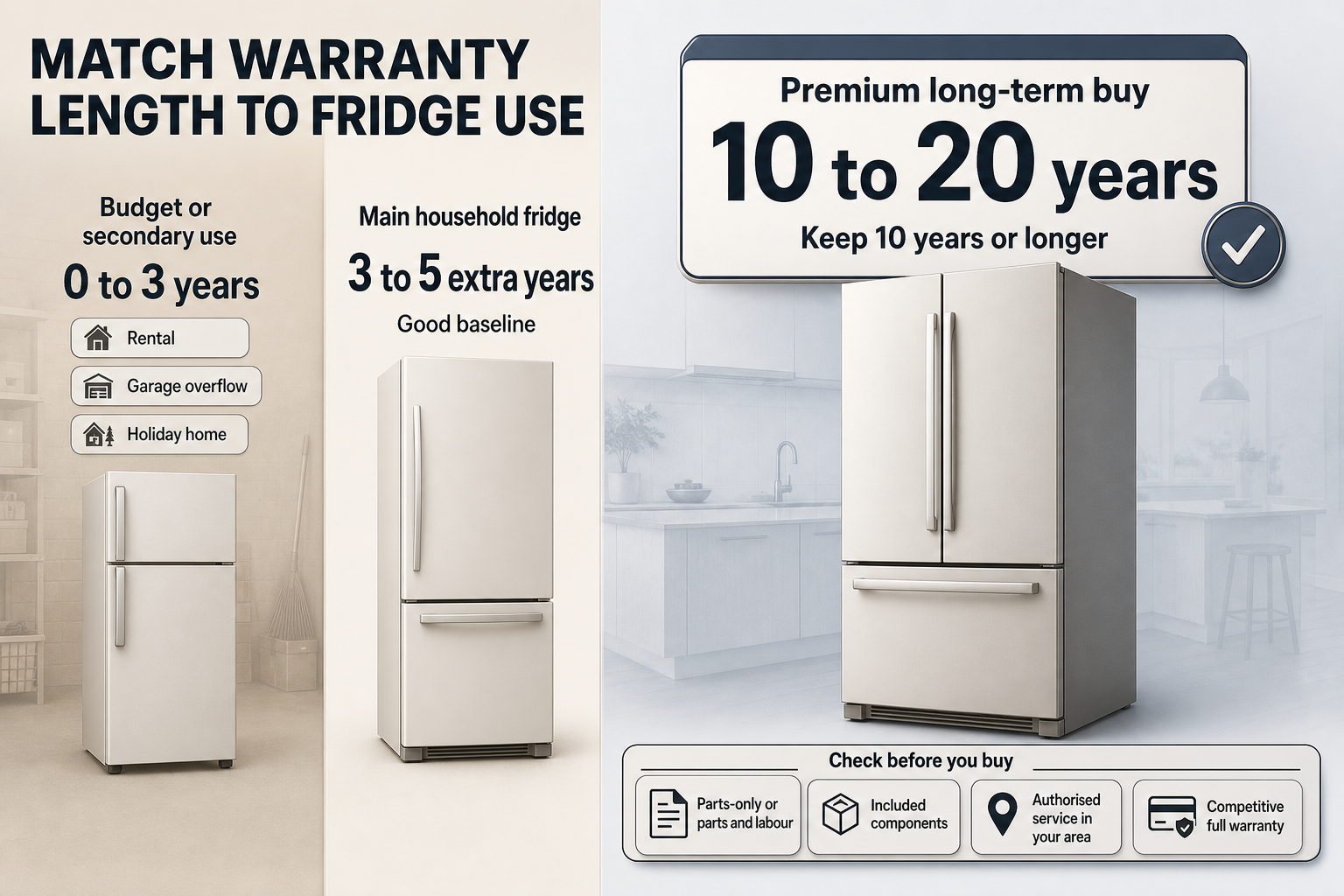
If you are spending more on a premium refrigerator and expect to keep it for 10 years or longer, extra warranty figures in the 10 to 20-year range are worth considering, but only after you confirm four things. First, whether the cover is parts-only or parts and labour. Second, exactly which components are included. Third, whether authorised service is available where you live. Fourth, whether the fridge’s ordinary full warranty is also competitive, because many faults in the first few years are electronic or mechanical issues outside the compressor itself. These details are often more useful than the raw number.
NZ-Specific Factors
New Zealand buyers have an important safety net that sits above any manufacturer warranty: the Consumer Guarantees Act. Consumer Protection states that businesses cannot limit their obligations to the terms of a store or manufacturer’s warranty, and that you may still be entitled to a repair, replacement or refund even after the written warranty has expired. (consumerprotection.govt.nz)
That means a refrigerator sold in New Zealand must be of acceptable quality and reasonably durable for its price and type. A large family fridge failing just outside a short written warranty may still raise a valid CGA claim, particularly if the fault is serious or the appliance has not lasted a reasonable time. The CGA also includes expectations around repair facilities and parts availability for a reasonable period. (legislation.govt.nz)
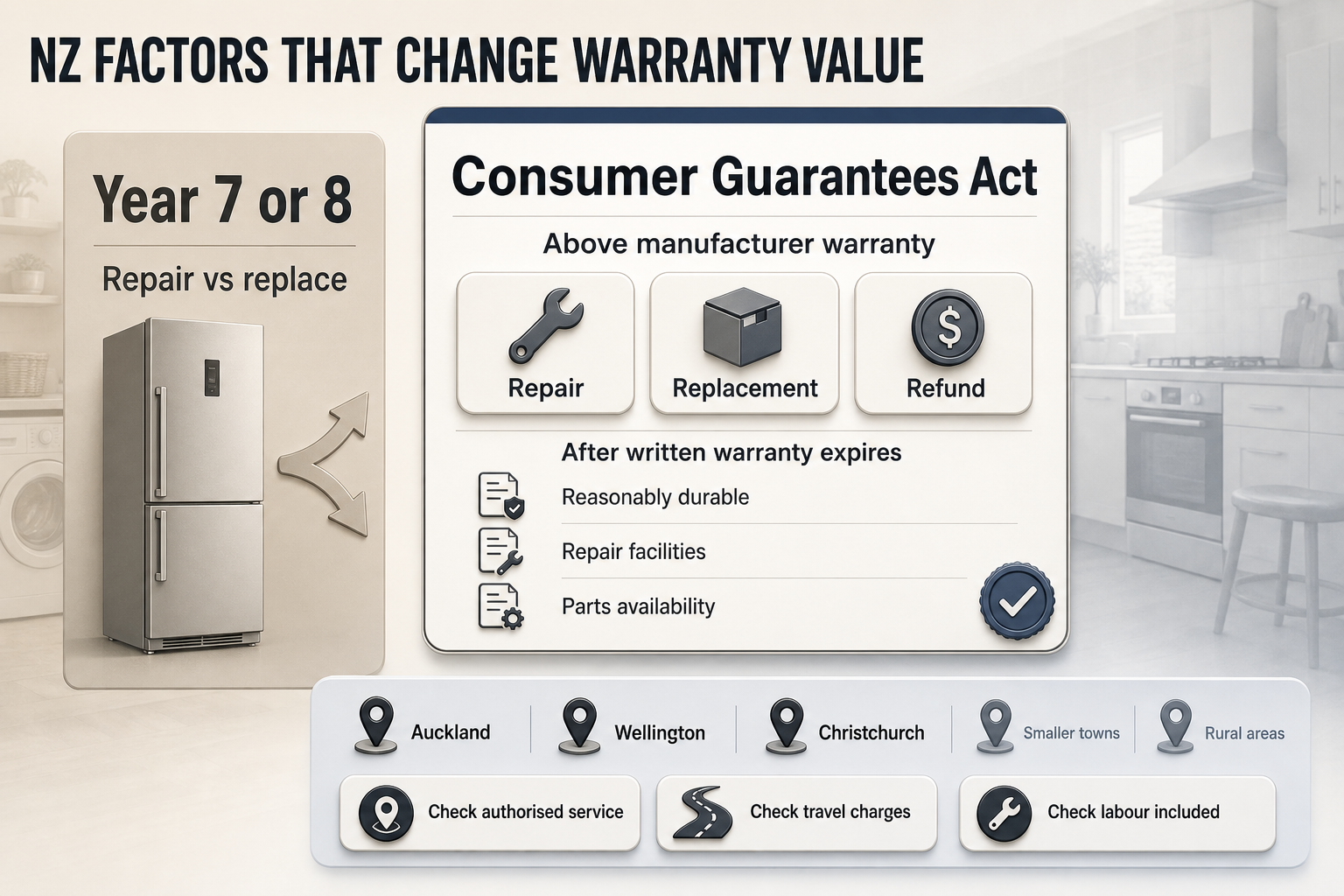
This matters because NZ households often keep refrigerators for a long time. Electricity prices also make replacement decisions more complex. If an older fridge fails in year 7 or 8, you may weigh repair against the running-cost savings of a newer efficient model. A long additional compressor warranty can tilt that decision, but only if the claim process is realistic and the rest of the appliance is still in good condition.
It is also worth thinking about where you live. In Auckland, Wellington or Christchurch, authorised service is usually easier to access than in smaller towns or rural areas. If a warranty requires authorised technicians only, distance and travel charges may affect the real value of that extra cover. Before you buy, ask the retailer or brand who services that refrigerator in your region and whether labour is included during the additional warranty period.
You may also be interested in these independent articles
Sources
- [1]Consumer Protection NZ - Consumer Guarantees Act
- [2]Consumer Protection NZ - Faulty appliances and devices
- [3]Fisher & Paykel NZ - Warranty Information
- [4]LG New Zealand - Warranty Terms
- [5]Samsung New Zealand - Product Warranty Information
- [6]Samsung New Zealand - Refrigerator FAQ
- [7]Haier New Zealand - 12 Year Compressor Warranty
- [8]Westinghouse New Zealand - Warranty Information
© 2026 pyfoi. All rights reserved.