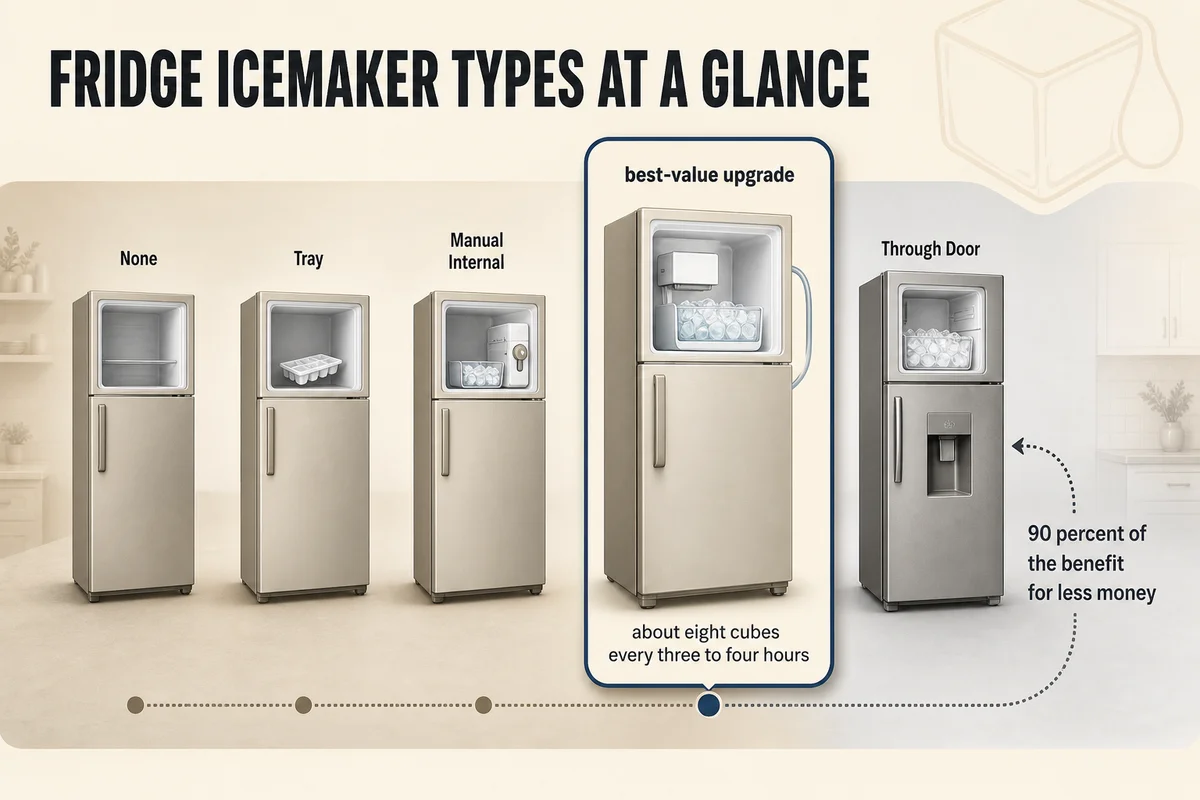

Fridge icemaker types explained for NZ buyers
Compare fridge icemaker types in NZ, from trays to through-door ice, and see which option suits your budget, space, plumbing and daily use.
A fridge's icemaker type tells you how it makes ice, how much effort you need to put in, and whether the appliance needs a plumbed water connection. For New Zealand buyers, that matters because it affects purchase price, running costs, freezer space, installation complexity and day-to-day convenience.
A basic tray setup may be perfect for a flat in Wellington or an Auckland apartment, while a plumbed automatic or through-door system can make more sense in a busy family kitchen, holiday home or entertaining space. The right choice depends less on status and more on how often you actually use ice.
The options
None
A fridge with no icemaker does exactly what it says on the label. There is no dedicated ice-making hardware, no tray included as a headline feature, and no plumbing or dispenser system to worry about.
The main advantage is simplicity. These models are usually cheaper to buy, easier to install and less likely to sacrifice freezer space to an ice bin or mechanism. They also avoid the extra energy use that often comes with water and ice dispensing features. New Zealand building guidance notes that water and ice dispensers use more energy and cost more to run than plain fridge-freezers.
The downside is obvious. If you want ice for drinks, chilly bins, sports recovery or summer entertaining, you will need separate trays or bagged ice. That is not a big issue for many households, especially if ice is only an occasional need.
This option suits buyers who want the best value, the least fuss and the fewest things to maintain. It makes sense for small households, rentals, office kitchens and anyone replacing an old fridge in a tight alcove where a like-for-like swap matters more than extra features.
Tray
A tray icemaker is the old-school method. You fill a removable tray with water by hand, place it in the freezer, then twist or flex the tray to release the cubes once frozen.
Its biggest strength is low cost. You get ice without paying for motors, valves, filters or plumbing. Trays are also flexible. If you need more freezer room for frozen chips, meal prep or a half lamb from the farm, you can move or remove them easily.
The trade-off is convenience. You have to remember to refill the tray, spills are common, and output is limited by how many trays you can fit. If your household goes through a lot of ice in summer, trays can feel slow and fiddly.
For NZ buyers, tray systems suit smaller top-mount and bottom-mount fridges, student flats, bach kitchens and anyone who only wants a few cubes for the odd G&T or iced coffee. They are also a good fit where a plumbed water line would be awkward or expensive.
Manual Internal
A manual internal icemaker sits inside the freezer and is more integrated than a loose tray, but it still relies on you to add water manually. In many designs, you fill a built-in reservoir or mould, then turn a dial or lever to release the cubes into a small storage bin once frozen.
This gives you a neater, more organised setup than separate trays. You usually get a dedicated bin, more consistent cube shape and less risk of sloshing water across the kitchen on the way to the freezer. It can also feel more premium without the cost and installation demands of a fully automatic system.
The downside is that it is still manual. You need to refill it yourself, and output is still limited compared with automatic systems. It also takes up permanent freezer space, which matters in compact fridges.
This type works well for buyers who want a tidier ice setup but do not want plumbing. It suits family homes that use a moderate amount of ice, and it can be a smart middle ground for people who entertain now and then but do not need a steady stream of cubes every day.
Automatic Internal
An automatic internal icemaker makes ice on its own and stores it in a bin inside the freezer. In most cases, the fridge is plumbed into your cold water supply, the freezer reaches temperature, and the icemaker cycles automatically until the bin is full. Fisher & Paykel's NZ guidance says its automatic icemakers typically produce about eight cubes every three to four hours, depending on temperature and door openings.
This is where convenience jumps. You do not need to fill trays, and there is usually enough ice on hand for family dinners, summer weekends and guests. Many models also let you turn the icemaker off when you want the freezer space back, or boost production before a party.
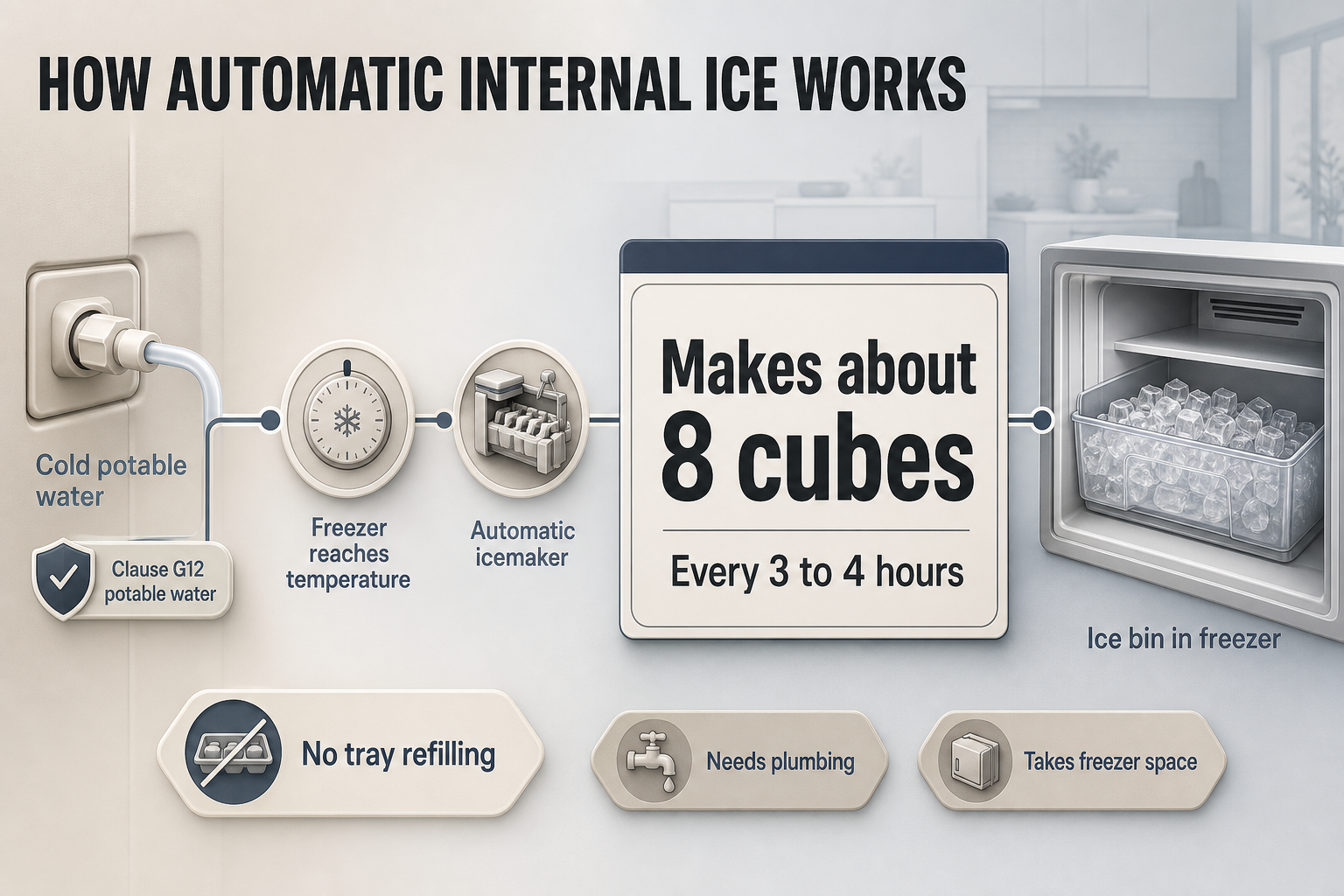
There are compromises. Automatic internal systems usually cost more, need more components and can reduce usable freezer volume because the bin and mechanism take up space. They also tend to need a plumbed potable water connection, and manufacturers may require installation by a qualified technician or plumber. In NZ, water supplied for human consumption and food preparation must be potable under Building Code Clause G12, so the water source matters as much as the fridge feature list.
This option suits busy households, larger families and buyers who regularly host friends, fill water bottles with ice, or want a more premium everyday experience without putting a dispenser in the door. It is often the sweet spot between convenience and efficiency, because the ice stays inside the freezer rather than adding a through-door dispensing system.
Through Door
A through-door icemaker dispenses ice through the fridge door, usually alongside chilled water. The ice is still made and stored inside the appliance, but you access it externally via a dispenser panel.
The appeal is obvious. It is the most convenient setup, especially if your household uses ice every day. You can fill a glass or jug without opening the freezer, which feels premium and can be handy in busy family kitchens. Many French-door and side-by-side models use this layout, and some NZ models combine slimline water dispensers with internal ice storage.
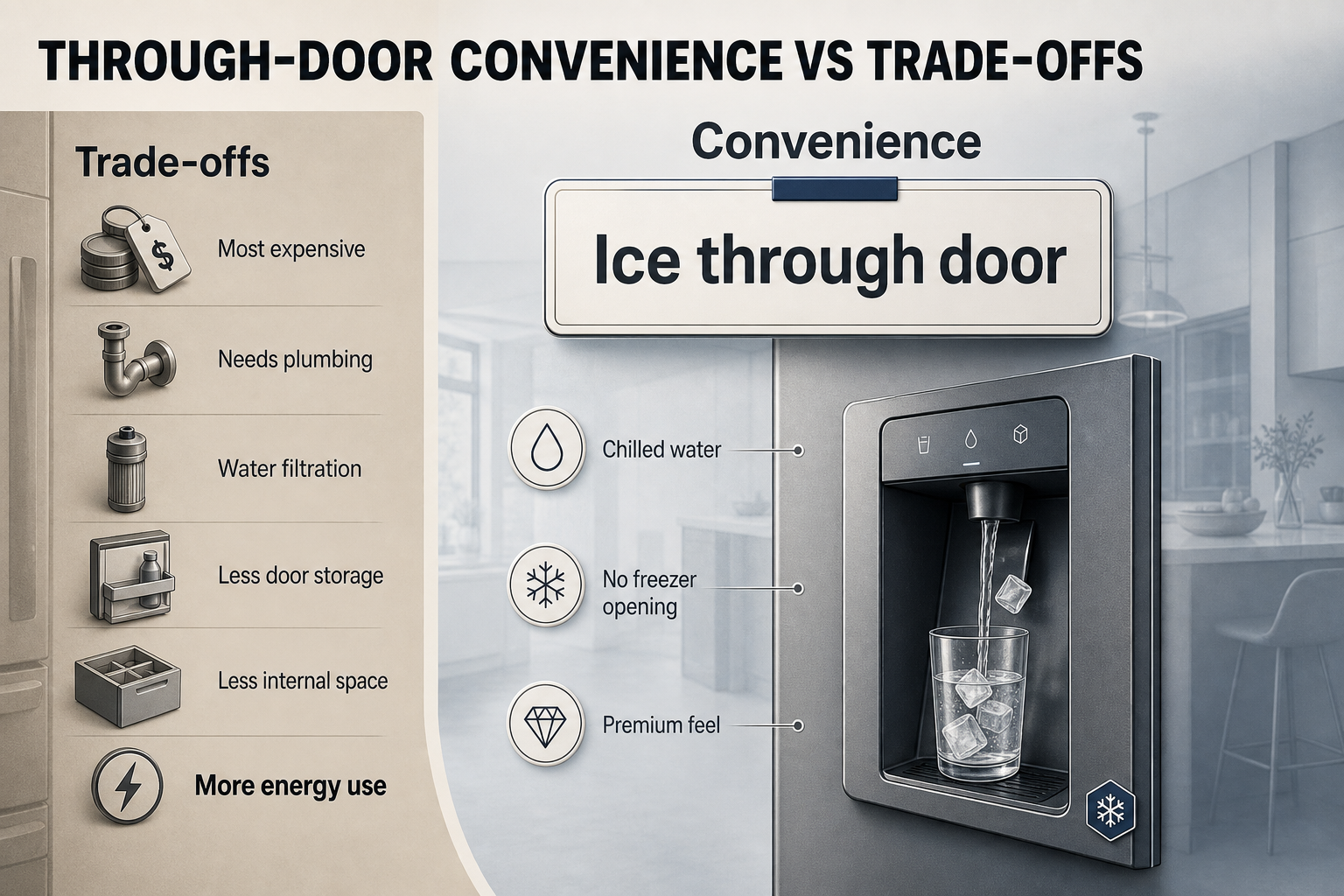
The trade-offs are price, complexity and efficiency. Through-door systems are usually the most expensive option, often need plumbing and water filtration, and can reduce door storage or internal space. They also tend to use more energy than simpler fridge-freezers. That matters in New Zealand, where electricity prices are high enough that small efficiency differences add up over years of ownership. EECA's energy label guidance also reminds buyers that energy labels should be compared within the same product category, not across different appliance types.
This setup suits buyers who value convenience above all else, entertain often, or simply know they will use the feature every day. It is common in premium family fridges, but it is often unnecessary in smaller homes where a simple internal icemaker would do the same job for less money.
How to choose
Start with honesty about your real ice use. If you only want cubes a few times a month, a tray or even no icemaker is often the smarter buy. Paying extra for plumbing, filters and a dispenser makes little sense if the feature will mostly sit idle through winter.
If you use ice weekly, a manual internal system can be a sensible middle ground. It is tidier than trays and still avoids the cost and installation demands of a plumbed appliance. For many households, this is enough.
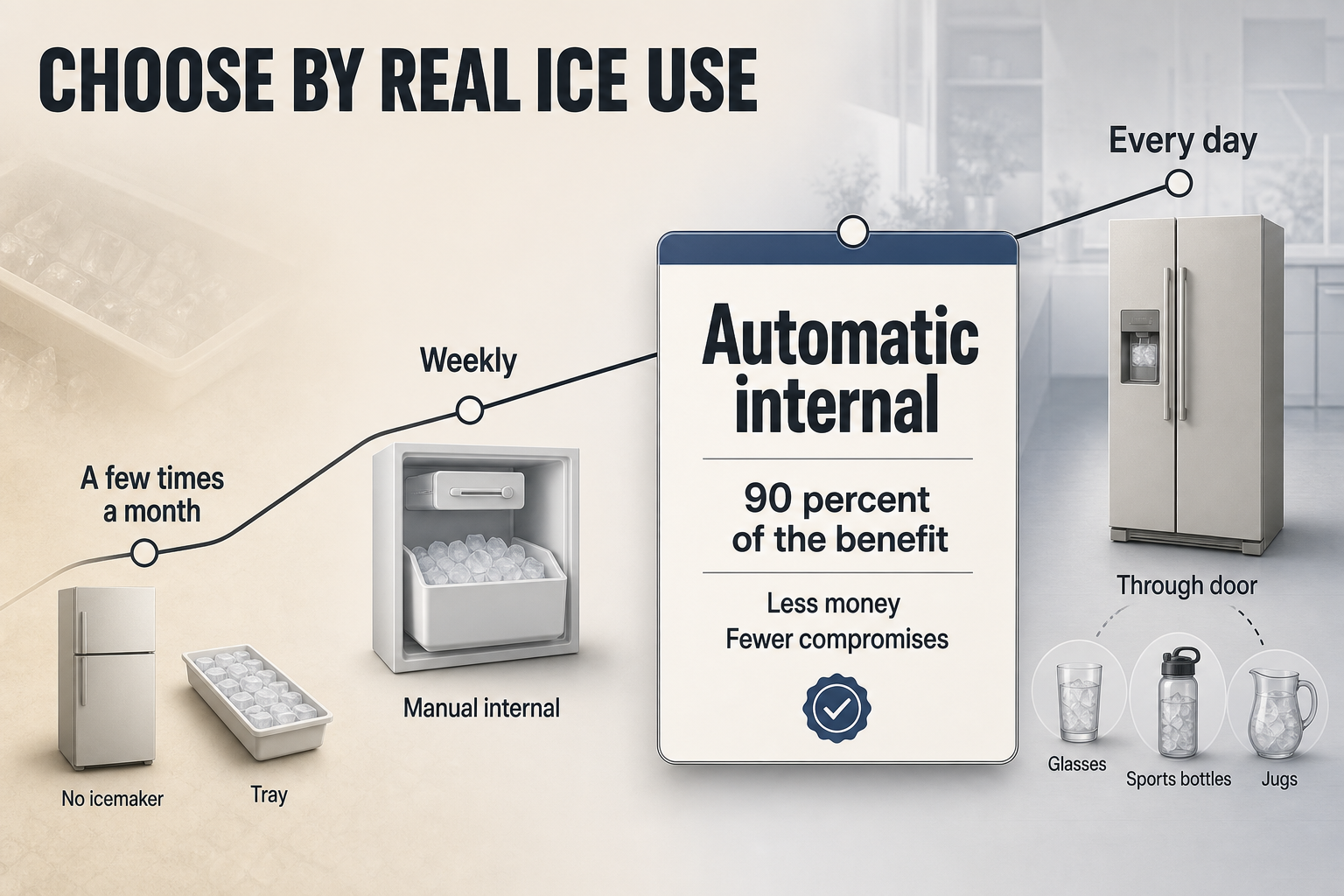
If you use ice most days, automatic internal is usually the best-value upgrade. You get proper convenience without necessarily taking on the full cost and complexity of a through-door system. That is especially true if you prefer French-door or bottom-mount layouts and want to keep the cleanest possible door design.
You probably do not need through-door ice just because it looks premium in the showroom. It makes the most sense if your household regularly fills glasses, smoothie cups, sports bottles or jugs with ice and chilled water. If not, an internal automatic icemaker often delivers 90 percent of the benefit for less money and with fewer compromises.
NZ context
In New Zealand, the biggest practical issue with automatic and through-door systems is installation. Many plumbed fridges need a cold potable water connection, and some brands specify qualified installation for the water connection. If your kitchen was not set up for this, budget for plumbing work as well as the appliance itself. Retailers also flag that some integrated models may require a cabinetmaker, plumber and installer, not just a delivery team.
Energy use matters too. MBIE's Smarter Homes guidance says through-the-door water and ice features use more energy and cost more to run than standard fridge-freezers. That does not mean you should avoid them, but you should check the energy label carefully and weigh convenience against long-term power bills.
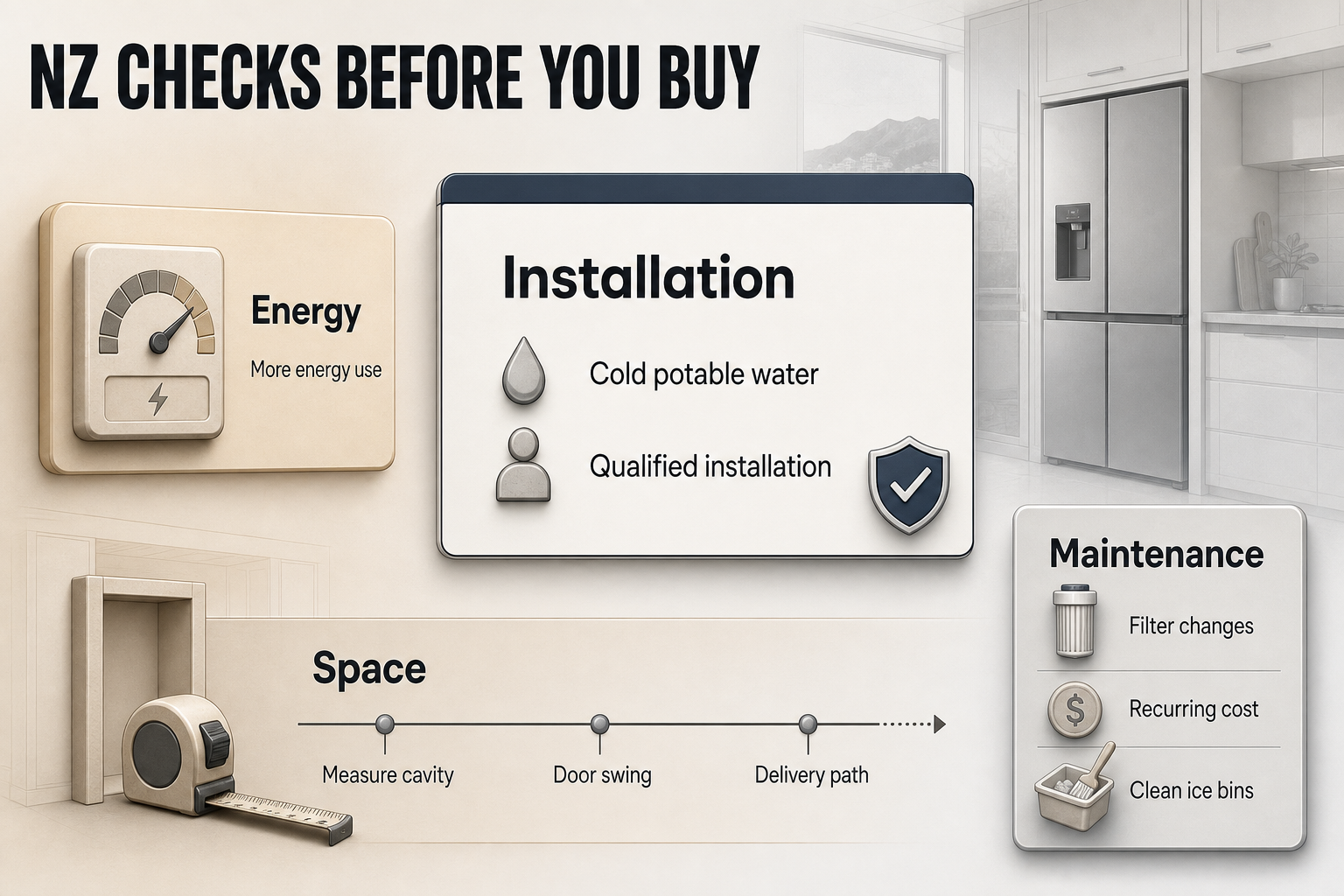
Space is another NZ-specific consideration because many homes, flats and townhouses have tighter kitchen footprints than the big American-style fridge market suggests. Ice bins, dispenser hardware and plumbing clearances can all eat into usable space. Measure your cavity, door swing and delivery path before falling for a big side-by-side with through-door ice.
Water quality and maintenance should not be ignored. If your fridge uses a filter, that is a recurring cost. If you live in an area with harder water, tank supply, or a holiday home that sits empty for stretches, you need to think about filter changes, flushing the system and whether the icemaker will actually be used enough to stay fresh. Manufacturers also advise emptying and cleaning ice bins periodically because stale ice can pick up odours and taste flat.
You may also be interested in these independent articles
Sources
- [1]EECA, The Energy Rating Label for fridges and freezers
- [2]MBIE Building Performance, Fridges and freezers
- [3]MBIE Building Performance, Building Code Clause G12 Water supplies
- [4]MBIE Building Performance, Plumbing and drainage work that doesn't need a building consent
- [5]Fisher & Paykel NZ, Ice and Water user guide
- [6]Fisher & Paykel NZ, 569L Series 7 French Door Refrigerator Freezer, Ice & Water
- [7]Fisher & Paykel NZ, 92cm Series 11 Integrated Refrigerator Freezer, Ice & Water
- [8]Harvey Norman New Zealand, Fisher & Paykel 303L Smart Integrated Bottom Mount Fridge Freezer with Ice & Water Dispenser
© 2026 pyfoi. All rights reserved.