
Fridge Water Dispenser: Is It Worth It in NZ?
Choosing a fridge water dispenser in NZ means weighing convenience, energy use, space and plumbing. Find out which option actually suits your home.
A fridge cold water dispenser sounds simple, but it changes how the appliance fits into your kitchen, your daily routine, and your power bill. For New Zealand buyers, it is less about luxury and more about deciding whether the convenience is worth the extra cost, space, plumbing, and maintenance.
The Options
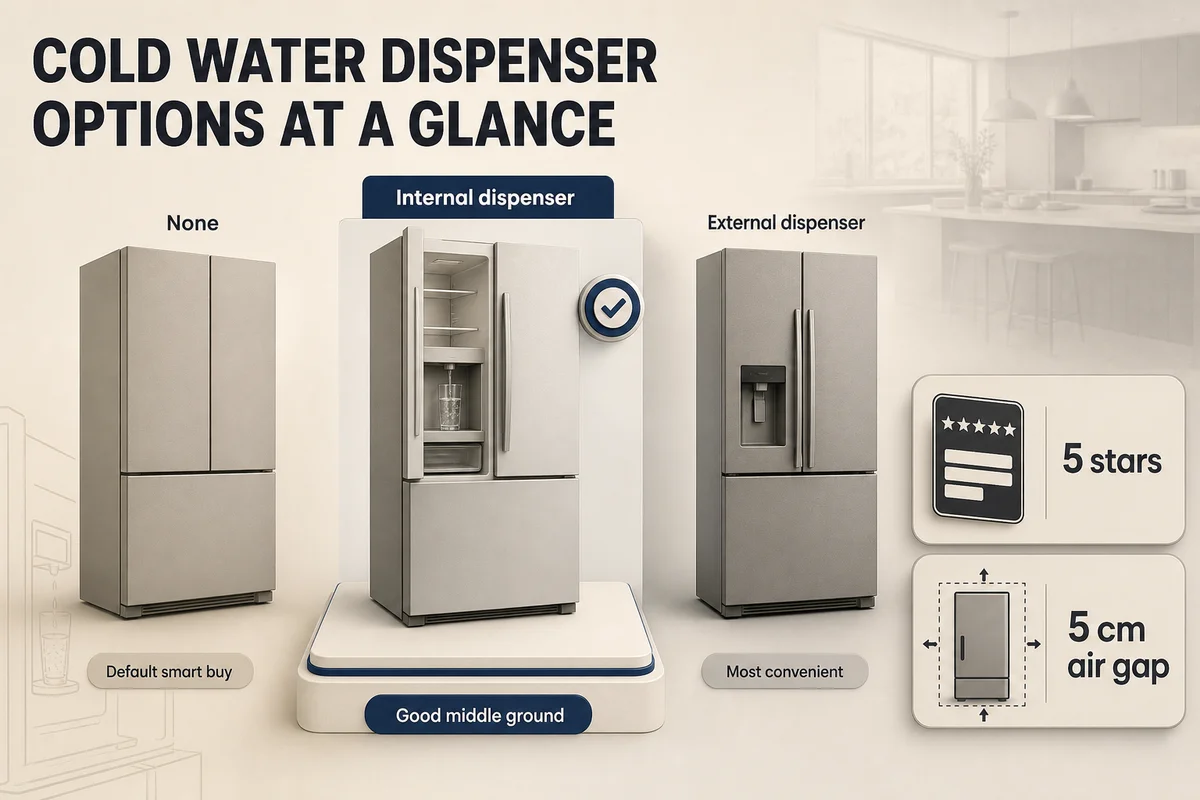
None
A fridge with no cold water dispenser is exactly that: no dedicated chilled-water outlet built into the appliance. You get your cold water the old-fashioned way by opening the door and pouring from a bottle, jug, or filter jug stored inside.
The biggest advantage is simplicity. A fridge without a dispenser is usually cheaper to buy, has fewer parts to break, and avoids the plumbing or refill systems that dispenser-equipped models often need. It can also be the better choice if you are focused on energy efficiency, because EECA notes that through-the-door ice and water features use more electricity than simpler models. (eeca.govt.nz)
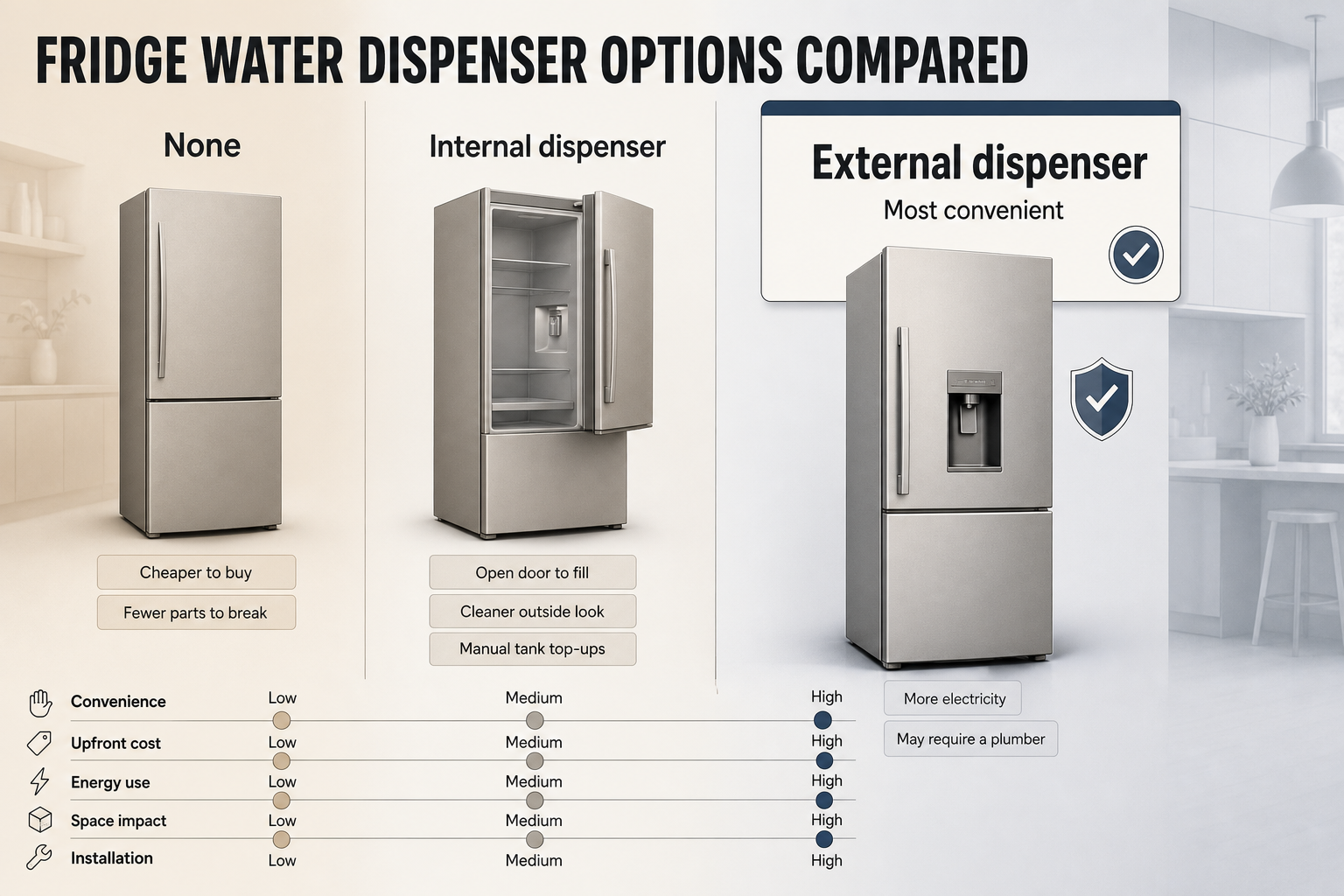
The downside is convenience. If your household drinks a lot of cold water, especially in summer, opening the fridge every time can get annoying. It also means more warm air enters the cabinet, which is not ideal for efficiency or temperature stability.
This option suits buyers who want value, reliability, and fewer maintenance jobs. It makes sense in smaller Auckland or Wellington flats, rental properties, holiday homes, and households that already use a bench-top water filter. It is also a sensible pick if you are comparing two similar fridges and one has a dispenser mainly as a showroom feature rather than something you will genuinely use.
For many NZ homes, this is the default smart buy. If your kitchen does not already have a nearby water connection, or if you are trying to keep purchase price and long-term running costs down, no dispenser is often the most practical answer.
Internal dispenser
An internal dispenser gives you chilled water from a built-in outlet inside the fridge compartment rather than on the outside door. In practice, you open the fridge door, press a lever or button, and fill your glass or bottle from the dispenser mounted on an inside wall.
This setup gives you some of the convenience of a water dispenser without changing the outside look of the fridge. That matters if you prefer a cleaner kitchen design or you do not want fingerprints, controls, and a dispenser recess on the front. Internal systems are also less exposed to knocks and grime from everyday kitchen use.
The trade-off is that it is not as quick as an external dispenser. You still need to open the door, so you lose some of the convenience advantage. If you are filling bottles for school lunches, sports training, or a chilly bin before a beach day, it can feel slower than a through-door setup. You also need to think about filter changes if the model uses filtration, and some non-plumbed units have an internal water tank that must be topped up manually.
An internal dispenser works well for households that want chilled water regularly but do not need instant access from the outside. It suits families who like the feature but care about appearance, or buyers who want fewer external moving parts. In NZ terms, it is a good middle ground for suburban family kitchens in places like Hamilton, Christchurch, or Tauranga where a clean look matters but a full American-style external dispenser may feel excessive.
There is also a practical point for narrower kitchens. External dispensers are often found on larger side-by-side or French-door fridges, while internal dispensers can appear on more conventional layouts. If you are trying to fit a fridge into a standard cavity in an older NZ home, that can widen your options.
External dispenser
An external dispenser, often called a through-door dispenser, lets you fill a glass or bottle from the outside of the fridge door. On some models it is water only. On others it may be paired with ice dispensing as well.
This is the most convenient option. You can grab cold water without opening the fridge, which is handy in busy family homes and during warmer months. If your household is always filling drink bottles before school, rugby practice, or a weekend drive, an external dispenser is genuinely useful rather than just flashy.
The downsides are cost, complexity, and usually higher energy use. EECA specifically notes that through-the-door ice and water dispensers use more electricity and may require a plumber for connection. (eeca.govt.nz) External dispenser models are often more expensive to buy, and they can be larger, which matters in New Zealand kitchens where space is not always generous. There is also more to clean around the dispenser recess, drip tray, and controls.
This option suits larger households, people who entertain often, and buyers who know they will use the feature every day. It can be especially handy in homes where kids are constantly in and out of the fridge, because getting water externally may reduce full door openings. But if you live alone or as a couple and mostly drink tap water from the sink, it may be money spent on a feature you rarely use.
NZ buyers should also think about installation. Some external dispensers are plumbed, while others use refillable internal tanks. If your kitchen layout makes plumbing awkward, the convenience may come with added installation cost. If you are renovating anyway, it is easier to plan for. If you are replacing a fridge in an existing kitchen, check the water connection requirements before you fall in love with the display model.
How to Choose
Start with your real habits, not the spec sheet. Ask yourself how often your household actually drinks chilled water, whether you already use a filter jug, and whether people will use the dispenser enough to justify the extra purchase price.
If you mainly want a dependable fridge at the best value, choose none. You will usually save money upfront, keep things simpler, and avoid paying for a feature that does not improve food storage. That will suit plenty of NZ households, especially in rentals, smaller homes, or homes where kitchen space is tight.
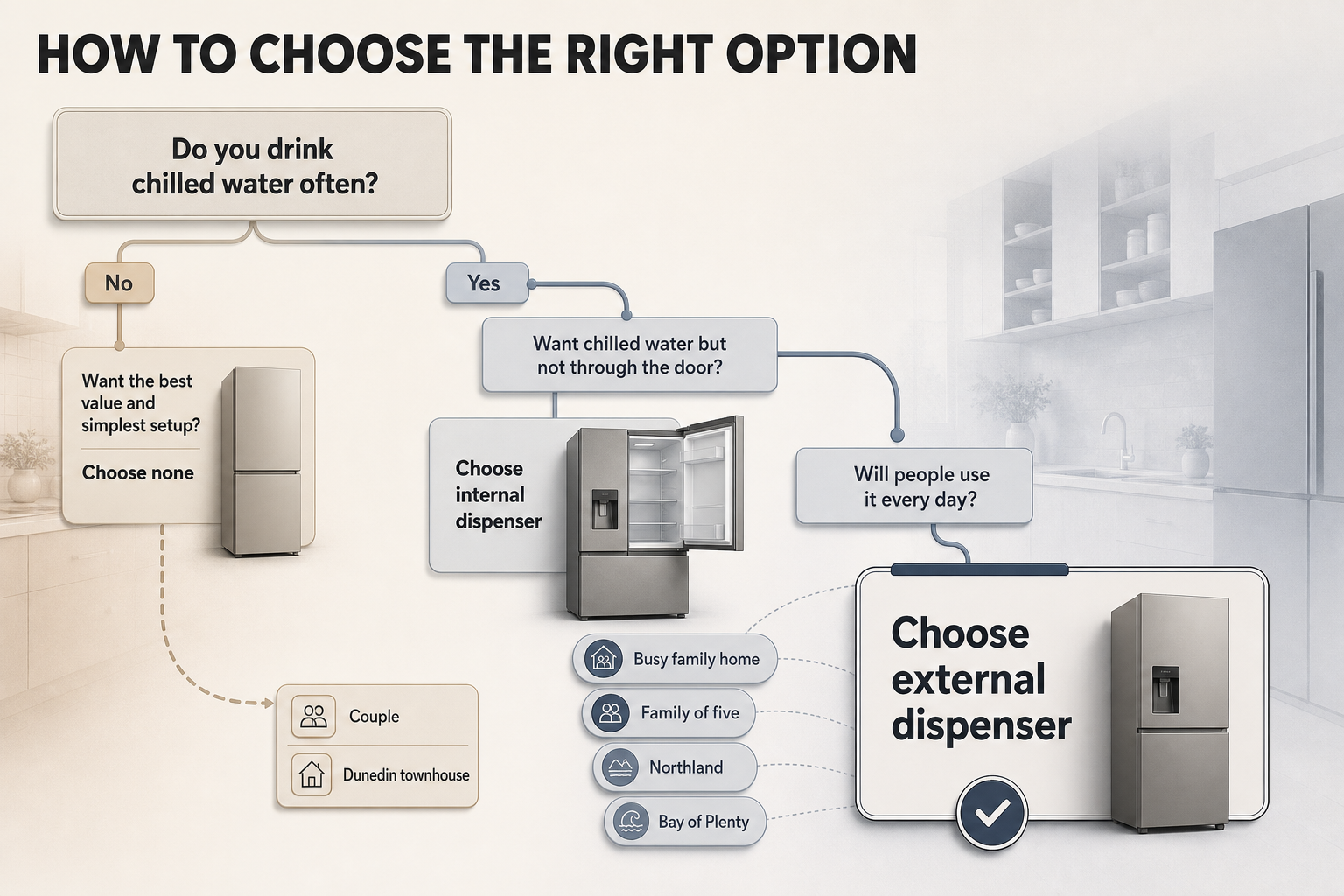
If you like the idea of chilled water but do not care about grabbing it through the door, internal dispenser is the balanced choice. You get the feature without making it the centrepiece of the fridge. It is often the better answer for buyers who want practicality with a tidier look.
If your home is busy and people will use it all the time, external dispenser can be worth it. The key is frequency. A family of five in a warm Northland or Bay of Plenty home may get real value from it. A couple in a Dunedin townhouse probably will not.
It is also worth challenging one common assumption: a dispenser does not automatically mean a better fridge. Food storage performance, energy use, usable shelf space, noise, and reliability matter more. EECA says fridges and freezers are always running and are one of the larger energy users in the home, so efficiency deserves close attention when comparing similar models. (eeca.govt.nz)
NZ Context
In New Zealand, energy efficiency should sit near the top of your checklist. EECA recommends aiming for at least 5 stars for refrigerators and 4 stars for side-by-side fridge-freezers, and it stresses looking at both the star rating and annual kWh figure on the Energy Rating Label. (eeca.govt.nz) If one dispenser-equipped model has noticeably higher annual energy use, that extra convenience may cost you every year the fridge is in your kitchen.
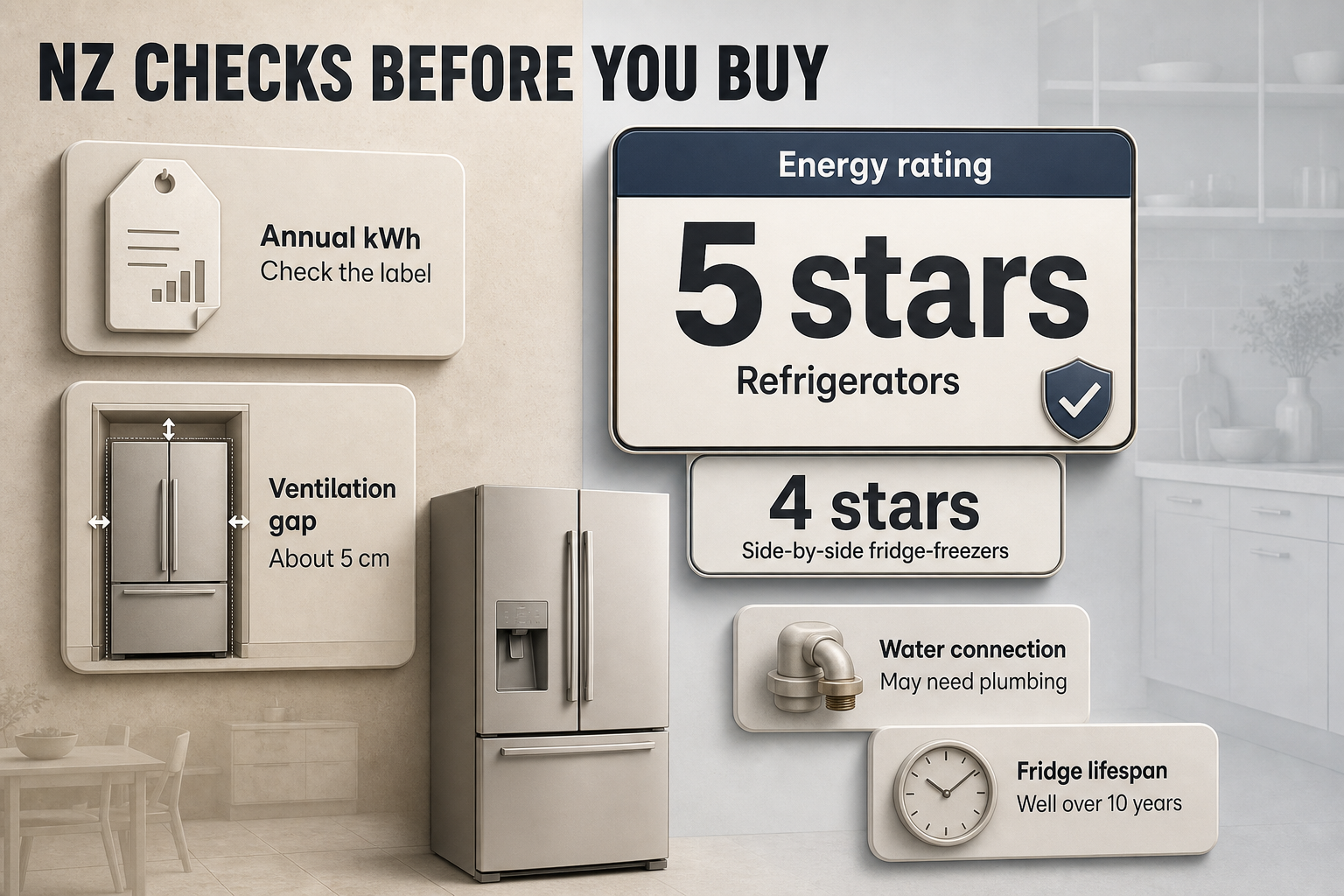
Kitchen space matters too. Many NZ homes, especially older villas, units, and apartments, were not designed around wide American-style fridges. EECA also advises allowing about 5 cm of air gap around the appliance for proper operation. (eeca.govt.nz) A dispenser model that looks fine on paper may be harder to fit once door swing, cabinetry, and ventilation are considered.
Water connection is another local practical issue. Some through-door systems may need plumbing, which adds cost and can complicate installation in existing kitchens. If you own the home and are already doing a kitchen renovation, that may be minor. In a rental or an older house, a non-plumbed model or no dispenser at all may be easier.
Finally, think about maintenance over the long haul. New Zealand appliance prices are not trivial, and a fridge should last well over 10 years. EECA notes that buying an efficient model can save meaningful money over its life. (eeca.govt.nz) If a dispenser feature pushes you into a pricier, less efficient, or more complex model, make sure it solves a real need in your home rather than just looking good in the showroom.
You may also be interested in these independent articles
Sources
© 2026 pyfoi. All rights reserved.